
 Image 1 of 4
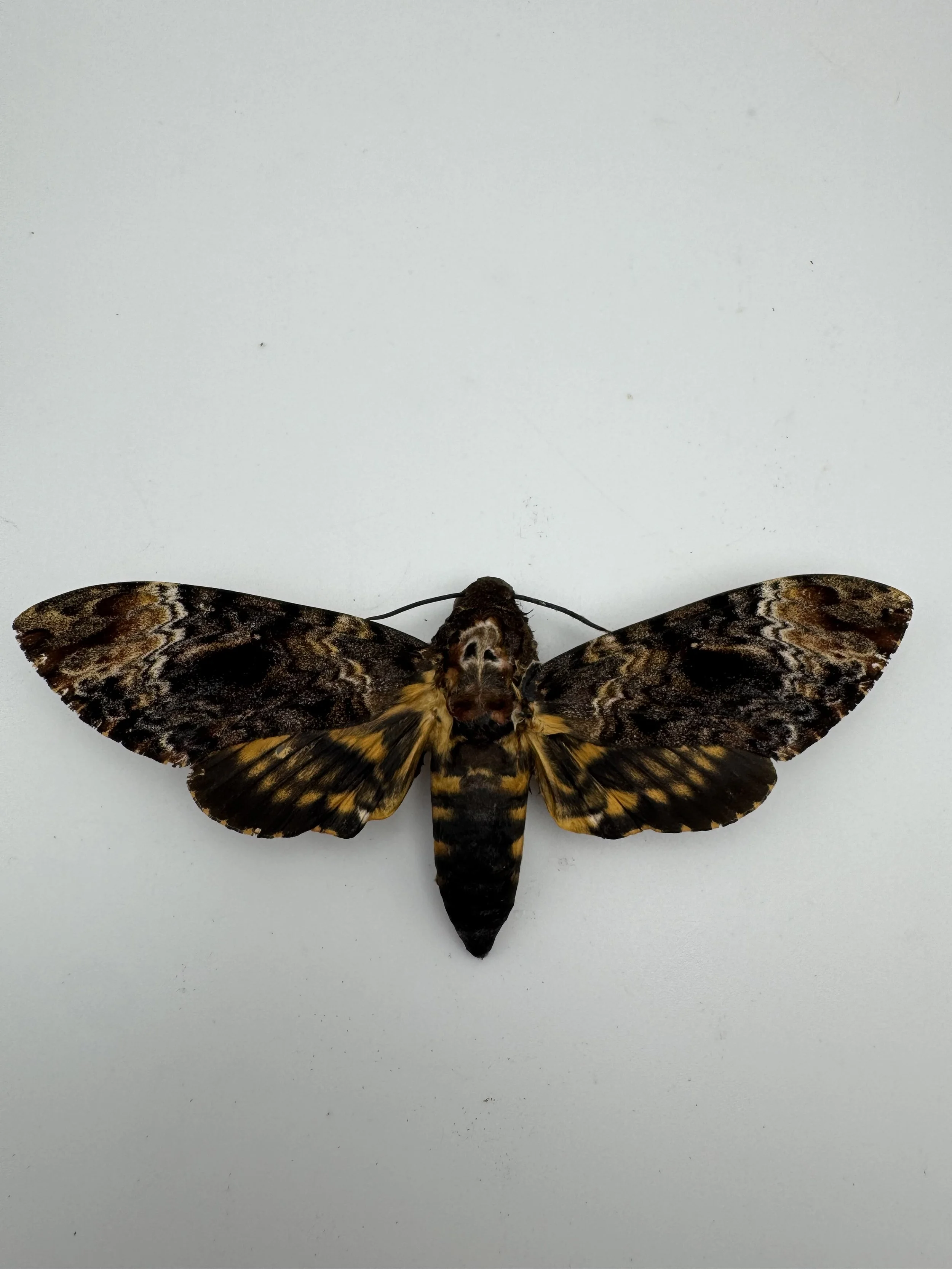 Image 2 of 4
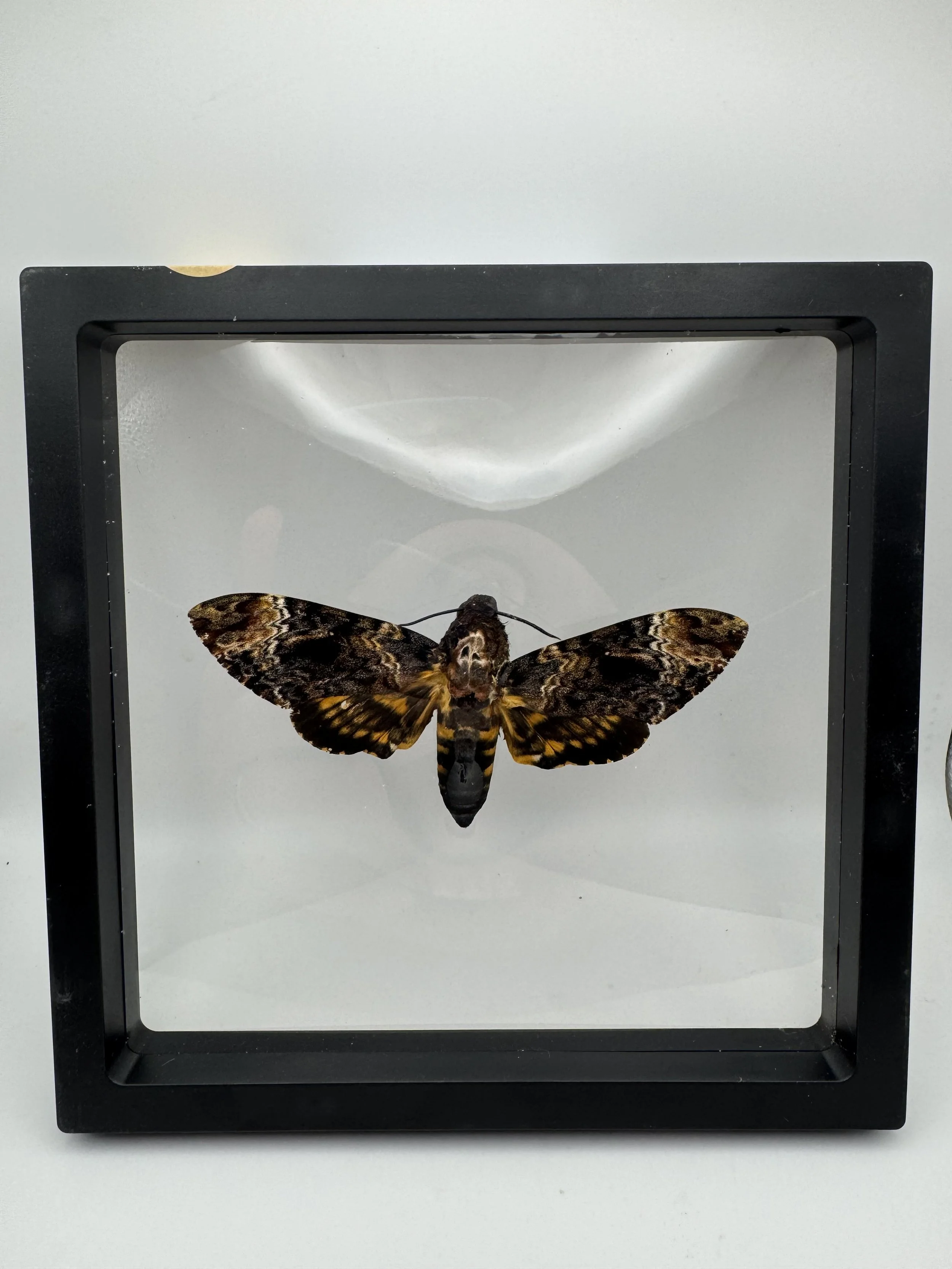 Image 3 of 4
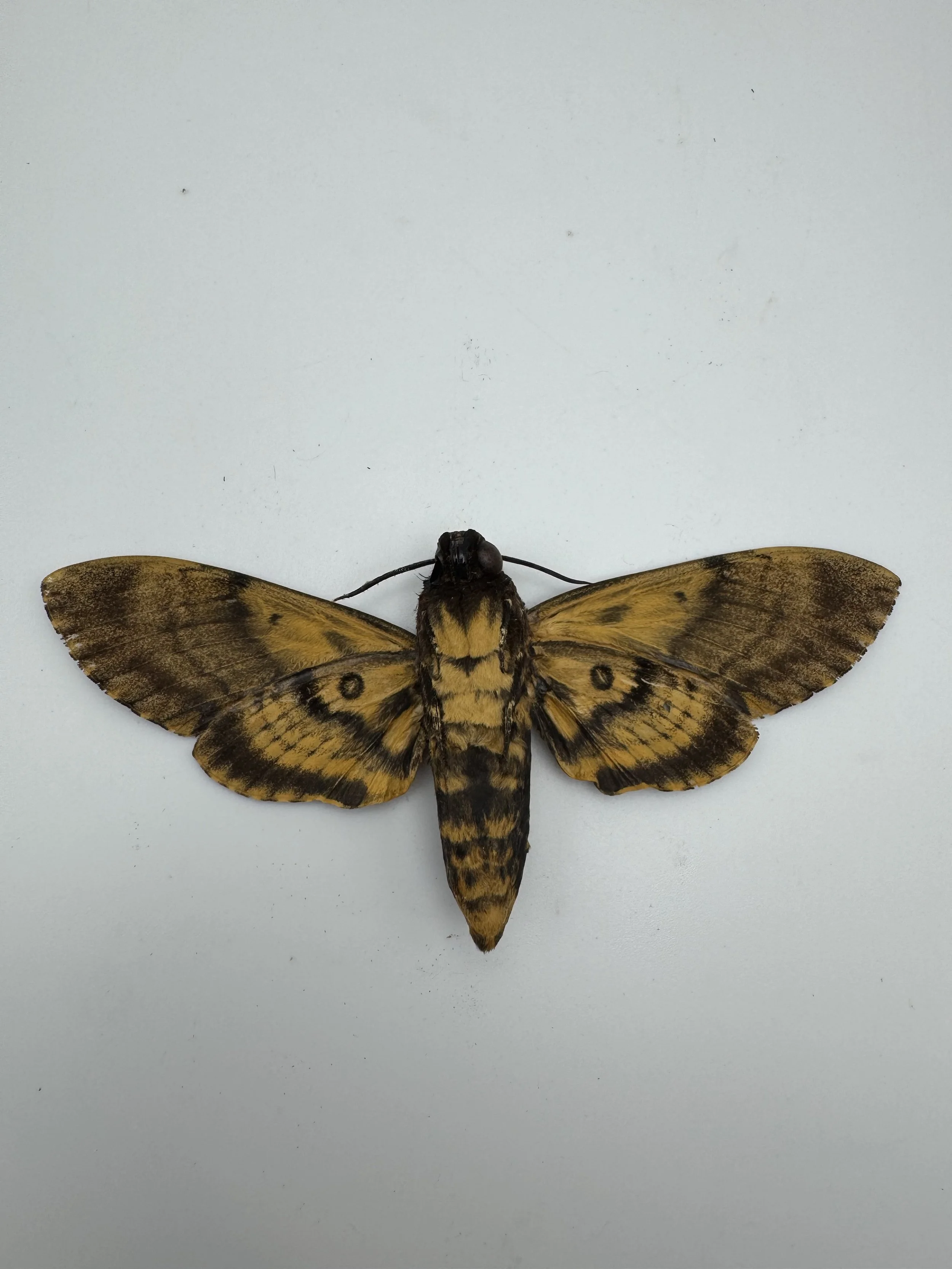 Image 4 of 4
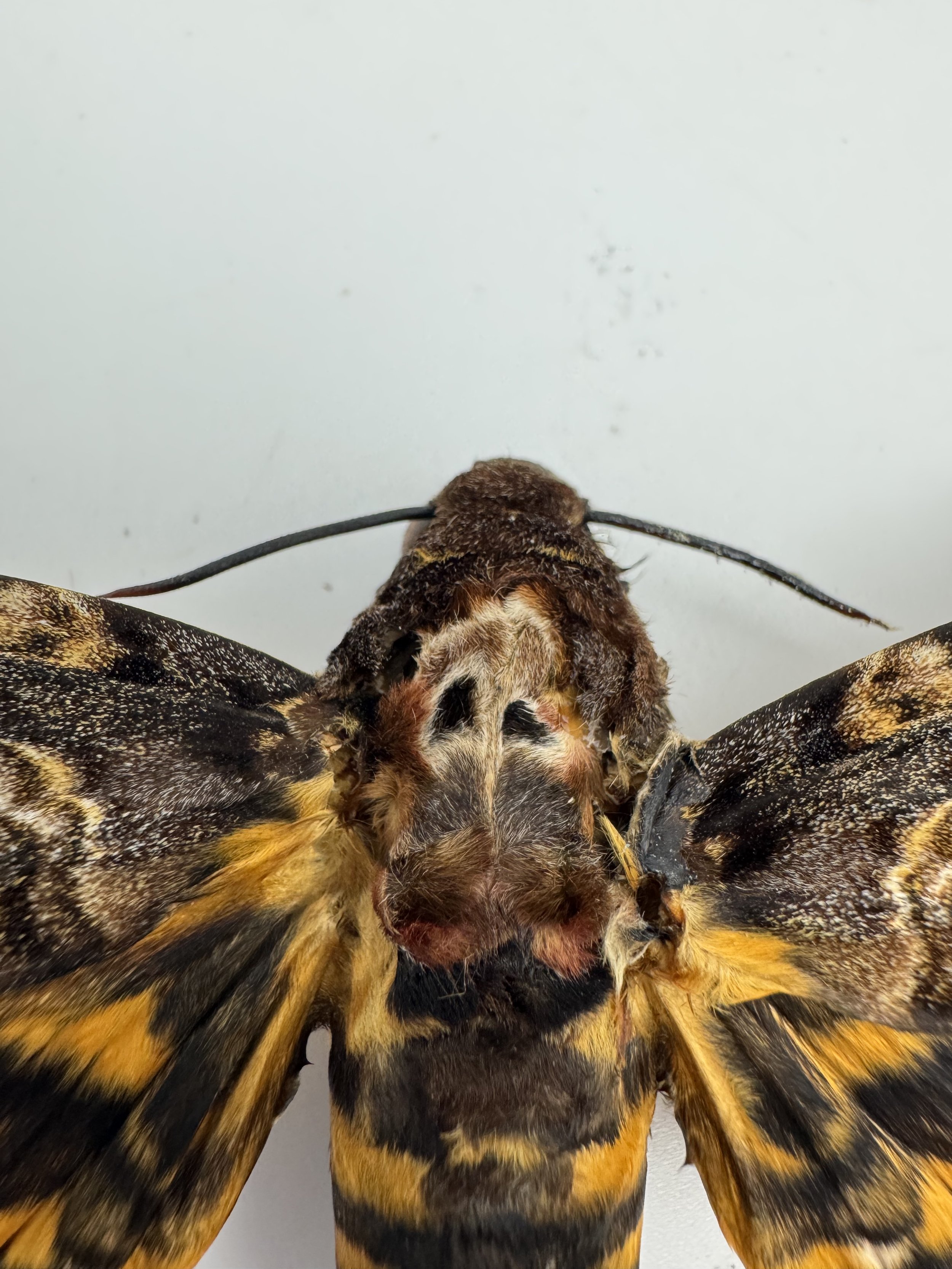
The Tropical Death’s-head Hawkmoth (Acherontia lachesis) is a large and powerful moth known for the skull-like marking on its thorax, which gives the group its distinctive name. Its wings are mottled in shades of brown, tan, and black, providing excellent camouflage, while the abdomen features bold yellow banding.
Native to Asia, Acherontia lachesis is found across South and Southeast Asia, including India, Thailand, and surrounding regions. It is commonly associated with forests, agricultural areas, and gardens.
Interesting Fact:
This species is capable of producing an audible squeaking sound when disturbed and is known to raid beehives for honey, using chemical mimicry to avoid detection by bees.
This specimen is preserved, fully spread and professionally mounted in a clear PE display frame, making it ready for immediate display. Collection data is included.
All specimens are ethically sourced, collected responsibly with a focus on sustainability and minimal impact on wild populations.
The Tropical Death’s-head Hawkmoth (Acherontia lachesis) is a large and powerful moth known for the skull-like marking on its thorax, which gives the group its distinctive name. Its wings are mottled in shades of brown, tan, and black, providing excellent camouflage, while the abdomen features bold yellow banding.
Native to Asia, Acherontia lachesis is found across South and Southeast Asia, including India, Thailand, and surrounding regions. It is commonly associated with forests, agricultural areas, and gardens.
Interesting Fact:
This species is capable of producing an audible squeaking sound when disturbed and is known to raid beehives for honey, using chemical mimicry to avoid detection by bees.
This specimen is preserved, fully spread and professionally mounted in a clear PE display frame, making it ready for immediate display. Collection data is included.
All specimens are ethically sourced, collected responsibly with a focus on sustainability and minimal impact on wild populations.