
 Image 1 of 4
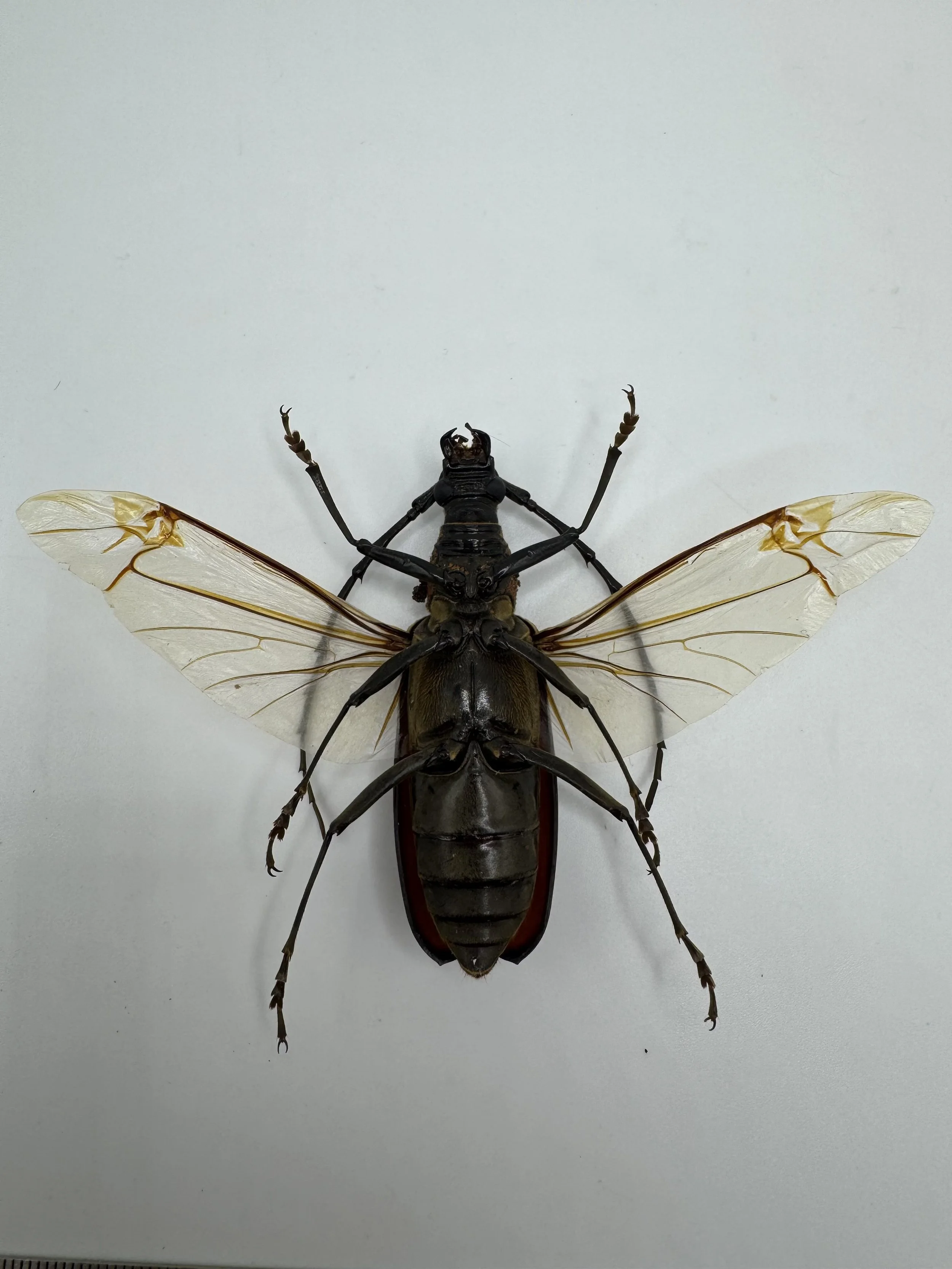 Image 2 of 4
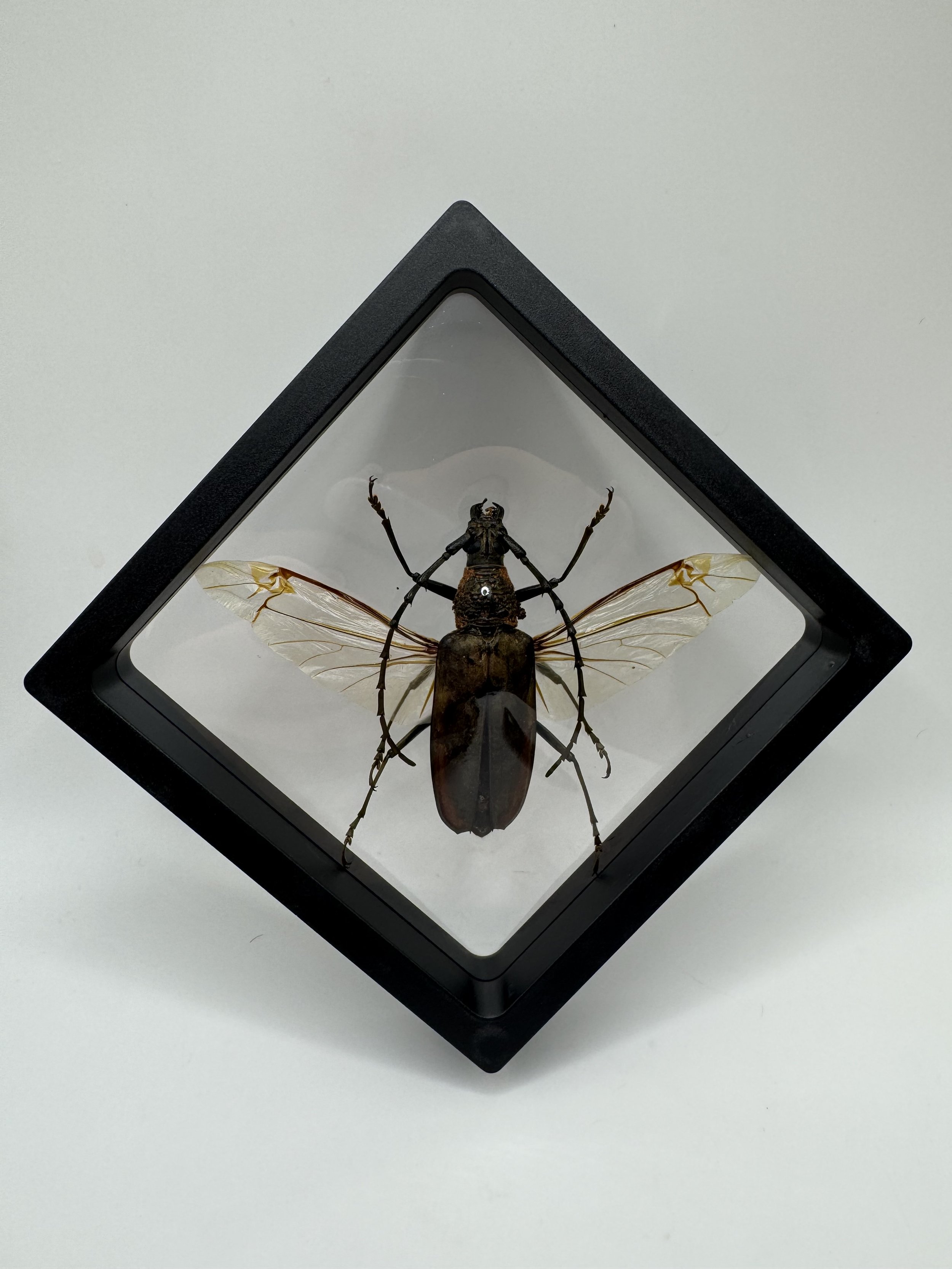 Image 3 of 4
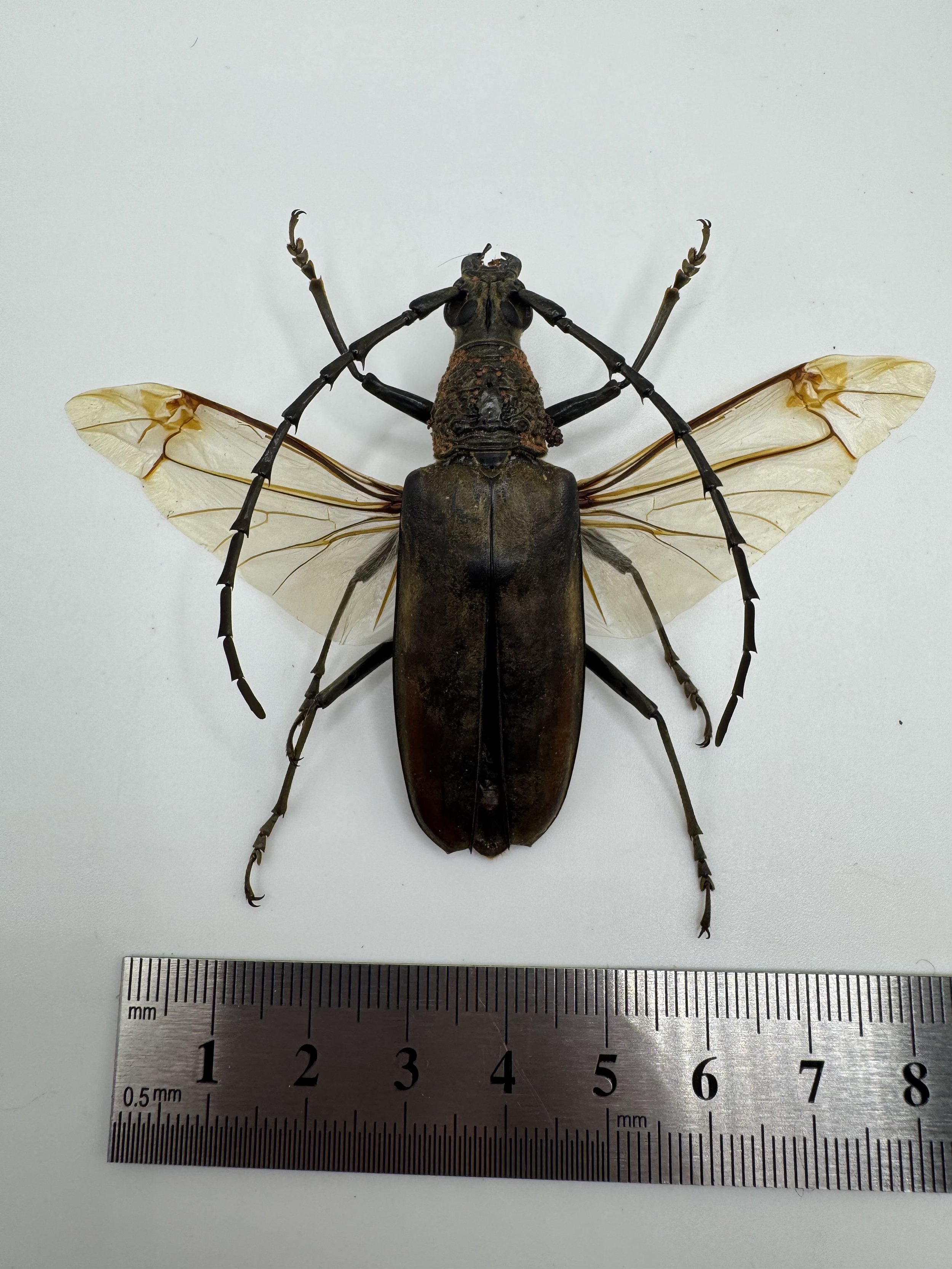 Image 4 of 4
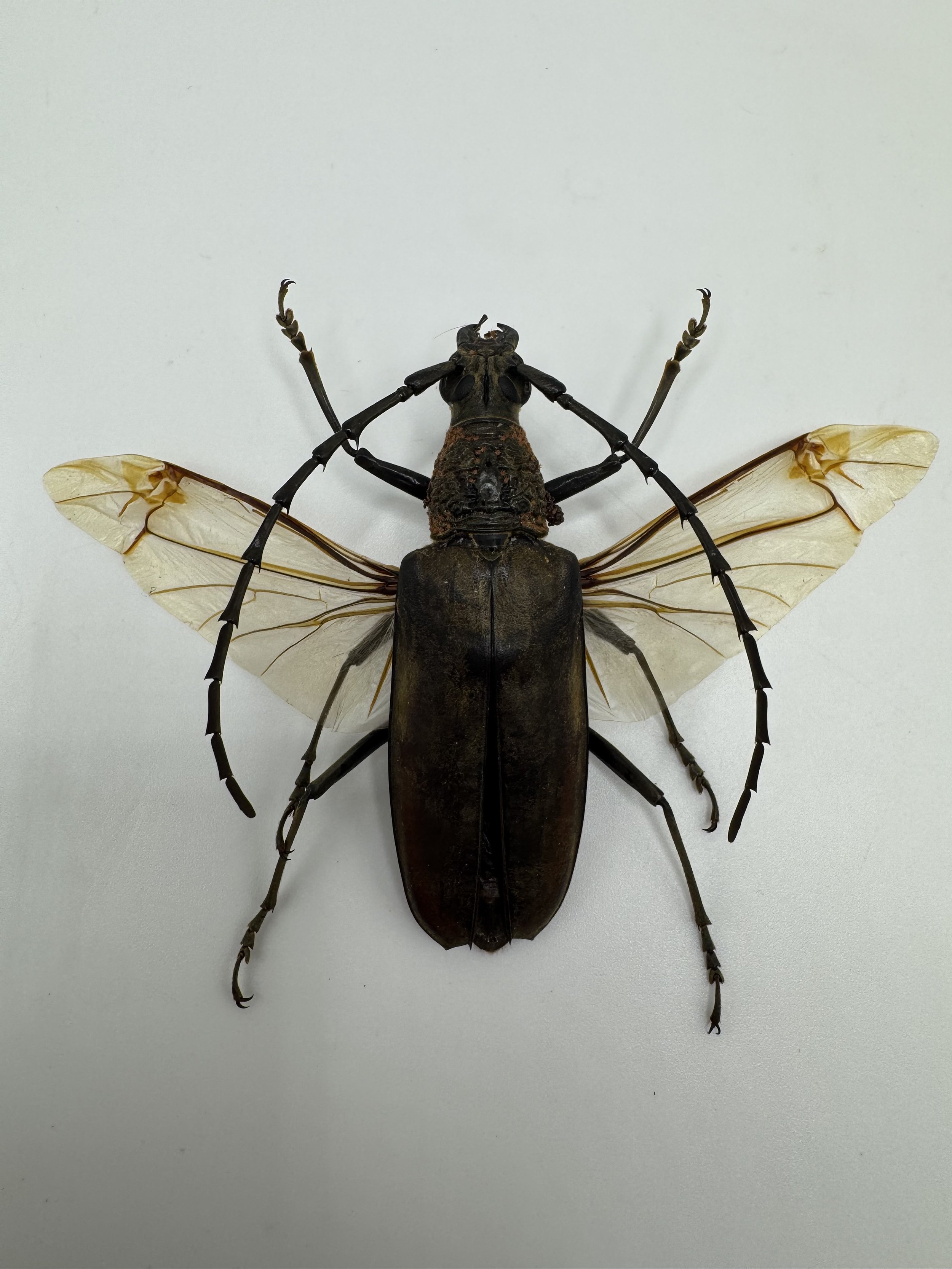
Aegosoma giganteum is an impressive species of longhorn beetle known for its large size, elongated body, and remarkably long antennae. Its pale brown to reddish-brown coloration, prominent mandibles, and distinctly ridged wing covers give it a striking appearance. This species belongs to the family Cerambycidae, commonly known as longhorn beetles.
Native to Southeast Asia, including Indonesia and Malaysia, this species inhabits tropical forest environments. Like other members of the subfamily Prioninae, its larvae develop within woody material, while adults emerge as large, fully winged beetles.
Interesting Fact:
Aegosoma giganteum was first scientifically described in 1884 from a single male specimen collected on the Indonesian island of Sumatra. That original specimen measured approximately 60 millimeters in length. More recently, researchers identified a distinct subspecies from the mountainous forests of Borneo, demonstrating how populations of these impressive beetles can develop different physical characteristics in separate environments.
This specimen is professionally mounted in a clear PE display frame, making it ready for immediate display. Collection data is included.
All specimens are ethically sourced, collected responsibly with a focus on sustainability and minimal impact on wild populations.