
 Image 1 of 1
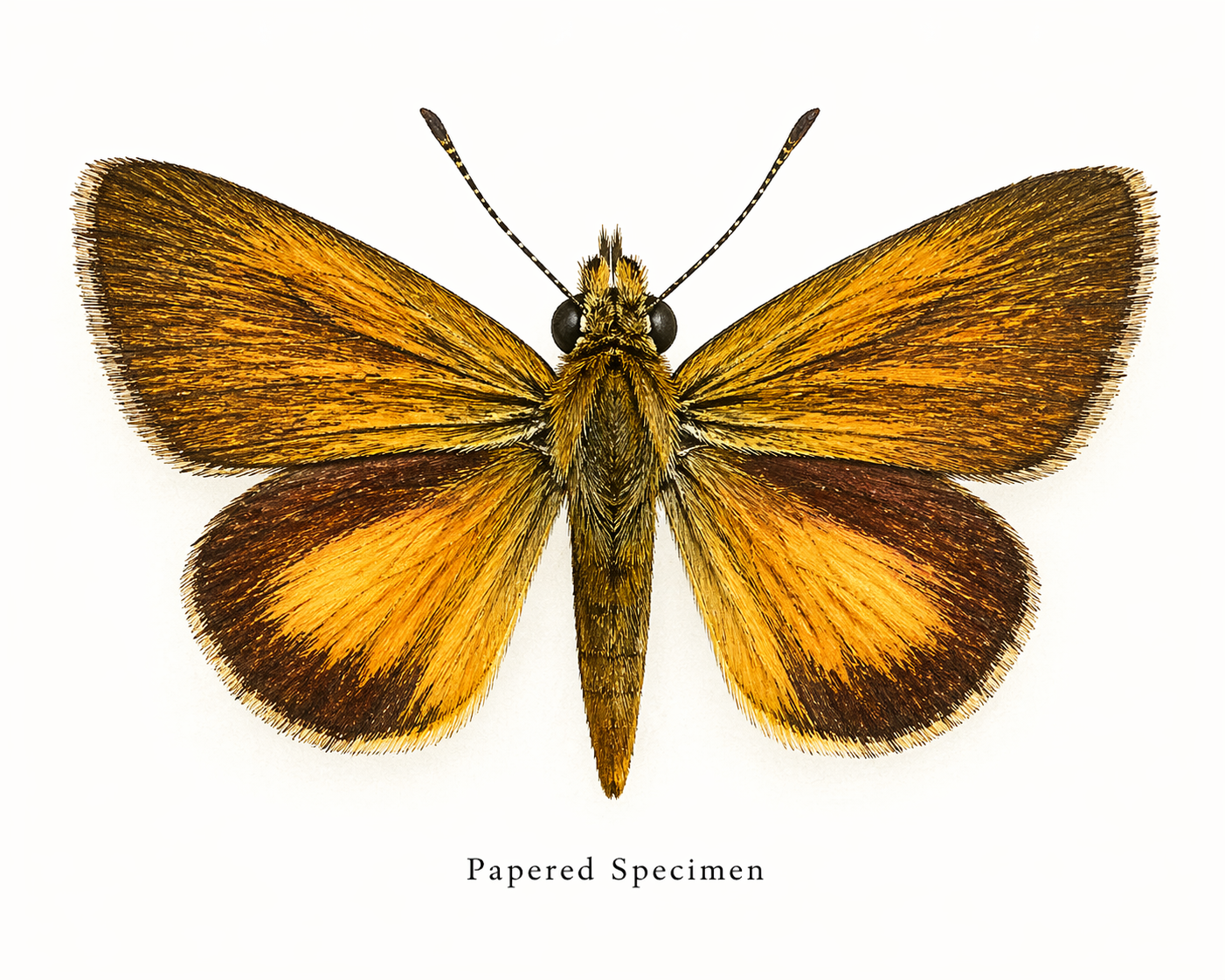
The Least Skipper (Ancyloxypha numitor) is one of the smallest butterflies in North America, recognized by its bright orange coloration with dark brown borders. Unlike many skippers, it has a slower, more fluttering flight close to the ground, giving it a delicate and distinctive presence.
Native to North America, Ancyloxypha numitor is found throughout the eastern and central United States and into southern Canada. It is most often associated with wet habitats such as marshes, grassy ditches, and pond edges where moisture-loving grasses thrive.
Interesting Fact:
This species is closely tied to wetland ecosystems—its caterpillars feed on aquatic and semi-aquatic grasses, making it one of the few butterflies adapted to these environments.
This specimen is preserved and is carefully stored in a protective paper triangle, ensuring it arrives safely and is ready for spreading or long-term collection. Collection data is included.
All specimens are ethically sourced, collected responsibly with a focus on sustainability and minimal impact on wild populations.
Image is a representation drawing and is not scientifically accurate.
The Least Skipper (Ancyloxypha numitor) is one of the smallest butterflies in North America, recognized by its bright orange coloration with dark brown borders. Unlike many skippers, it has a slower, more fluttering flight close to the ground, giving it a delicate and distinctive presence.
Native to North America, Ancyloxypha numitor is found throughout the eastern and central United States and into southern Canada. It is most often associated with wet habitats such as marshes, grassy ditches, and pond edges where moisture-loving grasses thrive.
Interesting Fact:
This species is closely tied to wetland ecosystems—its caterpillars feed on aquatic and semi-aquatic grasses, making it one of the few butterflies adapted to these environments.
This specimen is preserved and is carefully stored in a protective paper triangle, ensuring it arrives safely and is ready for spreading or long-term collection. Collection data is included.
All specimens are ethically sourced, collected responsibly with a focus on sustainability and minimal impact on wild populations.
Image is a representation drawing and is not scientifically accurate.