
 Image 1 of 1
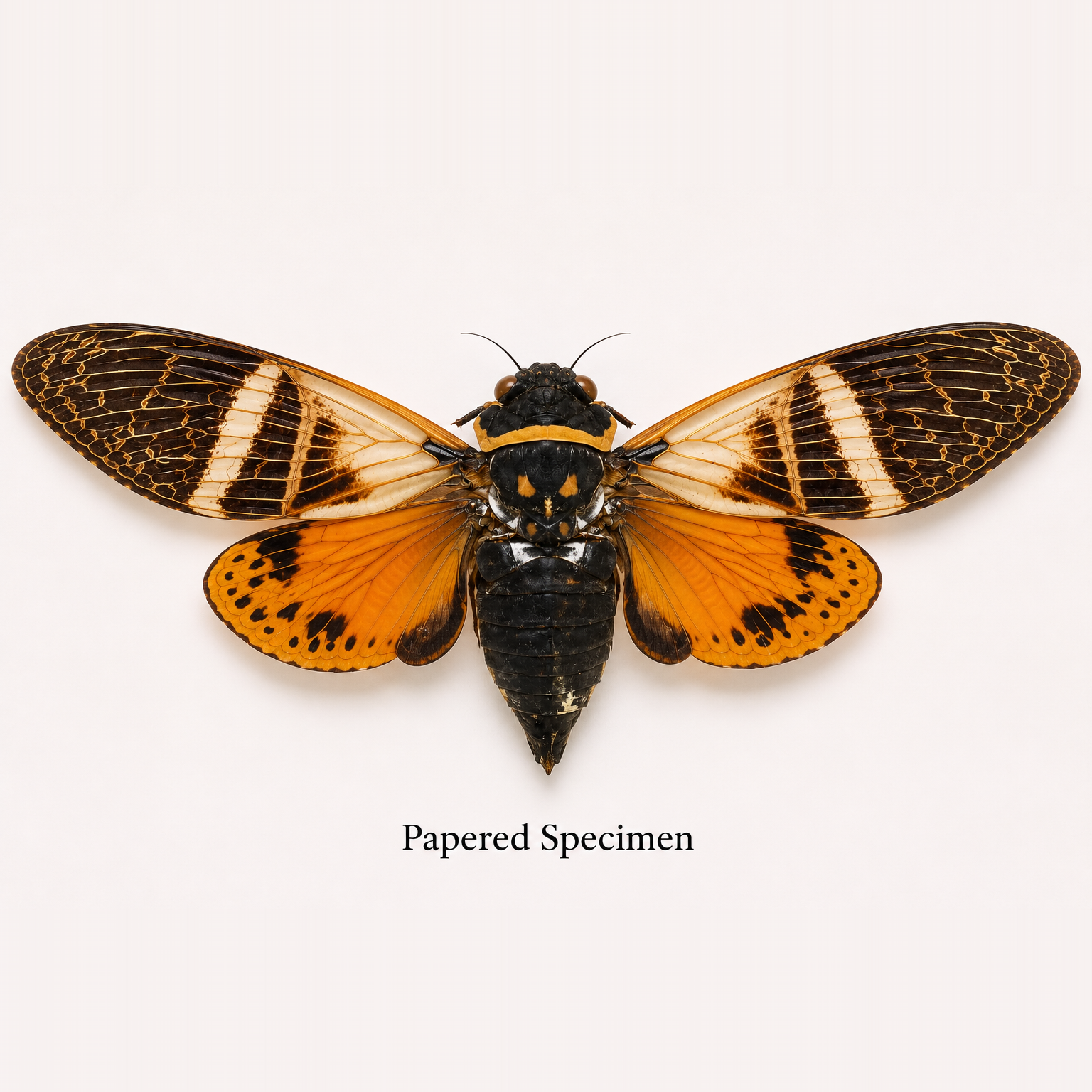
The Halloween Cicada (Angamiana floridula) is a large, striking Asian cicada known for its dramatic black and orange coloration. Its glossy dark body, intricately patterned forewings with pale bands and dark veins, and vibrant orange hindwings marked with black spots make it one of the most visually distinctive cicadas in the world.
Native to Southeast Asia and southern China, this species is found in countries including Vietnam, Laos, and Thailand. It inhabits forested environments where adults feed on plant fluids and developing nymphs live underground, obtaining nourishment from plant roots.
Interesting Fact:
The Halloween Cicada gets its common name from its striking black and orange coloration. In 2024, a scientific study reclassified this species into the genus Proretinata, making Proretinata floridula its currently accepted scientific name. Like other cicadas, males produce their characteristic calls using specialized sound-producing structures called tymbals rather than rubbing their wings together.
This specimen is preserved and is carefully stored in a protective paper triangle, ensuring it arrives safely and is ready for spreading or long-term collection. Collection data is included.
All specimens are ethically sourced, collected responsibly with a focus on sustainability and minimal impact on wild populations.
Image is a representation drawing and is not scientifically accurate.