
 Image 1 of 1
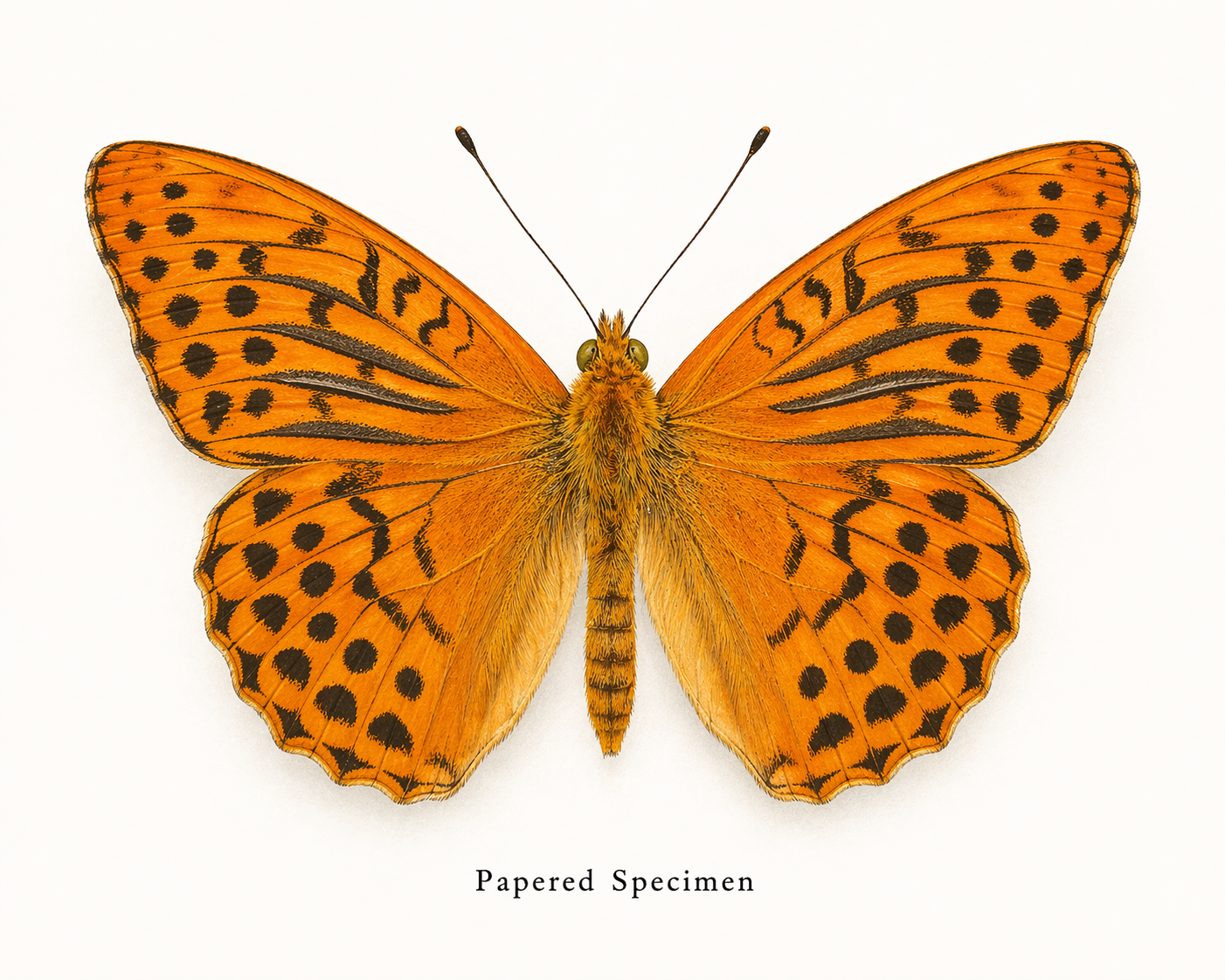
The Silver-washed Fritillary (Argynnis paphia) is a beautiful butterfly with rich orange wings marked by bold black spotting. The underside of the hindwings features distinctive silvery streaks, giving the species its name and adding to its elegant appearance.
Native to Europe and Asia, Argynnis paphia is found across much of Europe and into temperate parts of Asia. It is commonly associated with woodland habitats, forest edges, and clearings where its host plants grow.
Interesting Fact:
The caterpillars of this species feed on violets (Viola spp.), and females lay eggs near host plants, with larvae overwintering before feeding in the spring.
This specimen is preserved and is carefully stored in a protective paper triangle, ensuring it arrives safely and is ready for spreading or long-term collection. Collection data is included.
All specimens are ethically sourced, collected responsibly with a focus on sustainability and minimal impact on wild populations.
Image is a representation drawing and is not scientifically accurate.
The Silver-washed Fritillary (Argynnis paphia) is a beautiful butterfly with rich orange wings marked by bold black spotting. The underside of the hindwings features distinctive silvery streaks, giving the species its name and adding to its elegant appearance.
Native to Europe and Asia, Argynnis paphia is found across much of Europe and into temperate parts of Asia. It is commonly associated with woodland habitats, forest edges, and clearings where its host plants grow.
Interesting Fact:
The caterpillars of this species feed on violets (Viola spp.), and females lay eggs near host plants, with larvae overwintering before feeding in the spring.
This specimen is preserved and is carefully stored in a protective paper triangle, ensuring it arrives safely and is ready for spreading or long-term collection. Collection data is included.
All specimens are ethically sourced, collected responsibly with a focus on sustainability and minimal impact on wild populations.
Image is a representation drawing and is not scientifically accurate.