
 Image 1 of 3
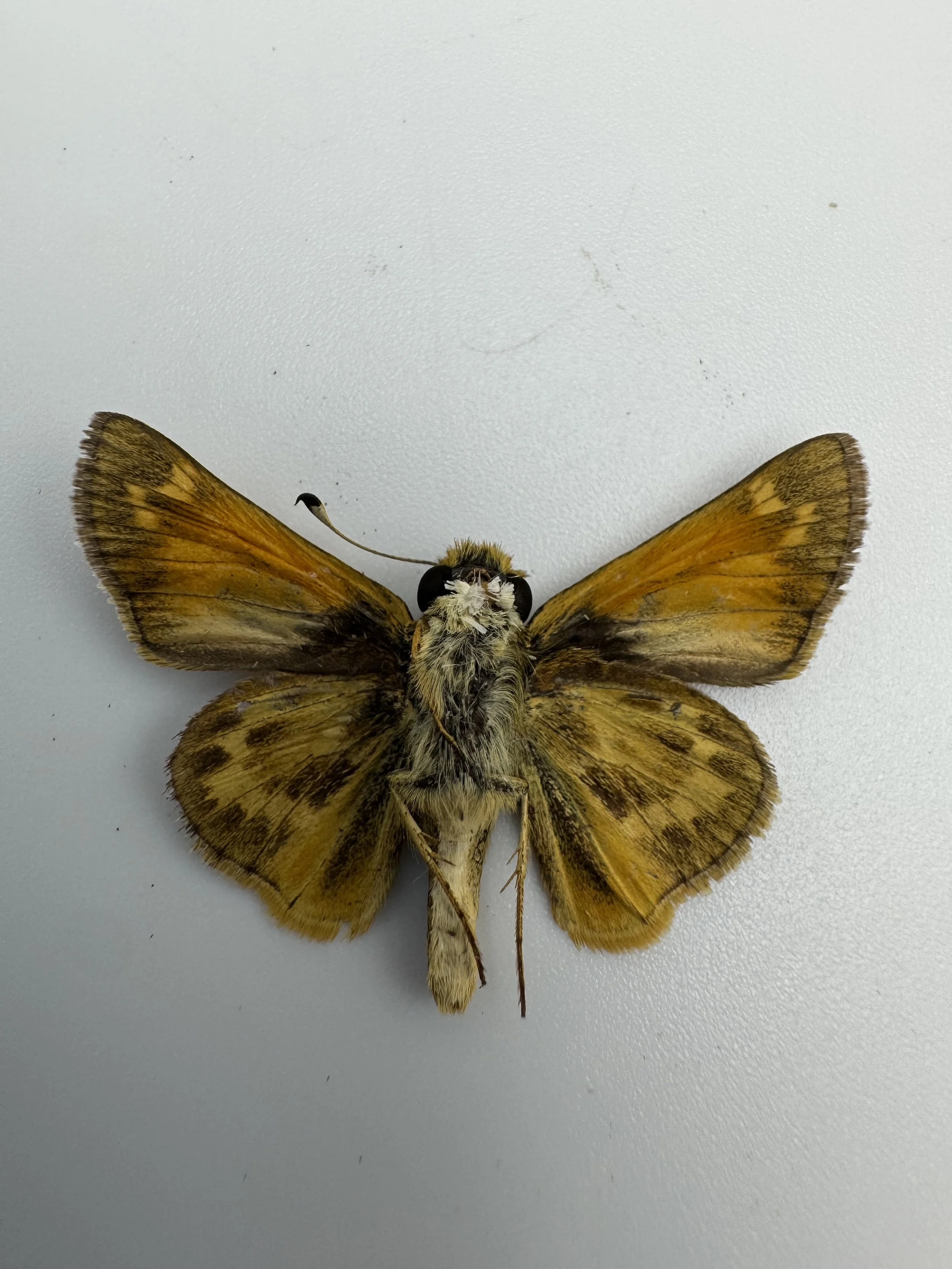 Image 2 of 3
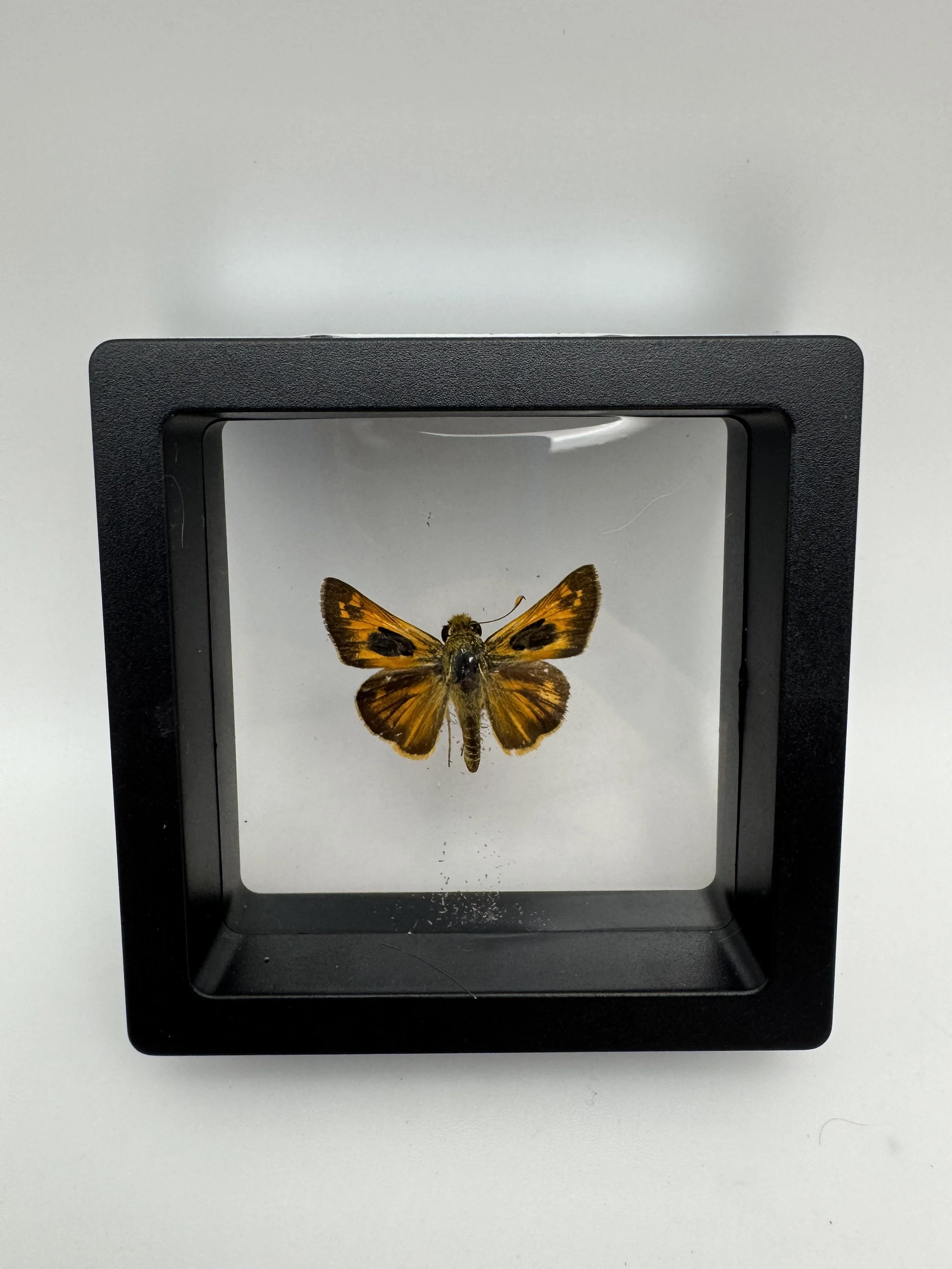 Image 3 of 3
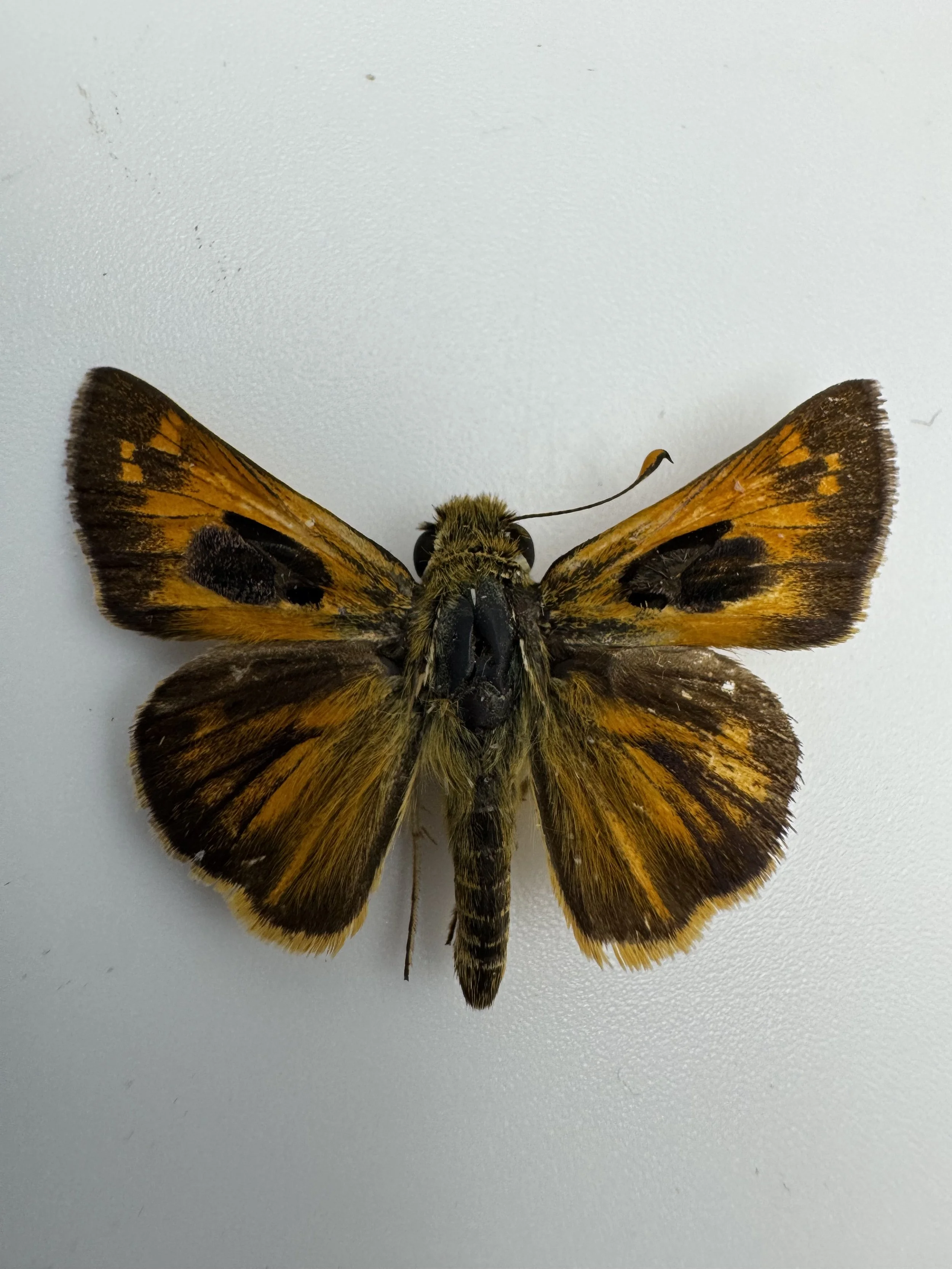
The Sachem (Atalopedes campestris) is a warm orange-brown skipper with a streamlined shape and a distinctive dark patch on the forewing of males. Females are darker with more mottled patterning, giving the species noticeable variation between sexes.
Native to the Americas, Atalopedes campestris is found throughout much of the United States, particularly in warmer regions, and extends into Central and South America. It is commonly seen in open habitats such as lawns, fields, roadsides, and disturbed areas.
Interesting Fact:
This species has expanded its range northward in recent decades, likely due to warming climates and the widespread availability of turf grasses, which serve as host plants for its caterpillars.
This specimen is preserved, fully spread and professionally mounted in a clear PE display frame, making it ready for immediate display. Collection data is included.
All specimens are ethically sourced, collected responsibly with a focus on sustainability and minimal impact on wild populations.
The Sachem (Atalopedes campestris) is a warm orange-brown skipper with a streamlined shape and a distinctive dark patch on the forewing of males. Females are darker with more mottled patterning, giving the species noticeable variation between sexes.
Native to the Americas, Atalopedes campestris is found throughout much of the United States, particularly in warmer regions, and extends into Central and South America. It is commonly seen in open habitats such as lawns, fields, roadsides, and disturbed areas.
Interesting Fact:
This species has expanded its range northward in recent decades, likely due to warming climates and the widespread availability of turf grasses, which serve as host plants for its caterpillars.
This specimen is preserved, fully spread and professionally mounted in a clear PE display frame, making it ready for immediate display. Collection data is included.
All specimens are ethically sourced, collected responsibly with a focus on sustainability and minimal impact on wild populations.