
 Image 1 of 1
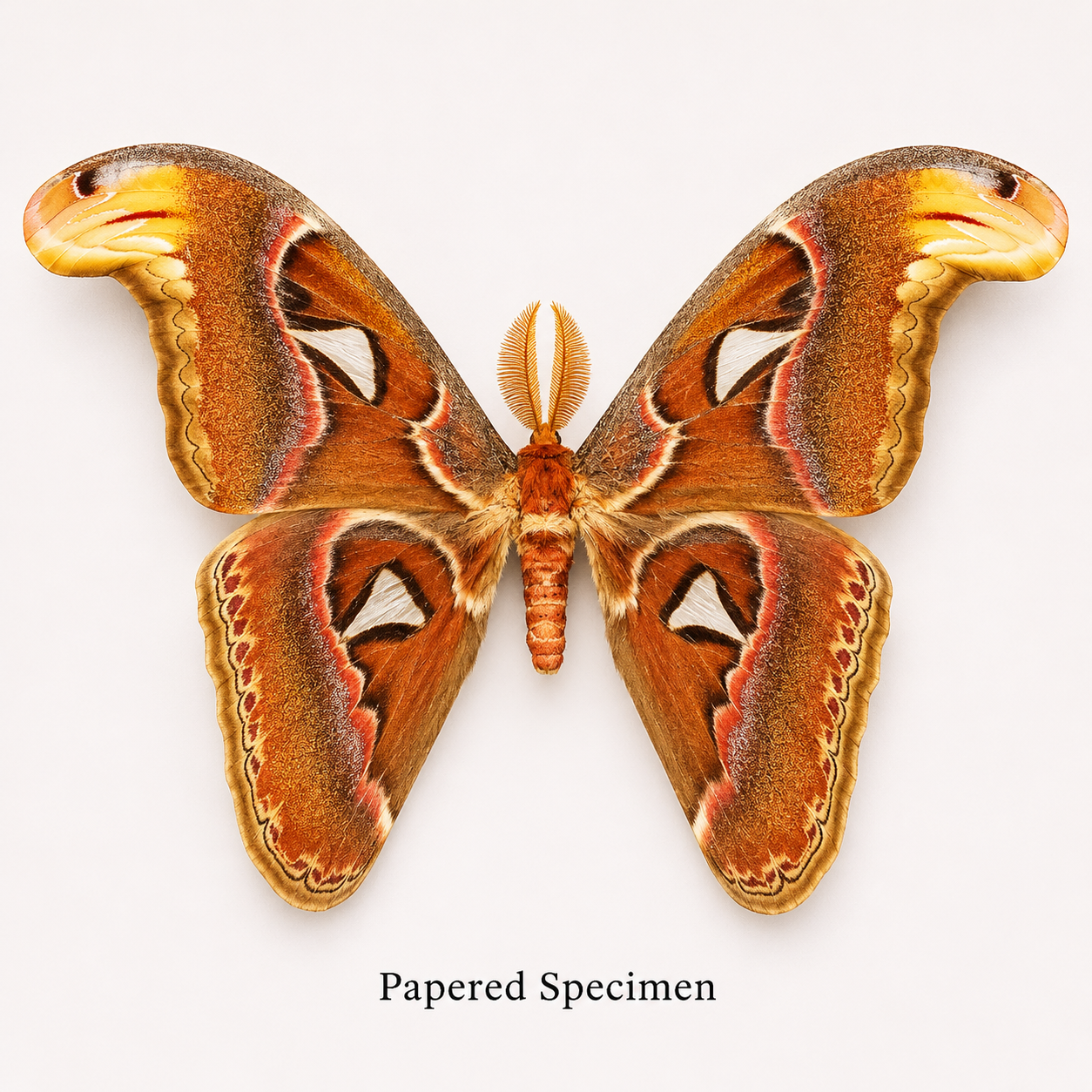
The Atlas Moth (Attacus atlas) is one of the largest moths in the world, with an impressive wingspan that can reach nearly 12 inches. Its enormous reddish-brown wings feature intricate patterns of orange, cream, black, and pink, along with distinctive translucent patches. The elongated, curved tips of its forewings resemble the heads of snakes, making this species one of the most visually remarkable members of the giant silk moth family (Saturniidae).
Native to tropical and subtropical regions of Asia, Attacus atlas is found in countries including India, China, Malaysia, Indonesia, Thailand, and Vietnam. It inhabits forests and other wooded environments where its caterpillars feed on the leaves of various trees and shrubs. The large caterpillars produce strong silk cocoons before transforming into adults.
Interesting Fact:
Adult Atlas Moths have no functioning mouthparts and cannot eat. Instead, they survive entirely on energy reserves accumulated during their caterpillar stage, giving them only a short adult lifespan in which to reproduce. Their distinctive wingtip markings are thought to resemble snake heads, potentially helping deter predators. The Atlas Moth is also famous for having one of the largest total wing surface areas of any living moth.
This specimen is preserved and is carefully stored in a protective paper triangle, ensuring it arrives safely and is ready for spreading or long-term collection. Collection data is included.
All specimens are ethically sourced, collected responsibly with a focus on sustainability and minimal impact on wild populations.
Image is a representation drawing and is not scientifically accurate.