
 Image 1 of 2
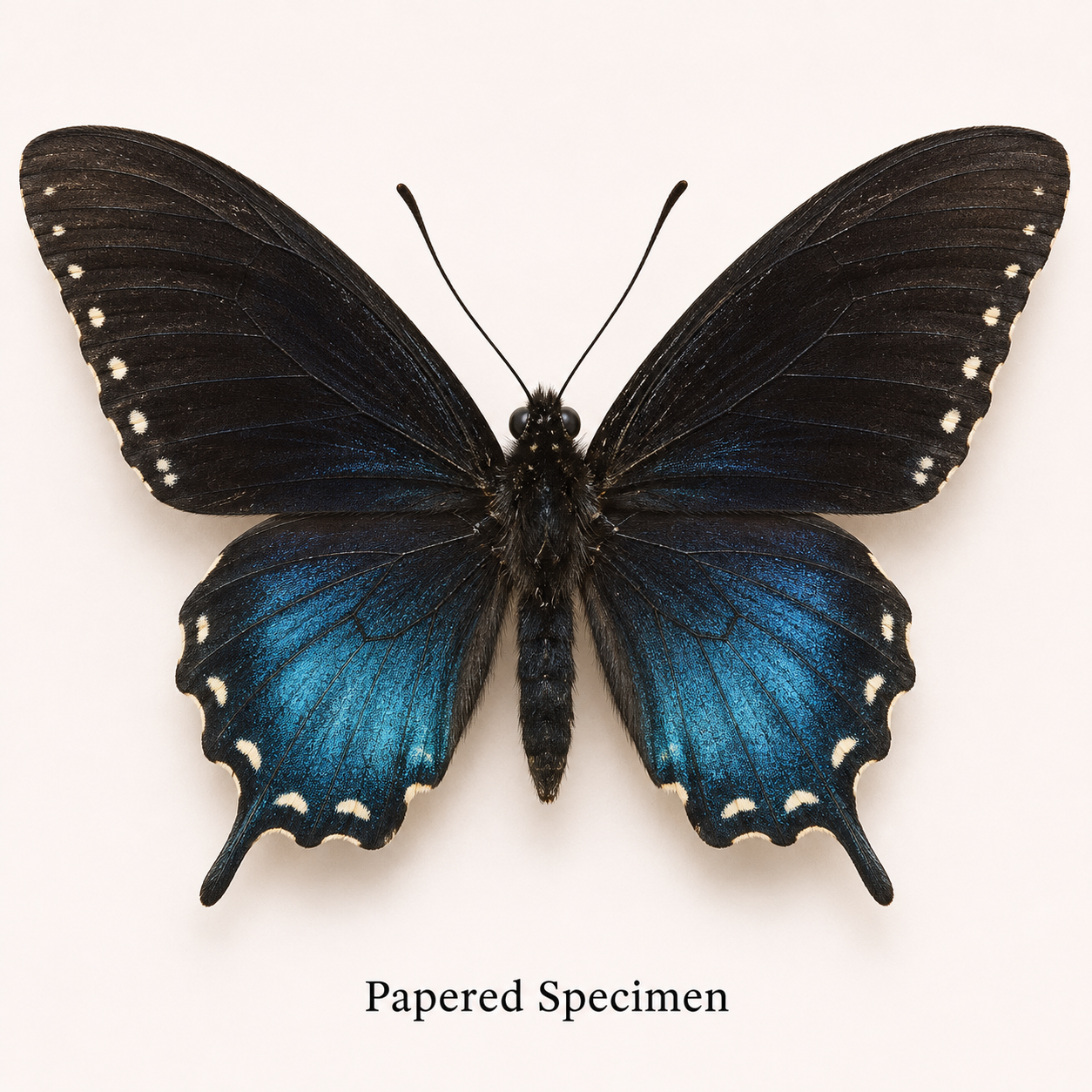 Image 2 of 2
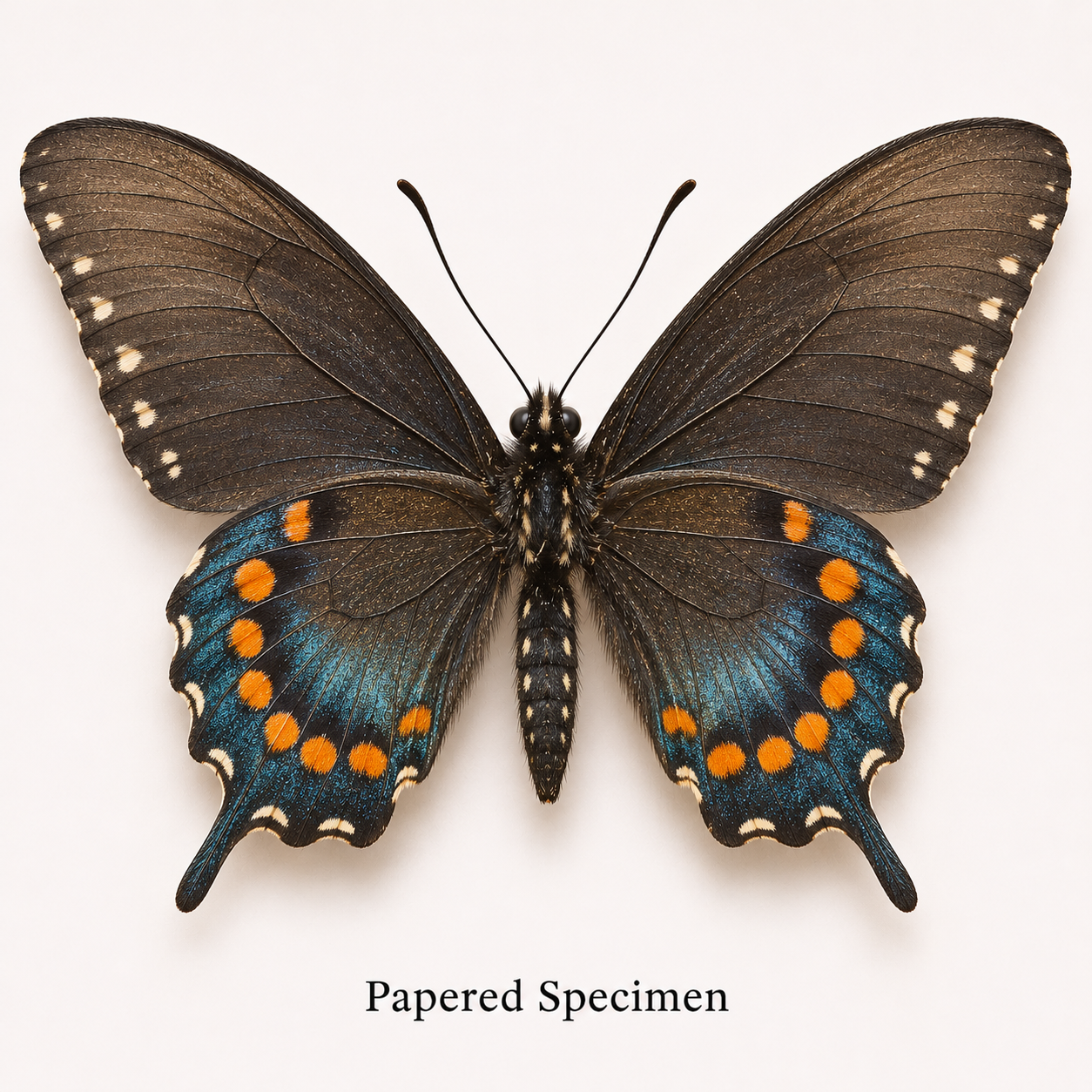
The California Pipevine Swallowtail (Battus philenor hirsuta) is a striking butterfly known for its velvety black wings and brilliant iridescent blue hindwings. The undersides of its hindwings feature a distinctive row of bright orange spots against a shimmering blue background. This subspecies is characterized by its relatively small size and noticeably hairy body, distinguishing it from other populations of the Pipevine Swallowtail.
Native to northern and central California, Battus philenor hirsuta inhabits oak woodlands, riparian corridors, forest edges, and foothill canyons. Its caterpillars feed exclusively on California Pipevine (Aristolochia californica), a native climbing vine commonly found along streams and in shaded woodland habitats. The butterfly’s distribution is closely tied to the presence of this specialized host plant.
Interesting Fact:
California Pipevine Swallowtail caterpillars absorb toxic aristolochic acids from their host plants, making both the caterpillars and adult butterflies unpalatable to many predators. Their striking coloration serves as a warning of this chemical defense. Several other North American butterfly species, including the Red-spotted Purple and female Eastern Tiger Swallowtails, have evolved similar dark coloration to mimic the protected Pipevine Swallowtail and discourage predators.
This specimen is preserved and is carefully stored in a protective paper triangle, ensuring it arrives safely and is ready for spreading or long-term collection. Collection data is included.
All specimens are ethically sourced, collected responsibly with a focus on sustainability and minimal impact on wild populations.
Image is a representation drawing and is not scientifically accurate.