
 Image 1 of 3
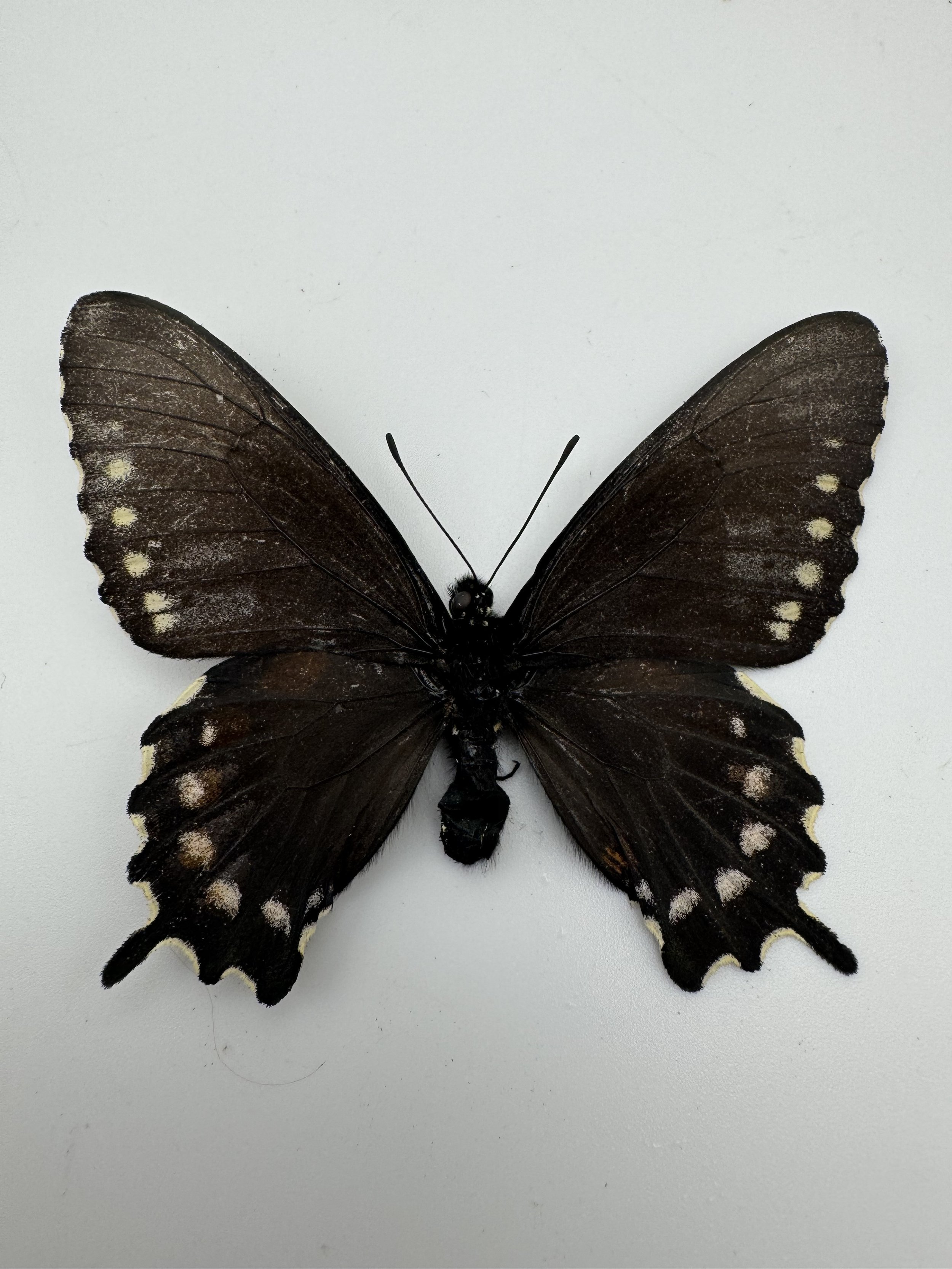 Image 2 of 3
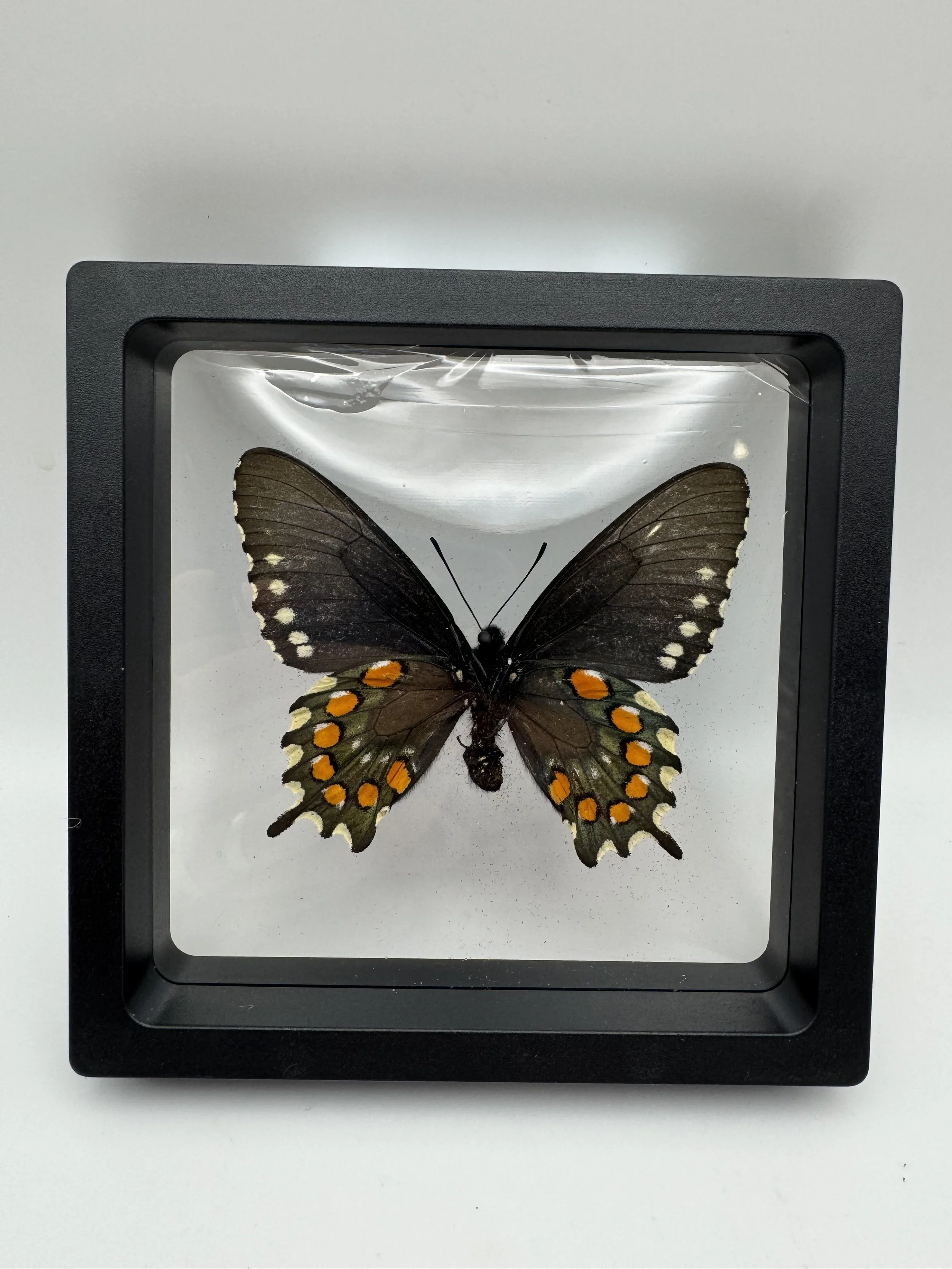 Image 3 of 3
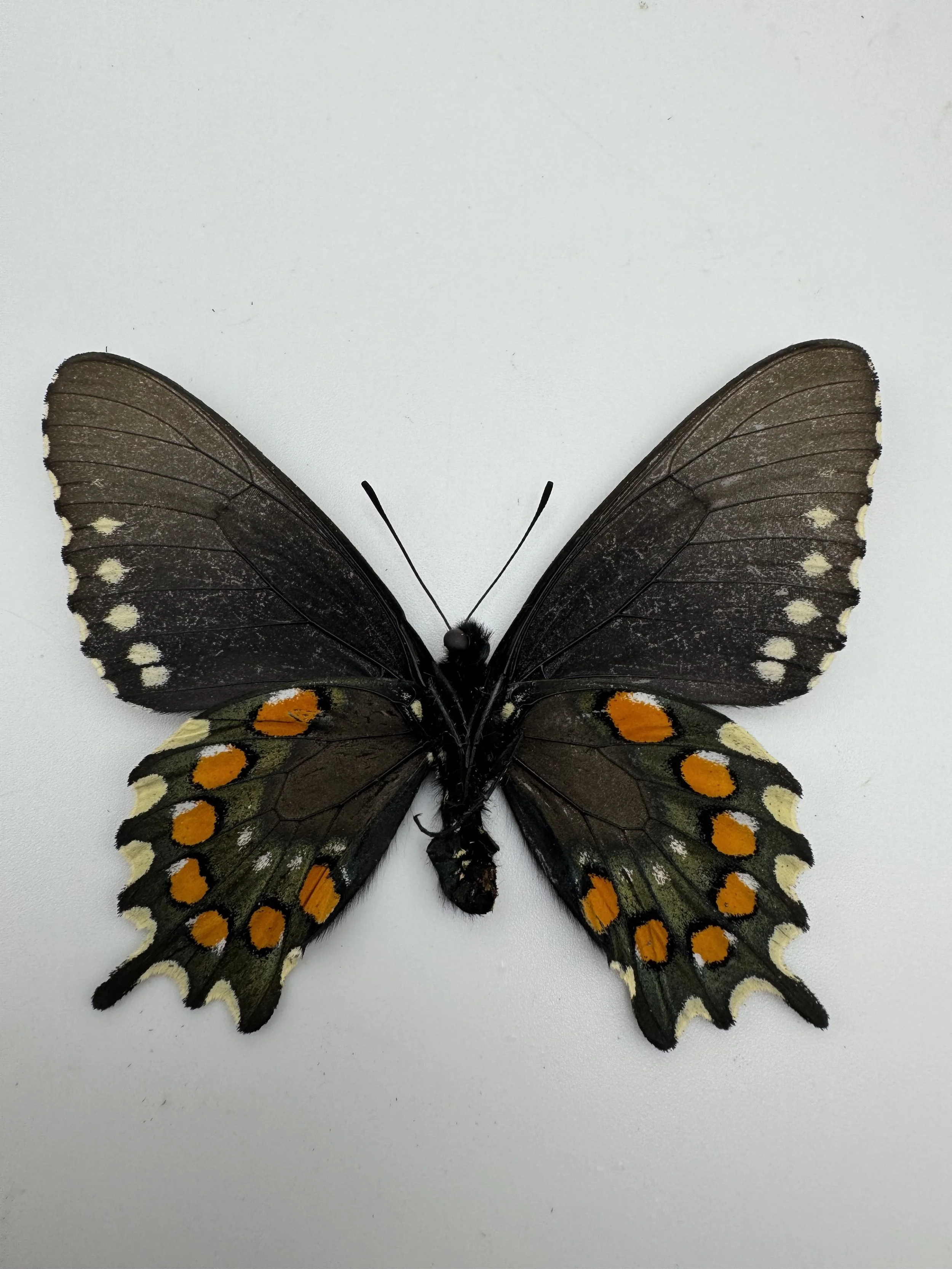
The Pipevine Swallowtail (Battus philenor hirsuta) is a striking butterfly known for its iridescent blue hindwings and velvety black forewings. The underside features a row of bright orange spots, creating a bold contrast and serving as a warning to predators.
This subspecies is endemic to the Sacramento Valley region of California, where it is closely associated with localized populations of its host plant. It is typically found in riparian corridors, foothill woodlands, and areas where native pipevine grows.
Interesting Fact:
The caterpillars feed exclusively on pipevine (Aristolochia spp.), which contains toxic compounds. These toxins are retained into adulthood, making the butterfly unpalatable to predators and a model species for mimicry.
This specimen is preserved, fully spread and professionally mounted in a clear PE display frame, making it ready for immediate display. Collection data is included.
All specimens are ethically sourced, collected responsibly with a focus on sustainability and minimal impact on wildlife populations.
The Pipevine Swallowtail (Battus philenor hirsuta) is a striking butterfly known for its iridescent blue hindwings and velvety black forewings. The underside features a row of bright orange spots, creating a bold contrast and serving as a warning to predators.
This subspecies is endemic to the Sacramento Valley region of California, where it is closely associated with localized populations of its host plant. It is typically found in riparian corridors, foothill woodlands, and areas where native pipevine grows.
Interesting Fact:
The caterpillars feed exclusively on pipevine (Aristolochia spp.), which contains toxic compounds. These toxins are retained into adulthood, making the butterfly unpalatable to predators and a model species for mimicry.
This specimen is preserved, fully spread and professionally mounted in a clear PE display frame, making it ready for immediate display. Collection data is included.
All specimens are ethically sourced, collected responsibly with a focus on sustainability and minimal impact on wildlife populations.