
 Image 1 of 3
 Image 2 of 3
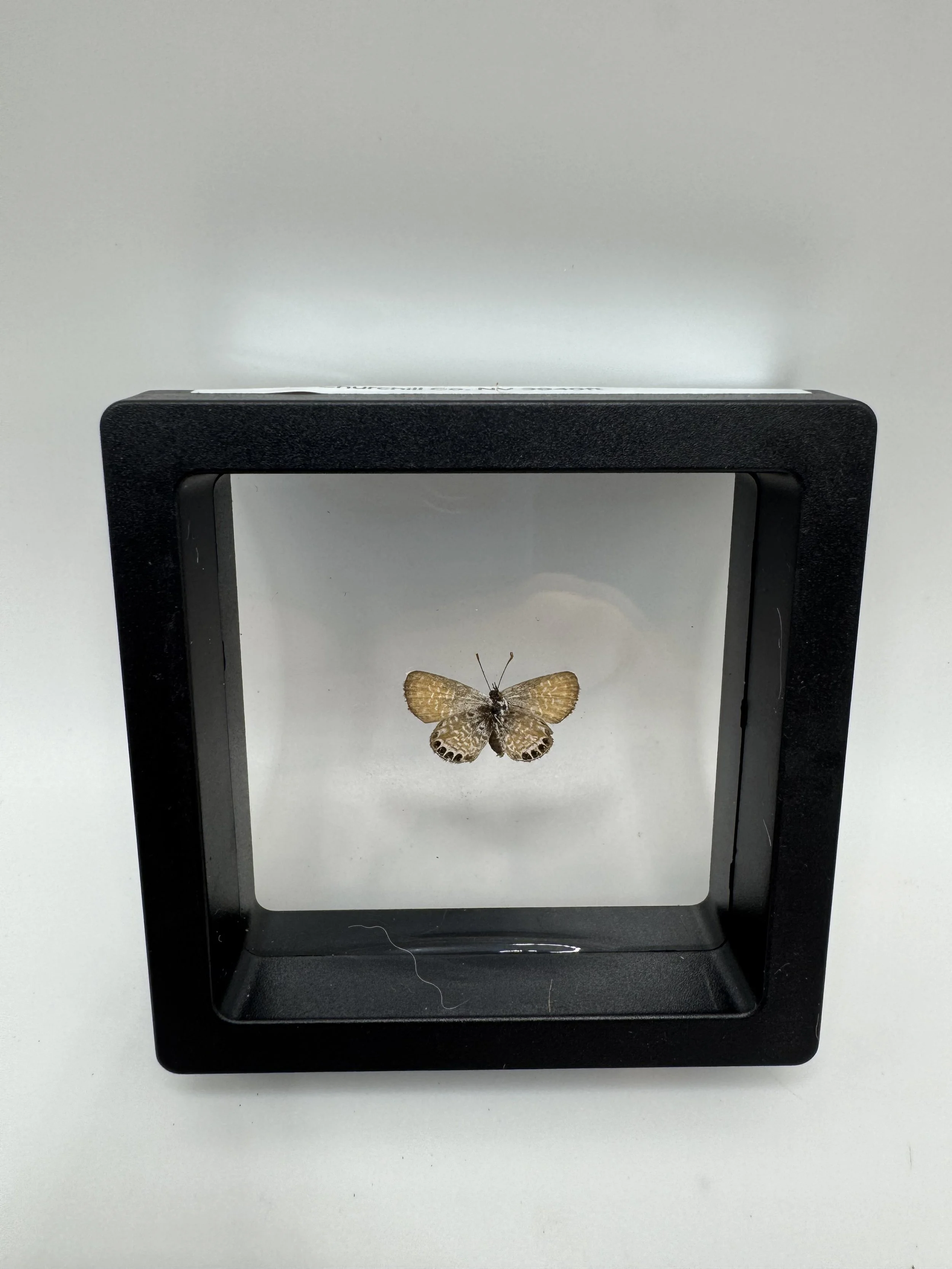 Image 3 of 3
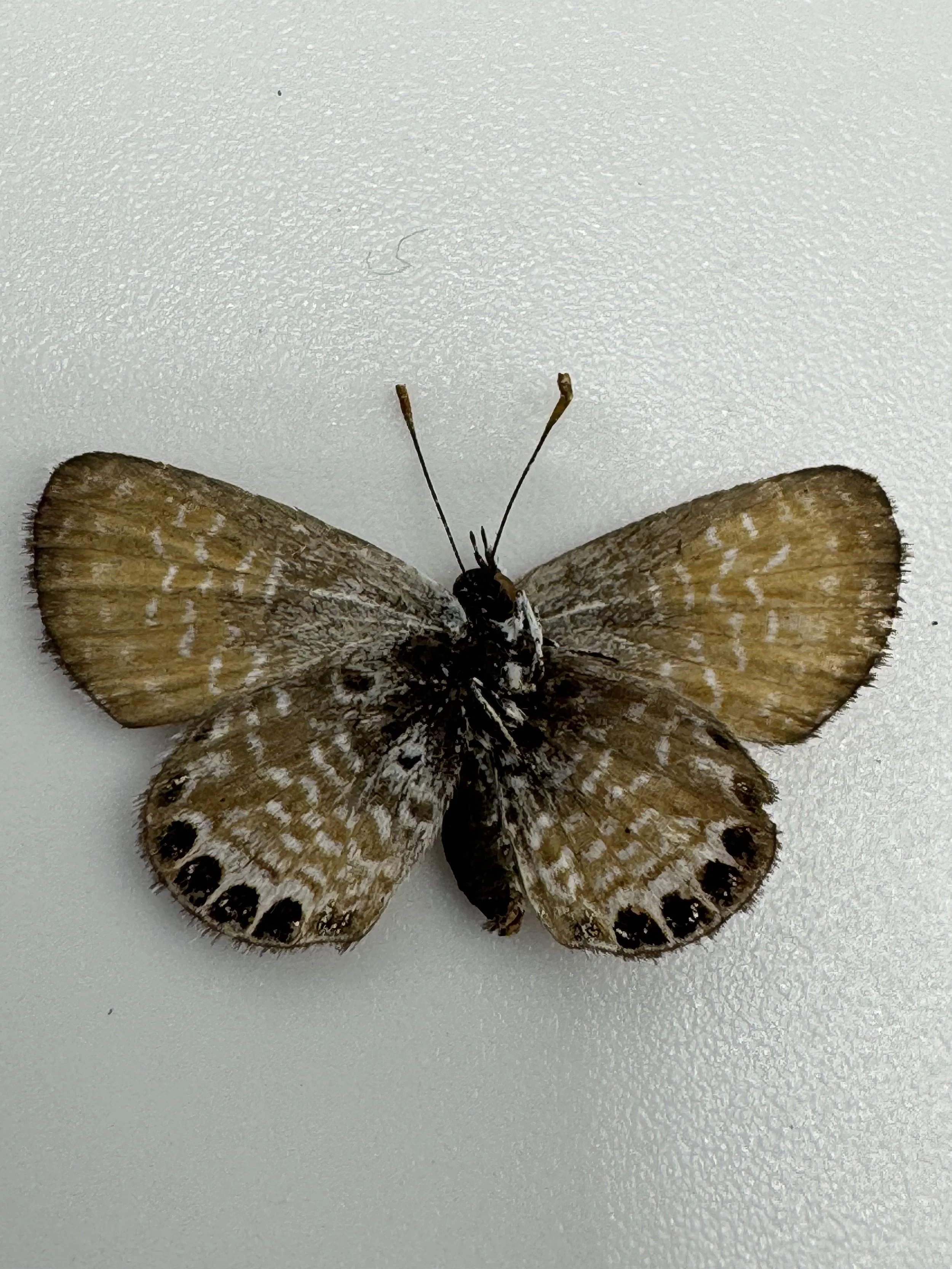
The Western Pygmy Blue (Brephidium exilis) is the smallest butterfly in North America, with a wingspan often less than 1.5 cm. It has a soft gray-brown coloration with subtle blue scaling near the base of the wings and delicate patterning on the underside.
Native to the Americas, Brephidium exilis is found throughout the southwestern United States, California, and into Mexico and South America. It thrives in open, often arid habitats such as deserts, coastal areas, and disturbed sites where its host plants grow.
Interesting Fact:
Despite its tiny size, this species can be abundant in the right conditions, and its caterpillars feed on salt-tolerant plants like saltbush (Atriplex), allowing it to occupy habitats that many butterflies cannot.
This specimen is preserved, fully spread and professionally mounted in a clear PE display frame, making it ready for immediate display. Collection data is included.
All specimens are ethically sourced, collected responsibly with a focus on sustainability and minimal impact on wild populations.
The Western Pygmy Blue (Brephidium exilis) is the smallest butterfly in North America, with a wingspan often less than 1.5 cm. It has a soft gray-brown coloration with subtle blue scaling near the base of the wings and delicate patterning on the underside.
Native to the Americas, Brephidium exilis is found throughout the southwestern United States, California, and into Mexico and South America. It thrives in open, often arid habitats such as deserts, coastal areas, and disturbed sites where its host plants grow.
Interesting Fact:
Despite its tiny size, this species can be abundant in the right conditions, and its caterpillars feed on salt-tolerant plants like saltbush (Atriplex), allowing it to occupy habitats that many butterflies cannot.
This specimen is preserved, fully spread and professionally mounted in a clear PE display frame, making it ready for immediate display. Collection data is included.
All specimens are ethically sourced, collected responsibly with a focus on sustainability and minimal impact on wild populations.