
 Image 1 of 1
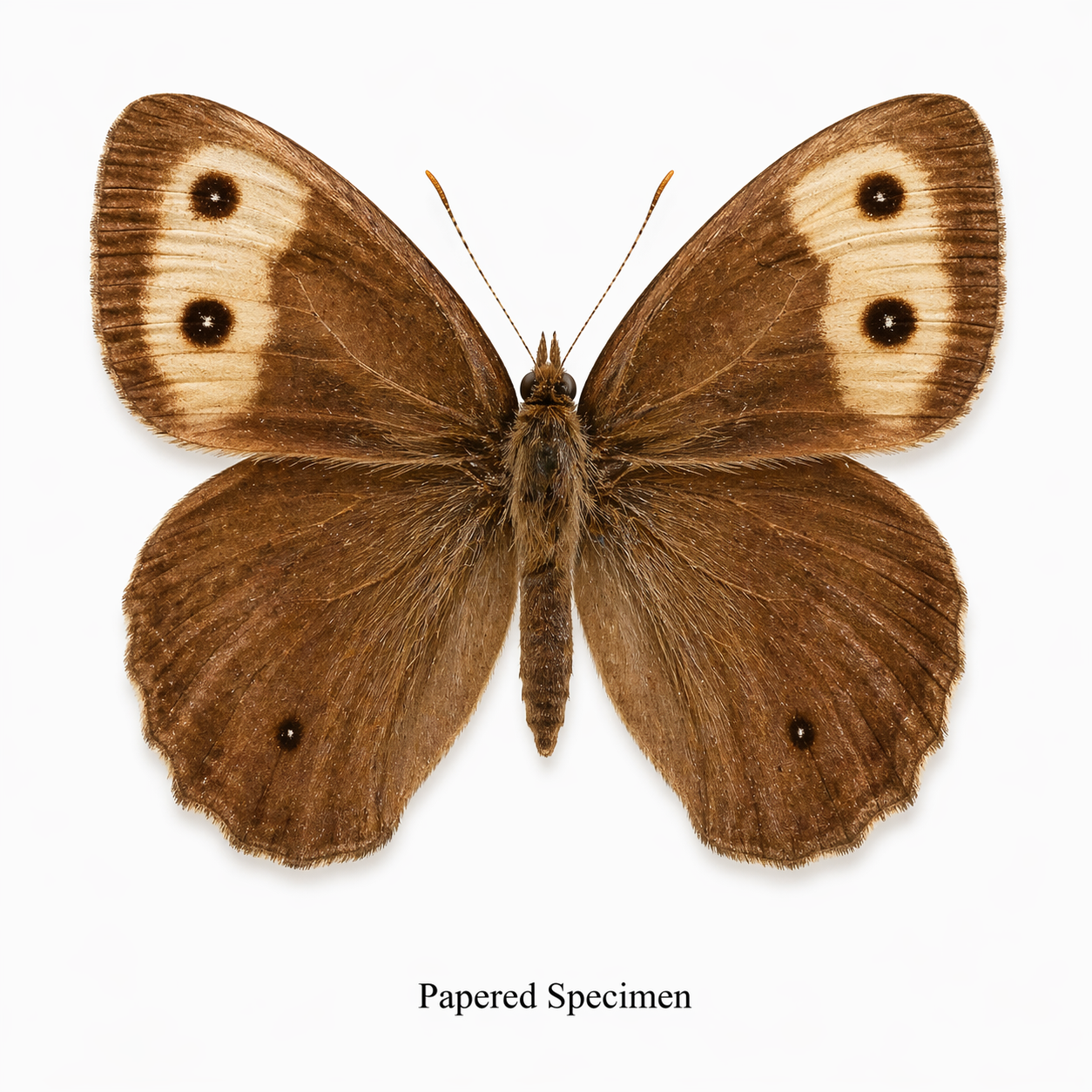
The Common Wood-Nymph (Cercyonis pegala) is a soft brown butterfly known for its subtle beauty and distinctive eye spots on the wings. These eyespots, often ringed with lighter coloration, help deter predators by mimicking the appearance of larger animals.
Native to North America, Cercyonis pegala is widespread across much of the United States and southern Canada. It is commonly found in grassy habitats such as prairies, open woodlands, and field edges where grasses grow abundantly.
Interesting Fact:
Unlike many butterflies that rely on nectar, adult Common Wood-Nymphs often feed on sap, rotting fruit, and other organic materials, making them less frequently seen on flowers.
This specimen is preserved and is carefully stored in a protective paper triangle, ensuring it arrives safely and is ready for spreading or long-term collection. Collection data is included.
All specimens are ethically sourced, collected responsibly with a focus on sustainability and minimal impact on wild populations.
Image is a representation drawing and is not scientifically accurate.
The Common Wood-Nymph (Cercyonis pegala) is a soft brown butterfly known for its subtle beauty and distinctive eye spots on the wings. These eyespots, often ringed with lighter coloration, help deter predators by mimicking the appearance of larger animals.
Native to North America, Cercyonis pegala is widespread across much of the United States and southern Canada. It is commonly found in grassy habitats such as prairies, open woodlands, and field edges where grasses grow abundantly.
Interesting Fact:
Unlike many butterflies that rely on nectar, adult Common Wood-Nymphs often feed on sap, rotting fruit, and other organic materials, making them less frequently seen on flowers.
This specimen is preserved and is carefully stored in a protective paper triangle, ensuring it arrives safely and is ready for spreading or long-term collection. Collection data is included.
All specimens are ethically sourced, collected responsibly with a focus on sustainability and minimal impact on wild populations.
Image is a representation drawing and is not scientifically accurate.