
 Image 1 of 1
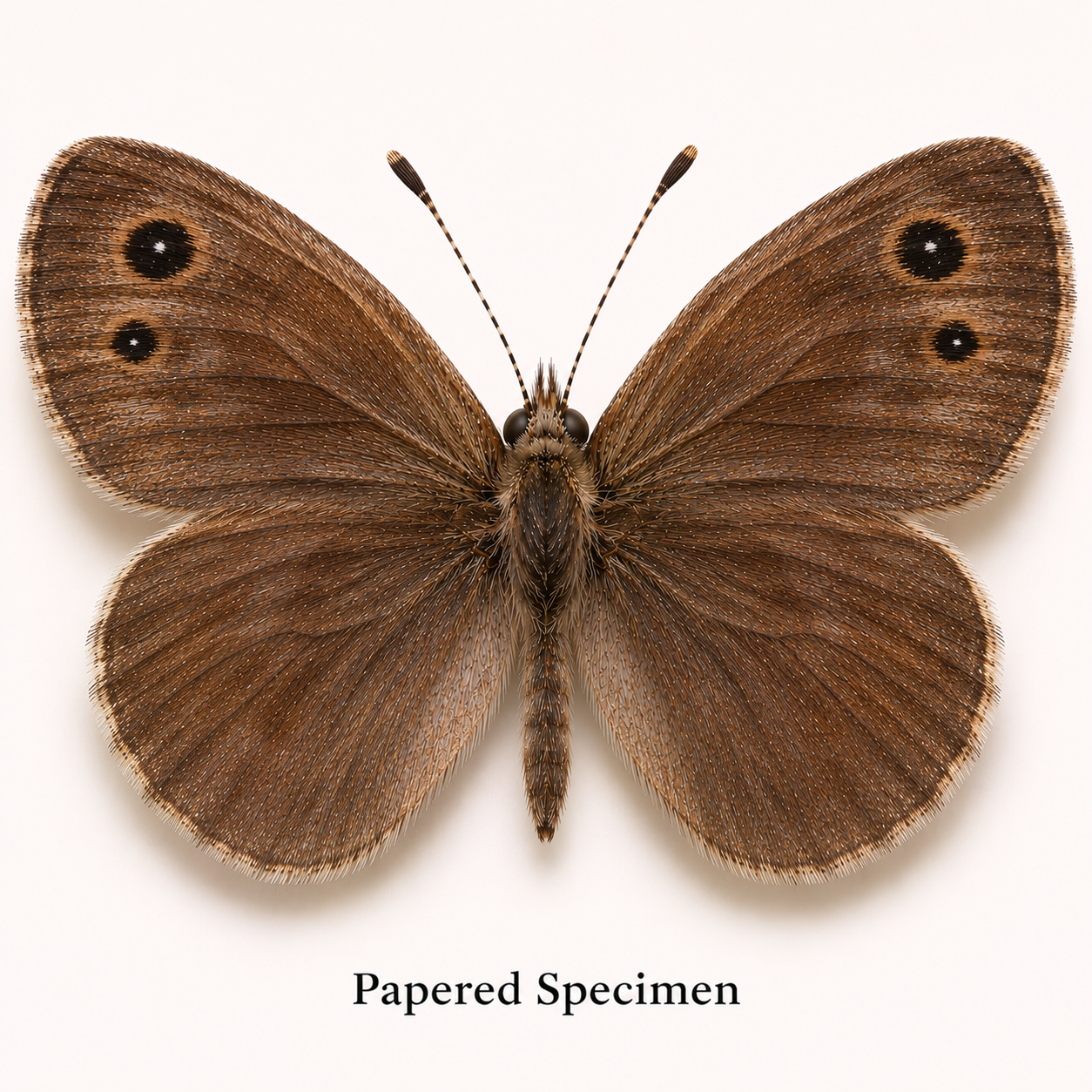
The Great Basin Wood-Nymph (Cercyonis sthenele) is a medium-sized North American butterfly recognized for its subtle brown coloration and distinctive eyespots. Its wings range from light to dark brown, with two prominent dark eyespots on the forewings that may be surrounded by yellowish rings. The undersides of the hindwings display a characteristic two-toned pattern, with a darker inner portion separated from a lighter outer region by an irregular dark line. With a wingspan of approximately 1⅜ to 1¾ inches, this member of the Nymphalidae family is well camouflaged among the grasses and vegetation of its natural habitat.
Native to western North America, Cercyonis sthenele ranges from southern British Columbia through California and northern Baja California, extending east into Wyoming, Colorado, and Arizona. It inhabits chaparral, oak woodlands, sagebrush, open pine forests, and pinyon-juniper woodlands. Its caterpillars feed on grasses, while adults occasionally visit wildflowers for nectar. Despite its common name, this species is also widespread in California west of the Great Basin.
Interesting Fact:
Great Basin Wood-Nymph caterpillars hatch from their eggs but enter winter dormancy without feeding, remaining inactive until the following spring. This adaptation allows them to begin feeding when grasses resume growth. Unlike butterflies that produce several generations annually, this species has only one generation per year, with adults typically flying during the summer months. Males spend much of the day patrolling through vegetation in search of females, often flying low to the ground with an irregular, bouncing motion.
This specimen is preserved and is carefully stored in a protective paper triangle, ensuring it arrives safely and is ready for spreading or long-term collection. Collection data is included.
All specimens are ethically sourced, collected responsibly with a focus on sustainability and minimal impact on wild populations.
Image is a representation drawing and is not scientifically accurate.