
 Image 1 of 1
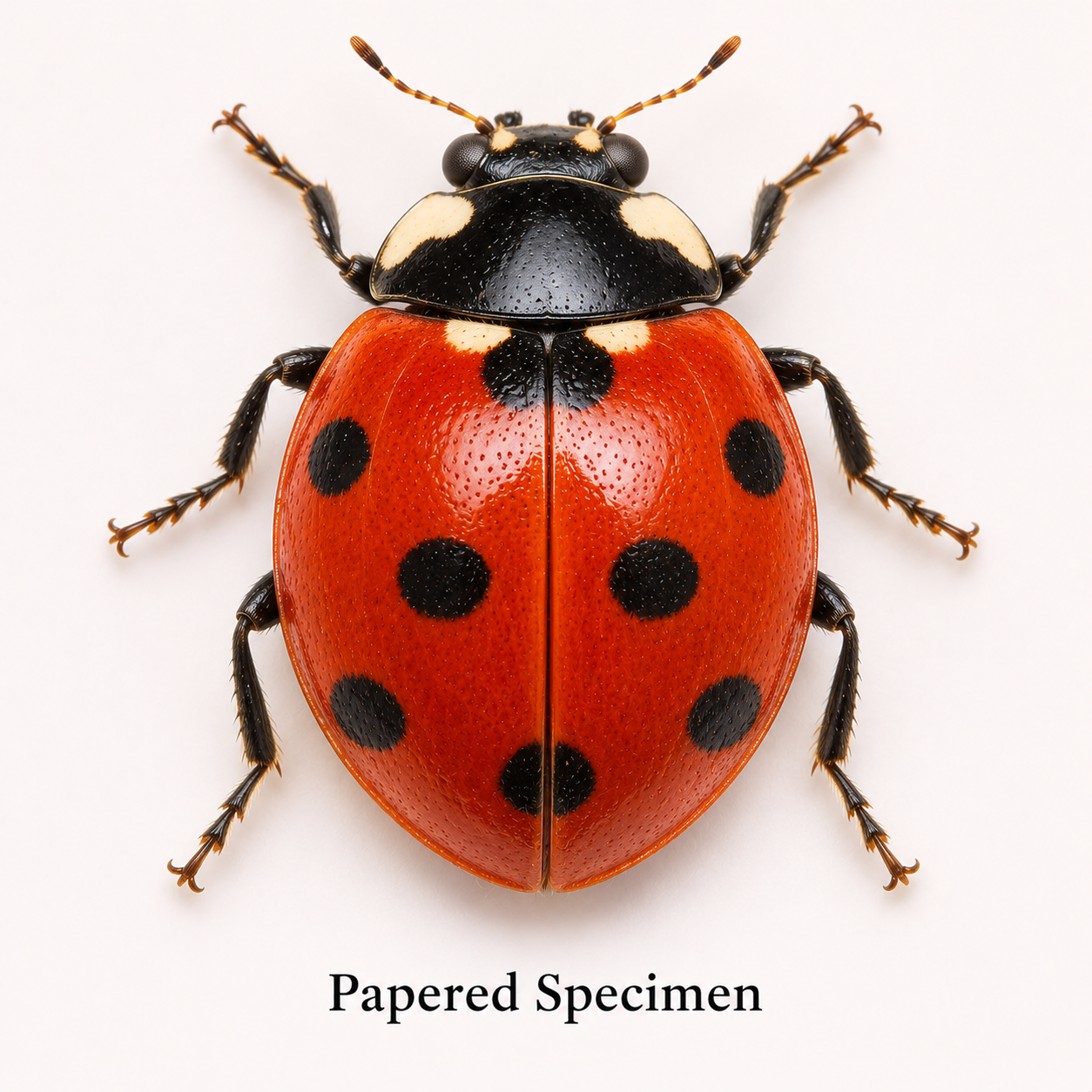
The Seven-Spotted Lady Beetle (Coccinella septempunctata) is a colorful and recognizable beetle known for its brilliant red to orange wing covers adorned with seven distinctive black spots. Its rounded, dome-shaped body features a glossy appearance, a black head with white markings, and short antennae. Measuring approximately ¼ to ⅜ inch in length, this member of the Coccinellidae family is one of the most familiar and recognizable lady beetles in the world.
Native to Europe and Asia, Coccinella septempunctata is now widely established throughout North America following introductions for agricultural pest control. It inhabits grasslands, meadows, gardens, agricultural fields, forest edges, and other areas with abundant vegetation. Both adults and larvae are voracious predators of aphids and other small, soft-bodied insects, making them important natural enemies of many agricultural pests.
Interesting Fact:
The Seven-Spotted Lady Beetle gets its name from the seven black spots on its wing covers, with three spots on each side and one shared spot near the center. This species was repeatedly introduced into North America during the twentieth century to help control agricultural aphids. Although effective at consuming large numbers of plant pests, its establishment has also raised ecological concerns because it can compete with and potentially displace native lady beetle species. When threatened, these beetles can release a yellowish, foul-tasting defensive fluid from their leg joints, a behavior known as reflex bleeding.
This specimen is preserved and is carefully stored in a protective paper triangle, ensuring it arrives safely and is ready for spreading or long-term collection. Collection data is included.
All specimens are ethically sourced, collected responsibly with a focus on sustainability and minimal impact on wild populations.
Image is a representation drawing and is not scientifically accurate.