
 Image 1 of 1
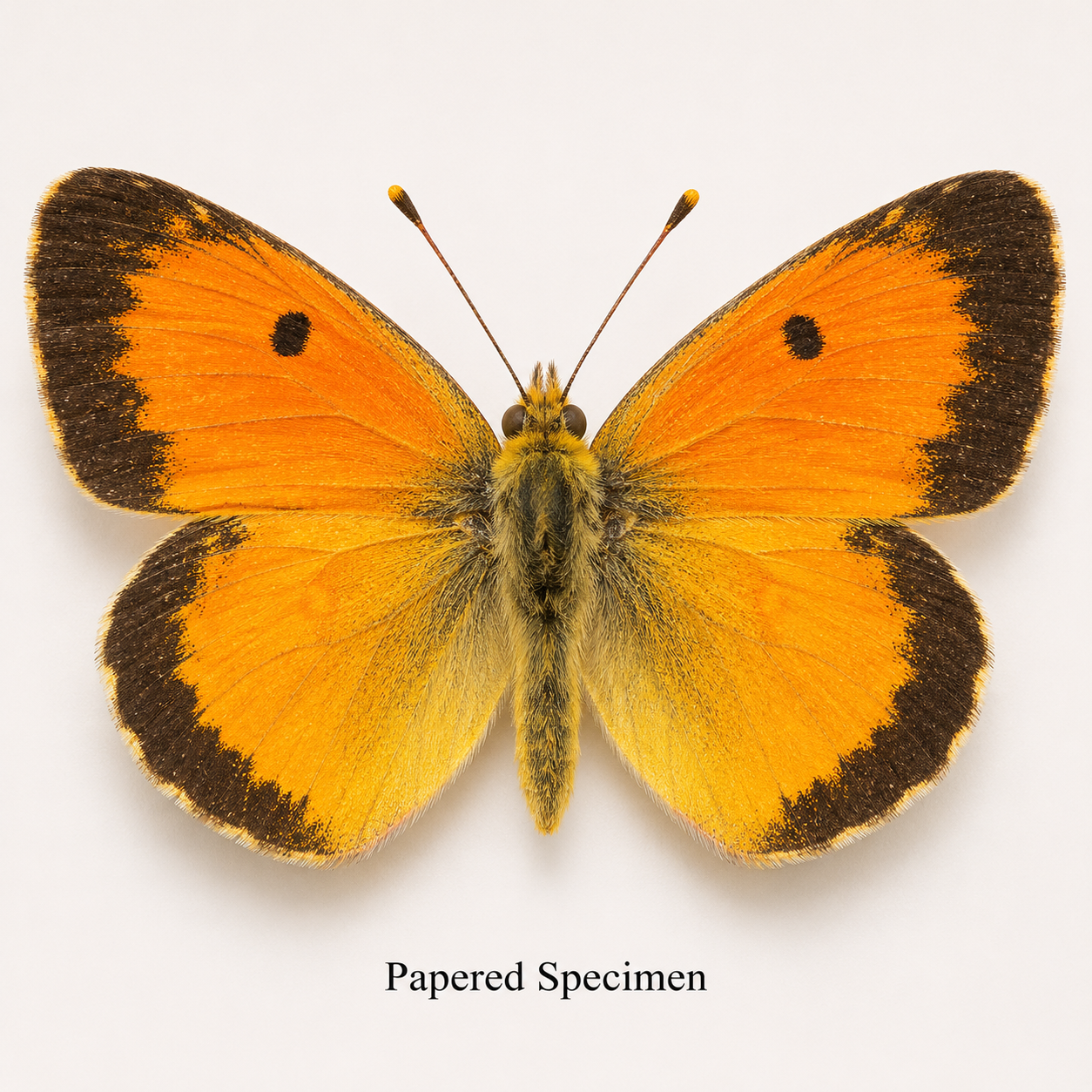
The Orange Sulphur (Colias eurytheme), also known as the Alfalfa Butterfly, is a colorful North American butterfly recognized for its brilliant orange-yellow wings bordered with contrasting black markings. Males typically display vibrant orange upper wings with broad black borders, while females may be orange-yellow, pale yellow, or creamy white, with lighter spots interrupting their dark wing borders. The undersides feature a distinctive silvery spot surrounded by dark rings. With a wingspan of approximately 1⅜ to 2¾ inches, this member of the Pieridae family is one of the most widespread sulphur butterflies in North America.
Native to North America, Colias eurytheme ranges from southern Canada through most of the United States and into central Mexico. It inhabits open grasslands, agricultural fields, meadows, roadsides, and other sunny environments. Its caterpillars feed on plants in the legume family (Fabaceae), particularly alfalfa (Medicago sativa), clovers (Trifolium spp.), and sweet clovers (Melilotus spp.). Adults visit a wide variety of wildflowers for nectar, including asters, goldenrods, and milkweeds.
Interesting Fact:
The Orange Sulphur is sometimes called the Alfalfa Butterfly because its caterpillars frequently feed on cultivated alfalfa, occasionally becoming agricultural pests when populations are especially abundant. This species is also known for its remarkable variation in wing coloration, with some females displaying nearly white wings instead of the typical orange-yellow appearance. Orange Sulphurs can naturally hybridize with the closely related Clouded Sulphur (Colias philodice), producing individuals with intermediate characteristics that can make identification challenging. In warmer regions, multiple generations may occur throughout the year.
This specimen is preserved and is carefully stored in a protective paper triangle, ensuring it arrives safely and is ready for spreading or long-term collection. Collection data is included.
All specimens are ethically sourced, collected responsibly with a focus on sustainability and minimal impact on wild populations.
Image is a representation drawing and is not scientifically accurate.