
 Image 1 of 3
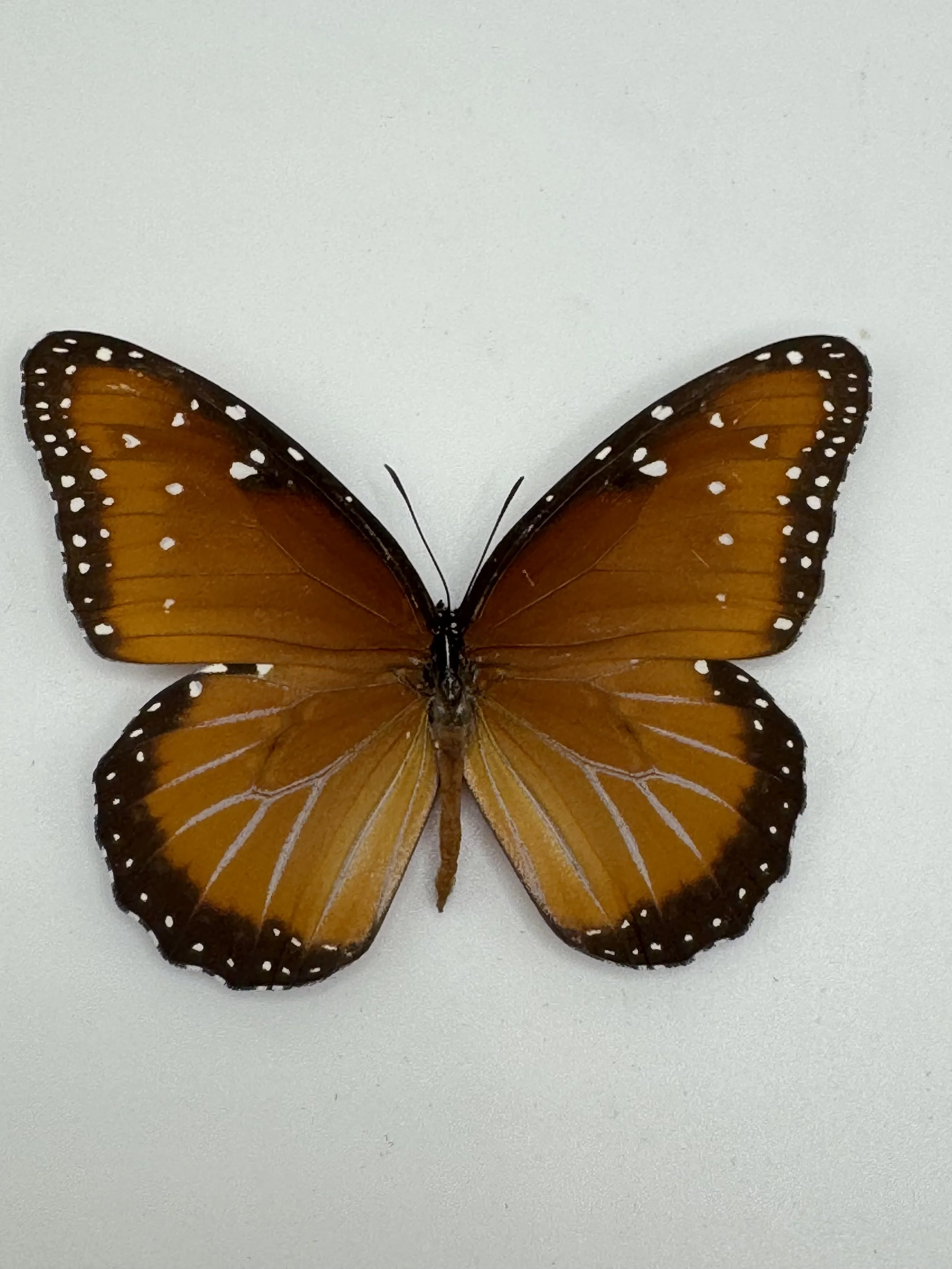 Image 2 of 3
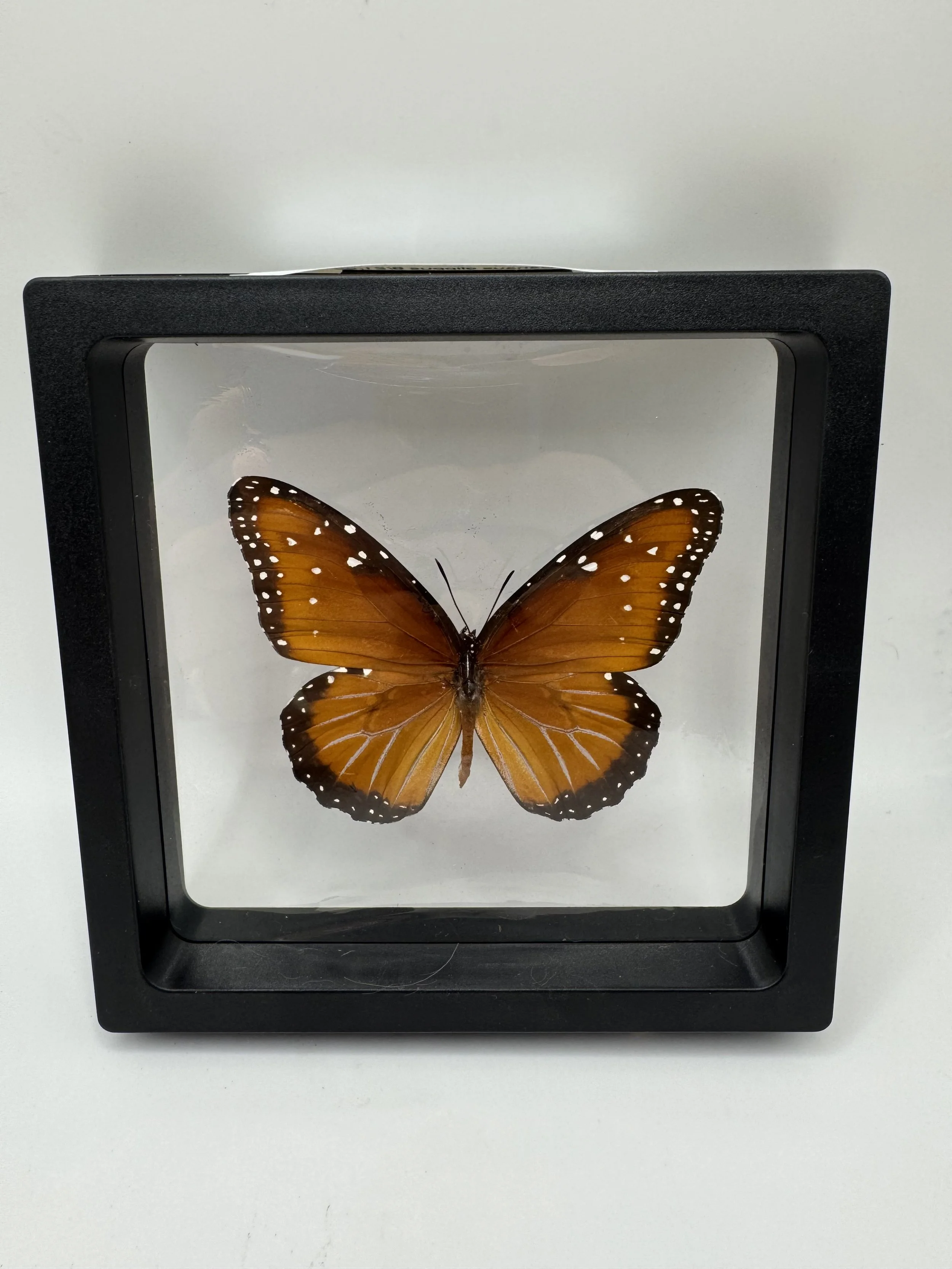 Image 3 of 3
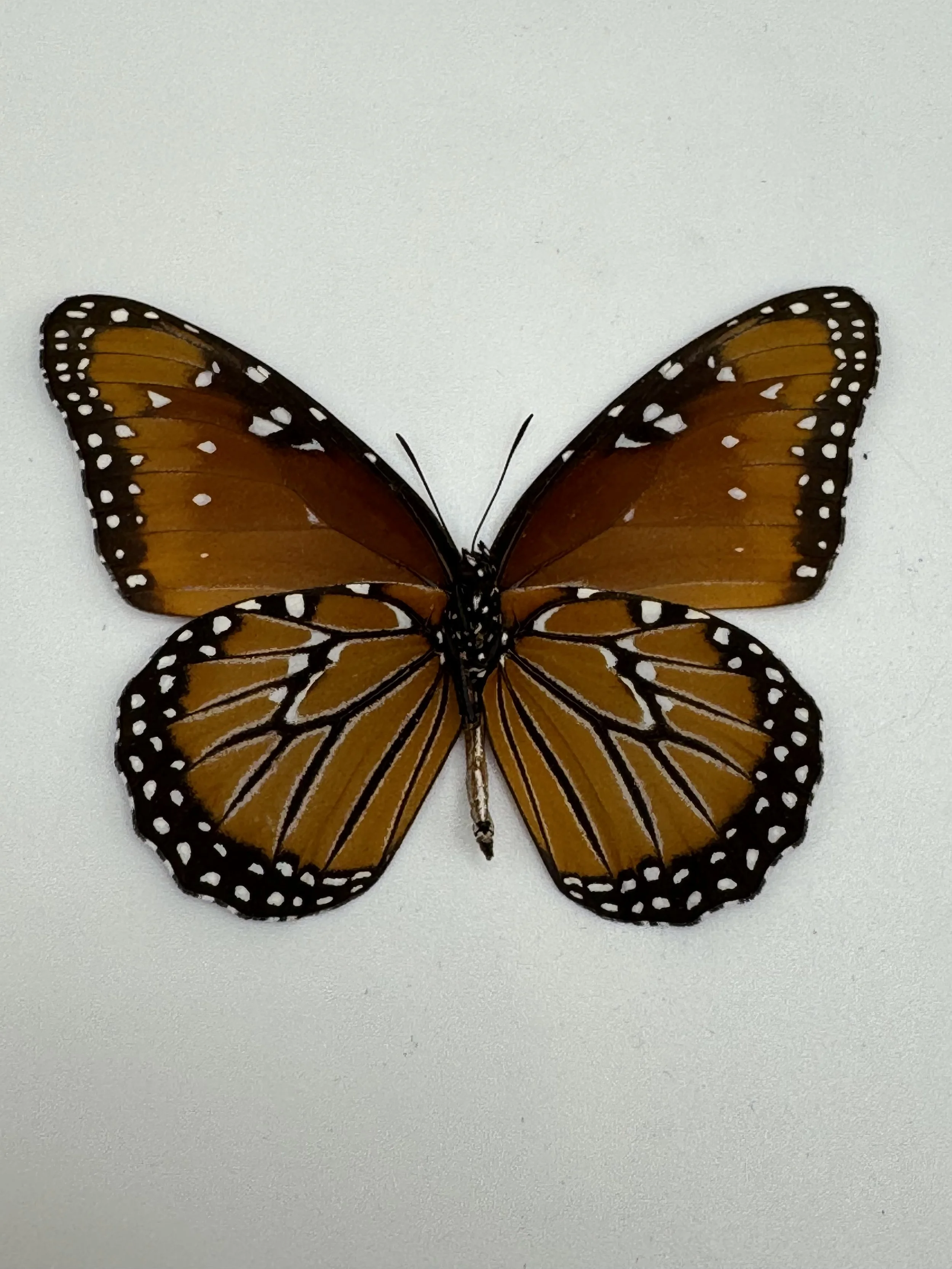
The Queen (Danaus gilippus) is a graceful butterfly with rich orange-brown wings bordered in black and dotted with white spots. Compared to its close relative the Monarch, it has a deeper coloration and lacks the bold black veining across the wings.
Native to the Americas, Danaus gilippus is found throughout the southern United States, especially in California, the Southwest, and along the Gulf Coast, extending into Central and South America. It is commonly associated with open habitats such as fields, deserts, and coastal areas.
Interesting Fact:
Like Monarchs, this species feeds on milkweed as a caterpillar, storing toxic compounds that make it unpalatable to predators. It also participates in mimicry complexes with other butterflies.
This specimen is preserved, fully spread and professionally mounted in a clear PE display frame, making it ready for immediate display. Collection data is included.
All specimens are ethically sourced, collected responsibly with a focus on sustainability and minimal impact on wild populations.
The Queen (Danaus gilippus) is a graceful butterfly with rich orange-brown wings bordered in black and dotted with white spots. Compared to its close relative the Monarch, it has a deeper coloration and lacks the bold black veining across the wings.
Native to the Americas, Danaus gilippus is found throughout the southern United States, especially in California, the Southwest, and along the Gulf Coast, extending into Central and South America. It is commonly associated with open habitats such as fields, deserts, and coastal areas.
Interesting Fact:
Like Monarchs, this species feeds on milkweed as a caterpillar, storing toxic compounds that make it unpalatable to predators. It also participates in mimicry complexes with other butterflies.
This specimen is preserved, fully spread and professionally mounted in a clear PE display frame, making it ready for immediate display. Collection data is included.
All specimens are ethically sourced, collected responsibly with a focus on sustainability and minimal impact on wild populations.