
 Image 1 of 5
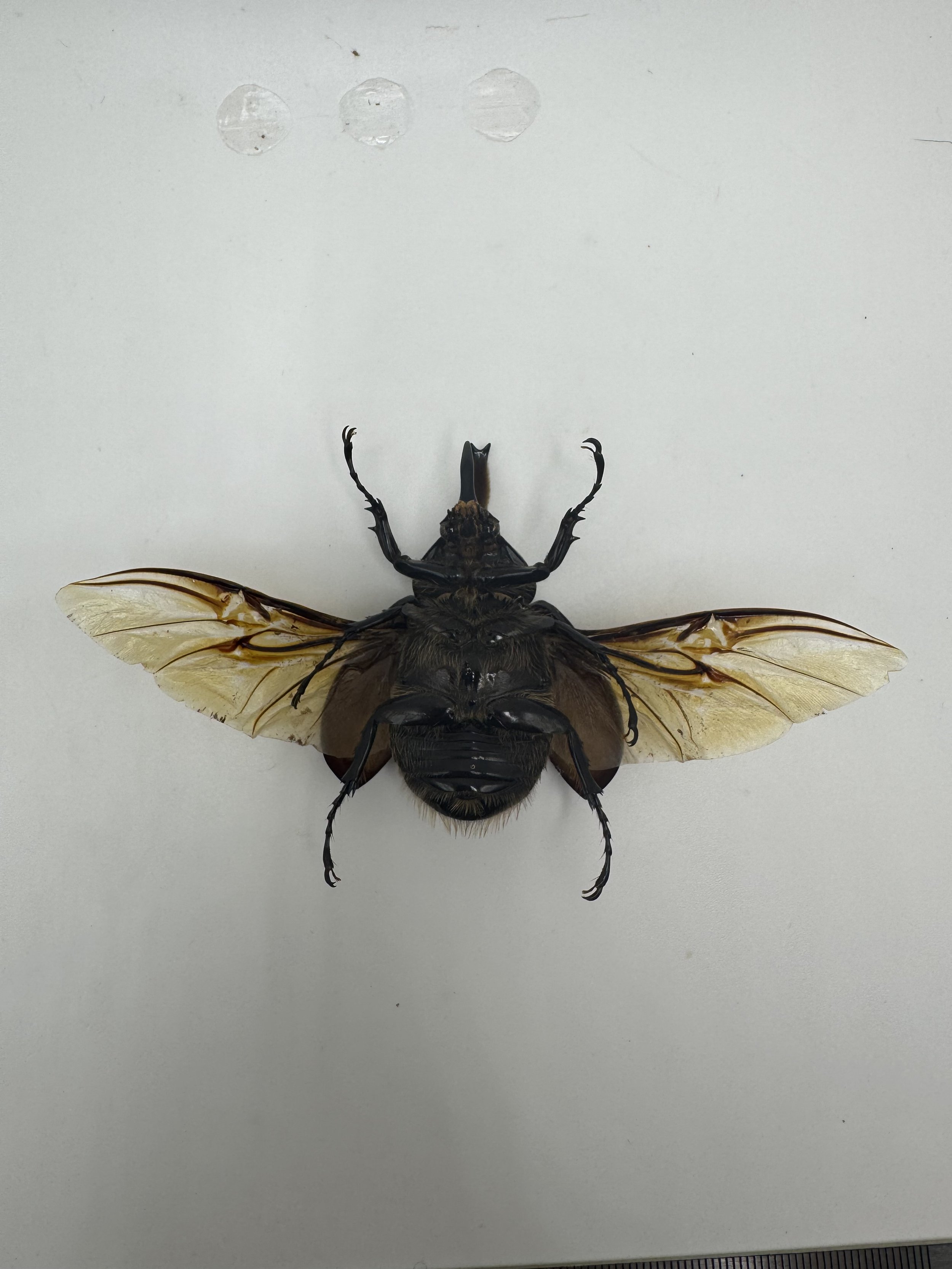 Image 2 of 5
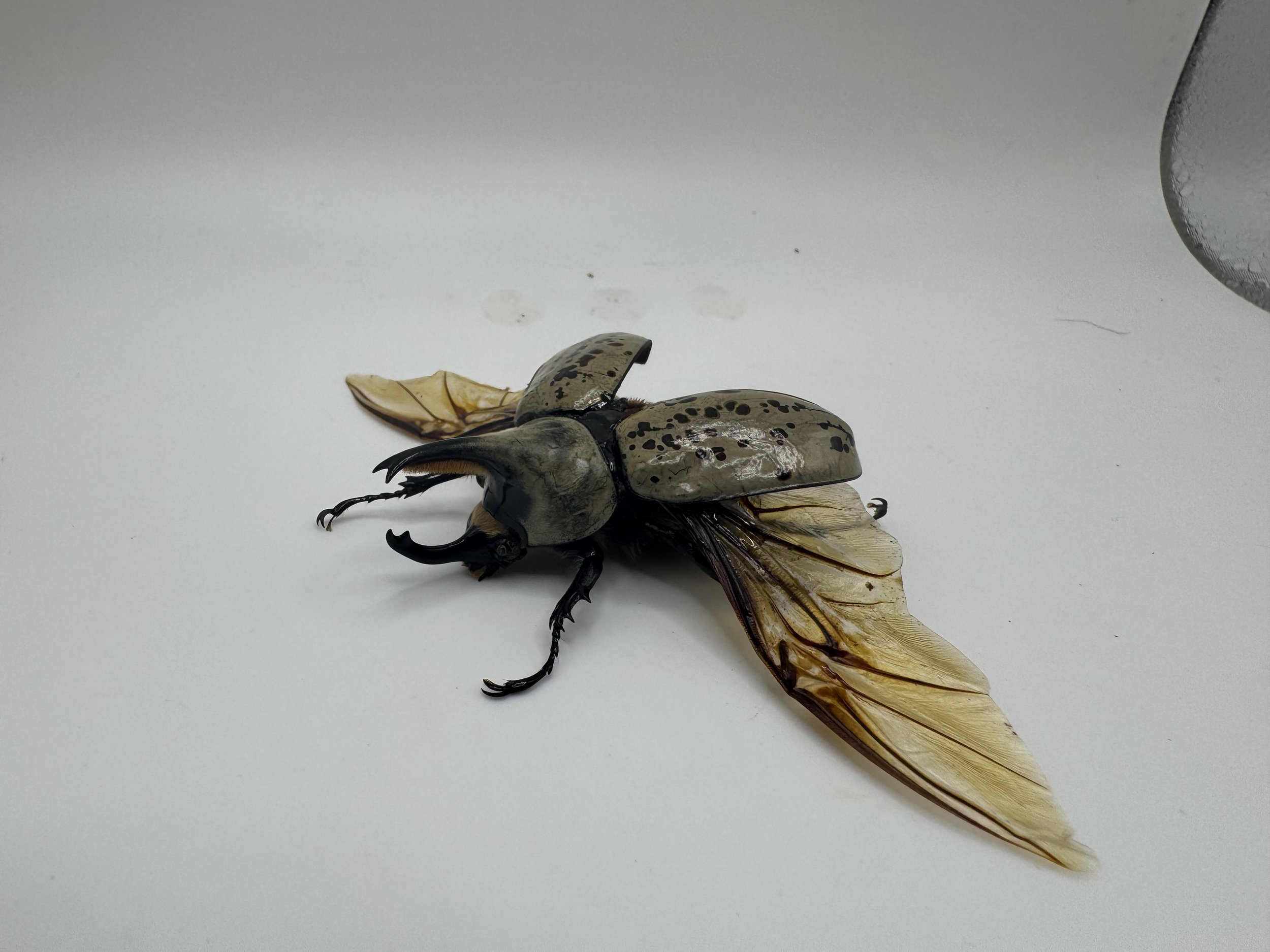 Image 3 of 5
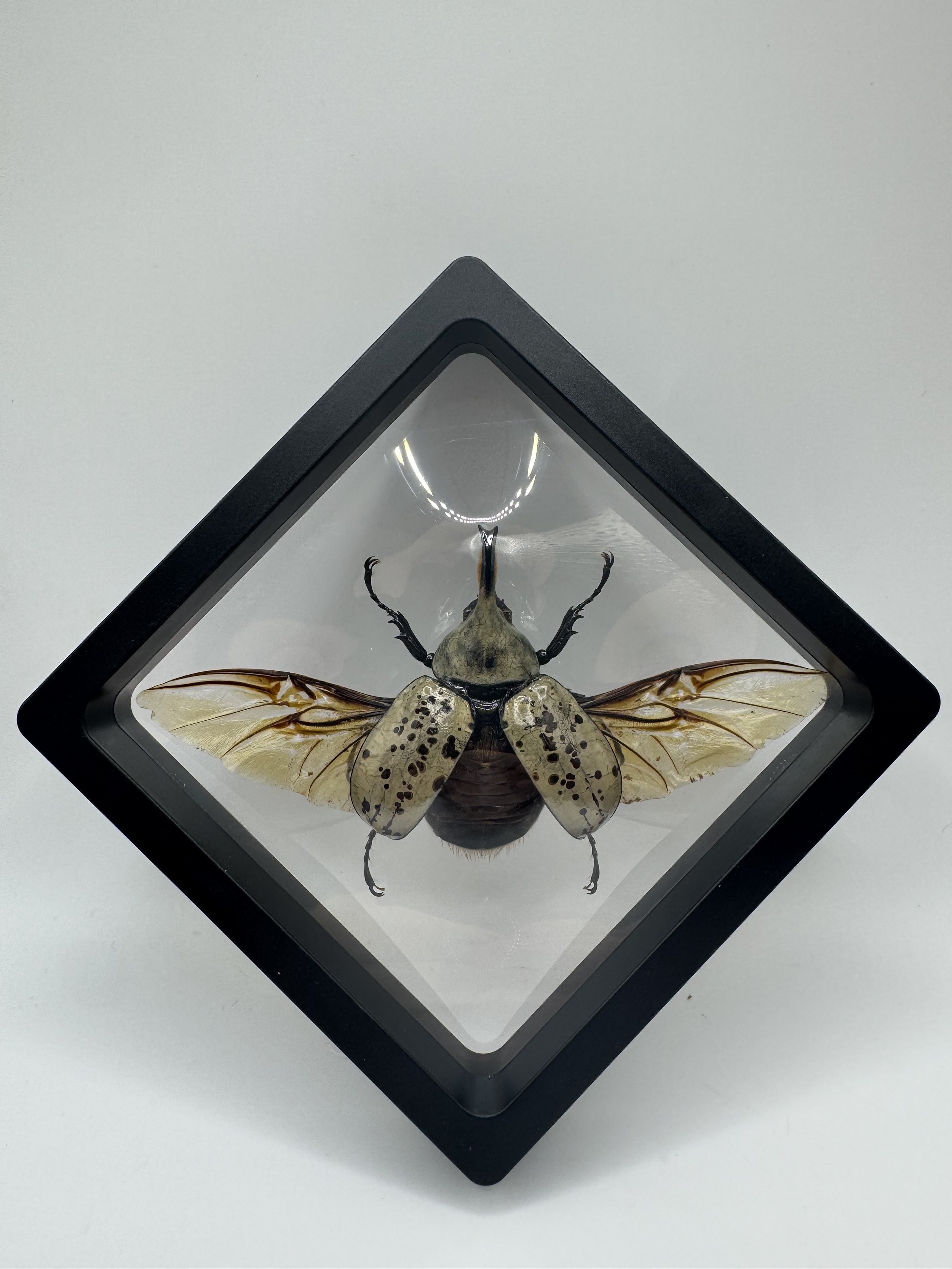 Image 4 of 5
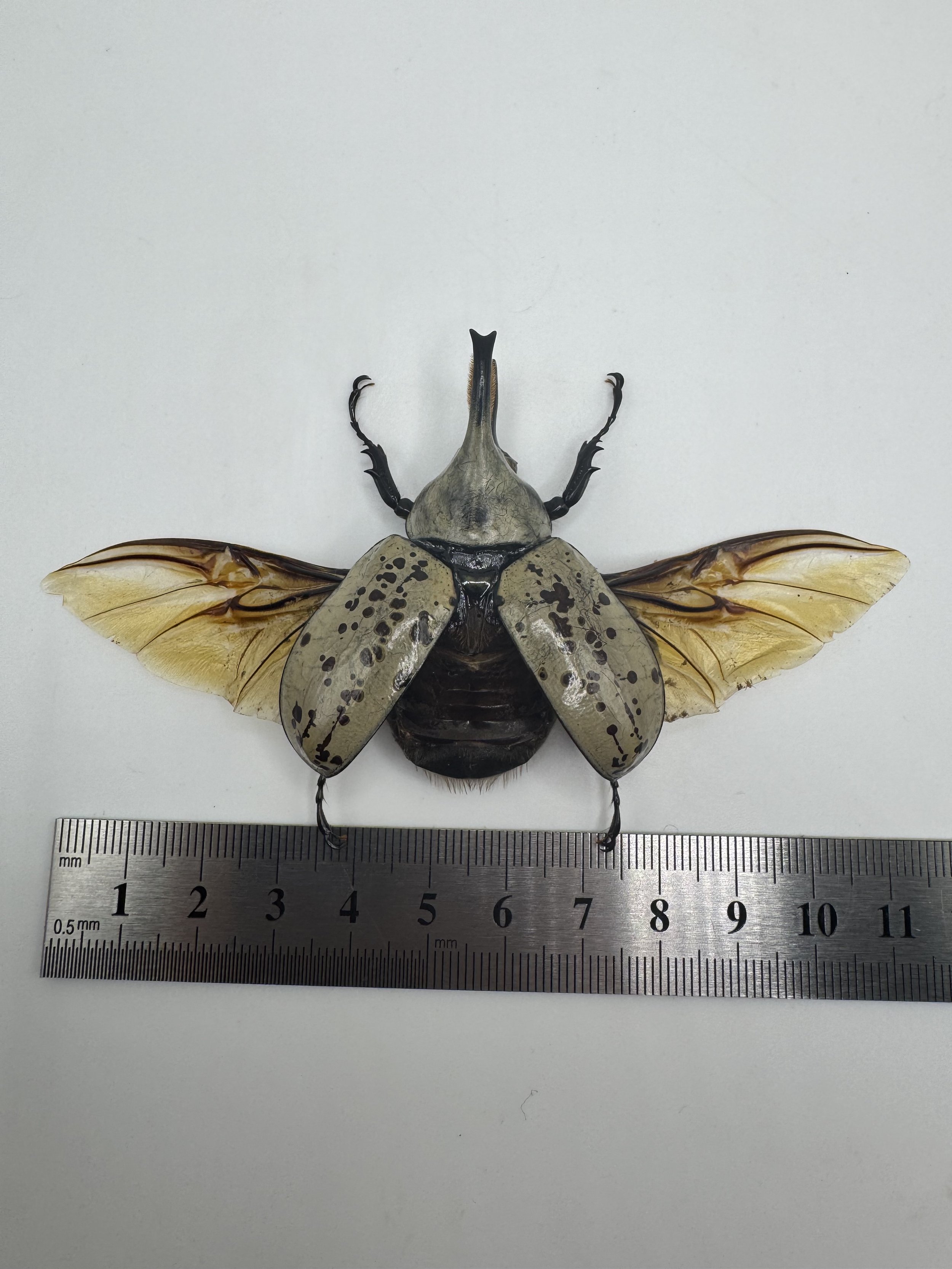 Image 5 of 5
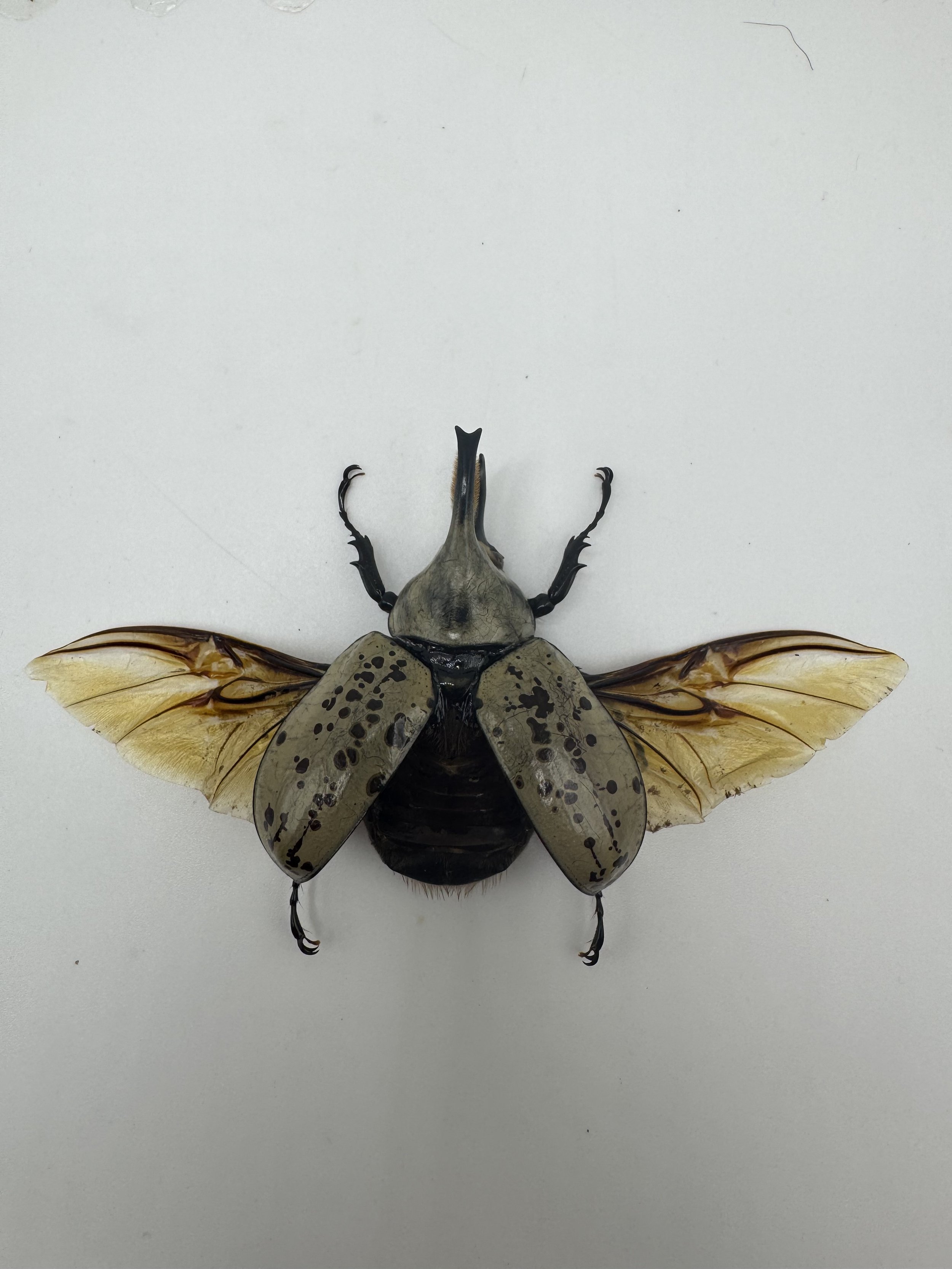
The Western Hercules Beetle (Dynastes grantii) is an impressive rhinoceros beetle native to the southwestern United States and northern Mexico. Recognized for its pale gray-green exoskeleton decorated with irregular black spots, this species is one of North America’s most distinctive scarab beetles. Males possess two prominent opposing horns that give them a powerful and unusual appearance.
This species inhabits mountainous forests, particularly areas with oak and other hardwood trees. Its larvae develop within decaying wood, where they feed on decomposing plant material and contribute to nutrient recycling. Adults are primarily active at night and may be attracted to artificial lights.
Interesting Fact:
Male Western Hercules Beetles use their opposing head and thoracic horns to lift and wrestle rival males during competition for mates. Horn length varies considerably between individuals, with larger males often developing much more impressive structures. Despite their intimidating appearance, these beetles are harmless to humans.
This specimen is professionally mounted in a clear PE display frame, making it ready for immediate display. Collection data is included.
All specimens are ethically sourced, collected responsibly with a focus on sustainability and minimal impact on wild populations.