
 Image 1 of 1
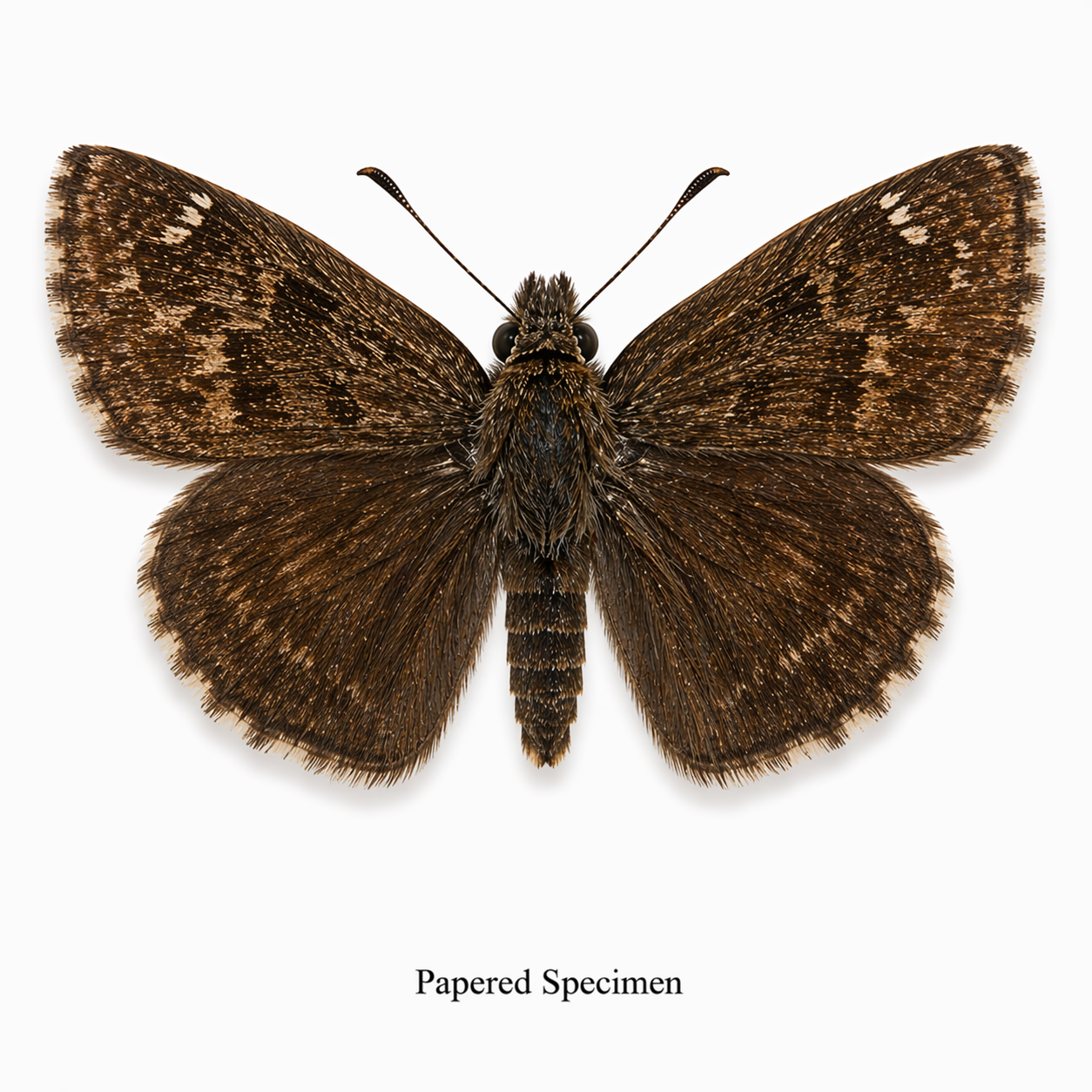
The Sleepy Duskywing (Erynnis brizo) is a dark, mottled butterfly with shades of brown and gray that provide excellent camouflage against bark and leaf litter. Like many duskywings, it has a rapid, erratic flight and a somewhat chunky appearance typical of the skipper family (Hesperiidae).
Native to eastern North America, Erynnis brizo is found from southern Canada through much of the eastern United States. It is commonly associated with open woodlands, oak barrens, and sandy habitats where its host plants grow.
Interesting Fact:
This species has a strong association with oaks—its caterpillars feed on various oak species (Quercus), making it an indicator of healthy oak woodland ecosystems.
This specimen is preserved and is carefully stored in a protective paper triangle, ensuring it arrives safely and is ready for spreading or long-term collection. Collection data is included.
All specimens are ethically sourced, collected responsibly with a focus on sustainability and minimal impact on wild populations.
Image is a representation drawing and is not scientifically accurate.
The Sleepy Duskywing (Erynnis brizo) is a dark, mottled butterfly with shades of brown and gray that provide excellent camouflage against bark and leaf litter. Like many duskywings, it has a rapid, erratic flight and a somewhat chunky appearance typical of the skipper family (Hesperiidae).
Native to eastern North America, Erynnis brizo is found from southern Canada through much of the eastern United States. It is commonly associated with open woodlands, oak barrens, and sandy habitats where its host plants grow.
Interesting Fact:
This species has a strong association with oaks—its caterpillars feed on various oak species (Quercus), making it an indicator of healthy oak woodland ecosystems.
This specimen is preserved and is carefully stored in a protective paper triangle, ensuring it arrives safely and is ready for spreading or long-term collection. Collection data is included.
All specimens are ethically sourced, collected responsibly with a focus on sustainability and minimal impact on wild populations.
Image is a representation drawing and is not scientifically accurate.