
 Image 1 of 1
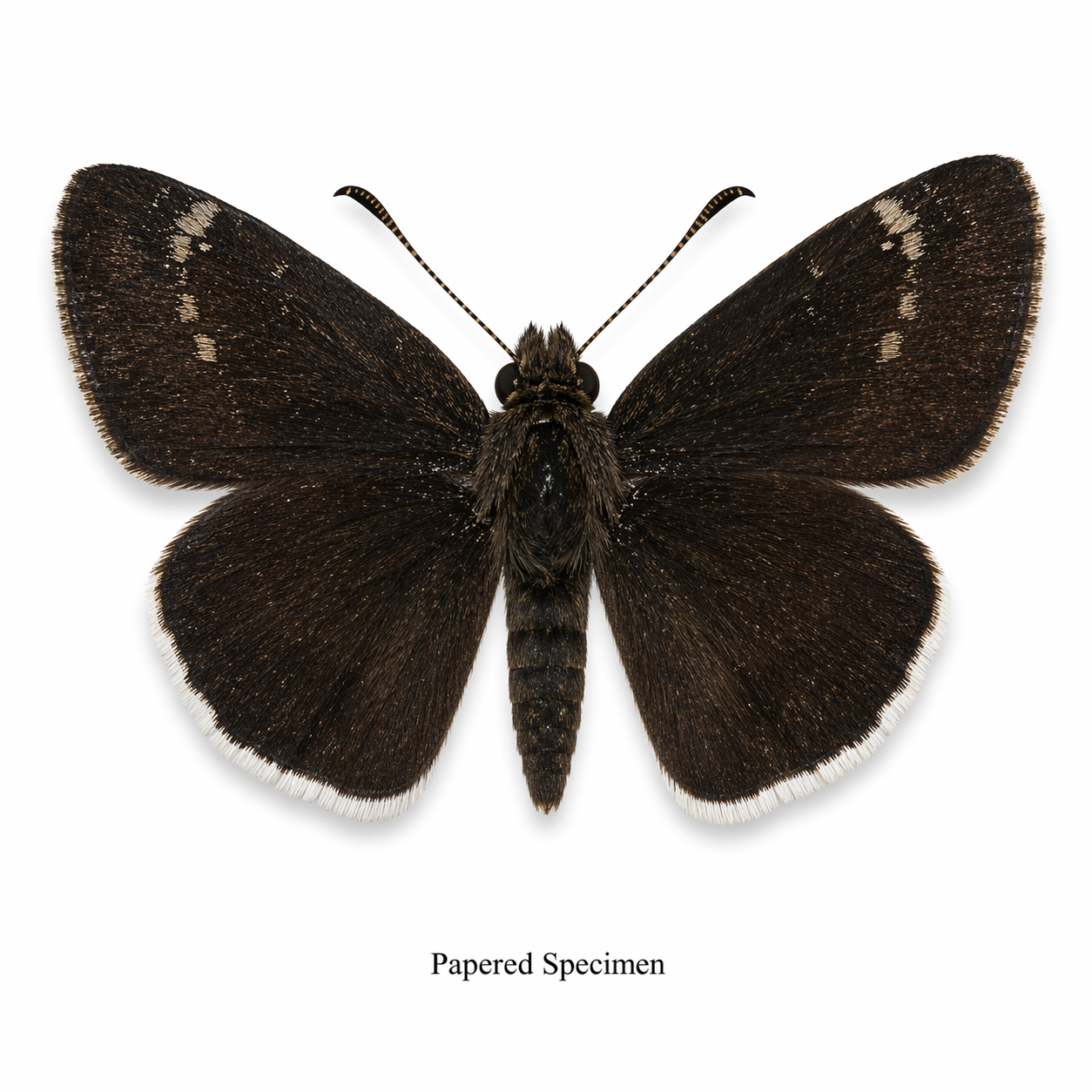
The Funereal Duskywing (Erynnis funeralis) is a distinctive dark skipper with velvety brown to black wings highlighted by bold white fringes along the edges. This striking contrast makes it one of the more easily recognizable duskywing species.
Native to the Americas, Erynnis funeralis is found throughout much of the United States, particularly in the western and southern regions, extending into Mexico and parts of Central America. It is commonly seen in open habitats such as fields, roadsides, and disturbed areas.
Interesting Fact:
Unlike many duskywings that rely on oaks, this species’ caterpillars feed on plants in the legume family, such as beans, making it more adaptable to a wider range of environments—including agricultural areas.
This specimen is preserved and is carefully stored in a protective paper triangle, ensuring it arrives safely and is ready for spreading or long-term collection. Collection data is included.
All specimens are ethically sourced, collected responsibly with a focus on sustainability and minimal impact on wild populations.
Image is a representation drawing and is not scientifically accurate.
The Funereal Duskywing (Erynnis funeralis) is a distinctive dark skipper with velvety brown to black wings highlighted by bold white fringes along the edges. This striking contrast makes it one of the more easily recognizable duskywing species.
Native to the Americas, Erynnis funeralis is found throughout much of the United States, particularly in the western and southern regions, extending into Mexico and parts of Central America. It is commonly seen in open habitats such as fields, roadsides, and disturbed areas.
Interesting Fact:
Unlike many duskywings that rely on oaks, this species’ caterpillars feed on plants in the legume family, such as beans, making it more adaptable to a wider range of environments—including agricultural areas.
This specimen is preserved and is carefully stored in a protective paper triangle, ensuring it arrives safely and is ready for spreading or long-term collection. Collection data is included.
All specimens are ethically sourced, collected responsibly with a focus on sustainability and minimal impact on wild populations.
Image is a representation drawing and is not scientifically accurate.