
 Image 1 of 4
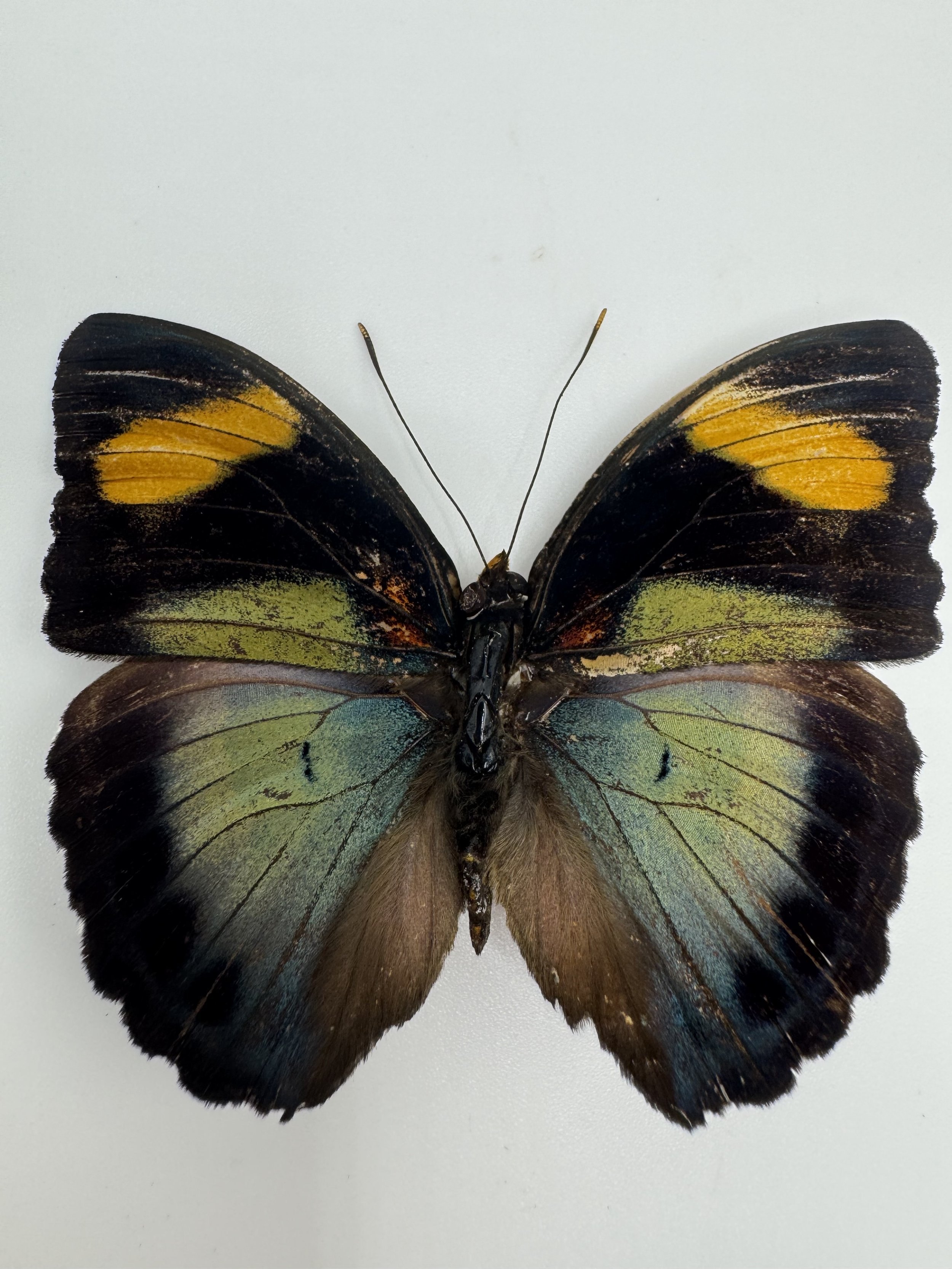 Image 2 of 4
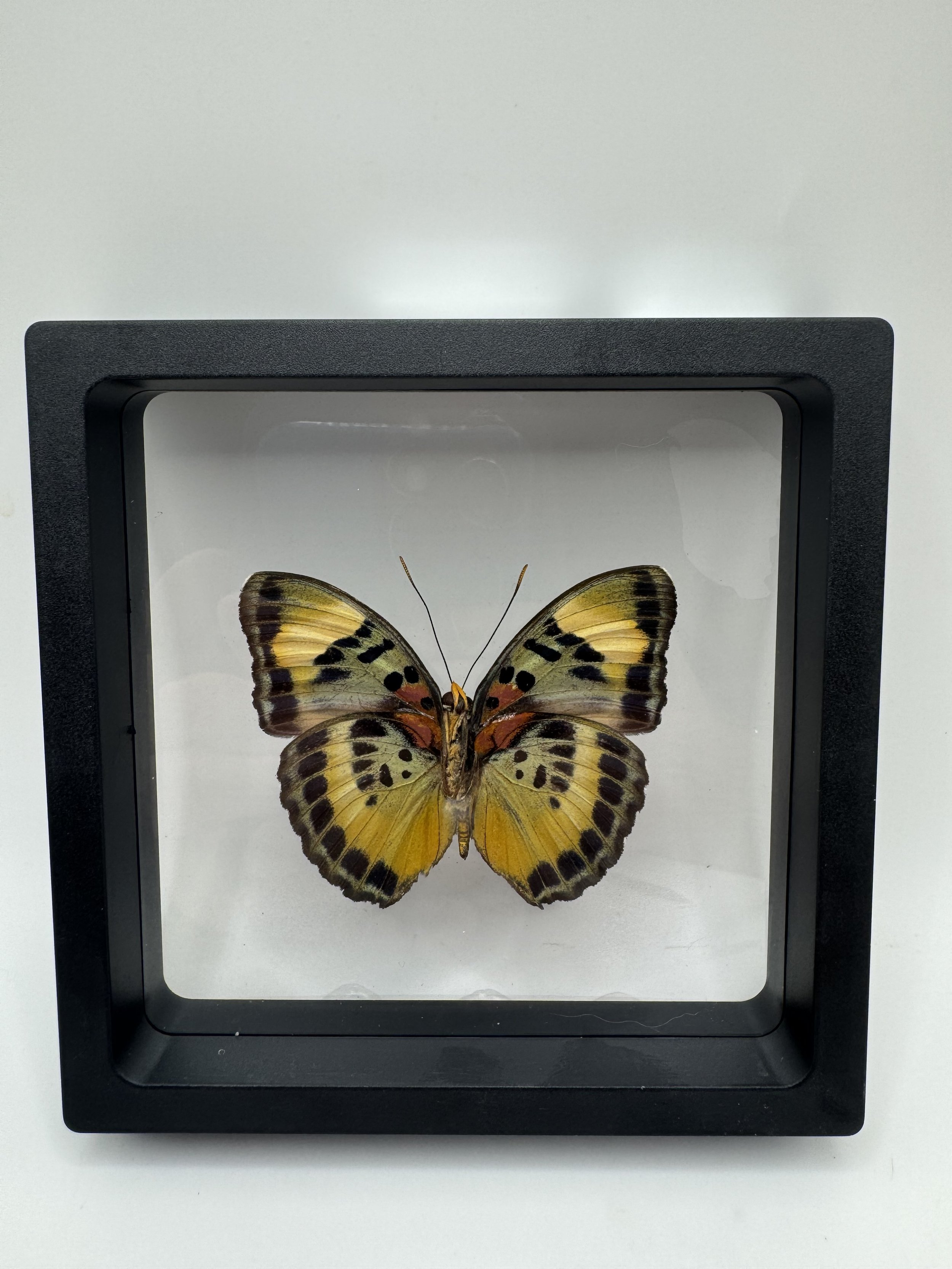 Image 3 of 4
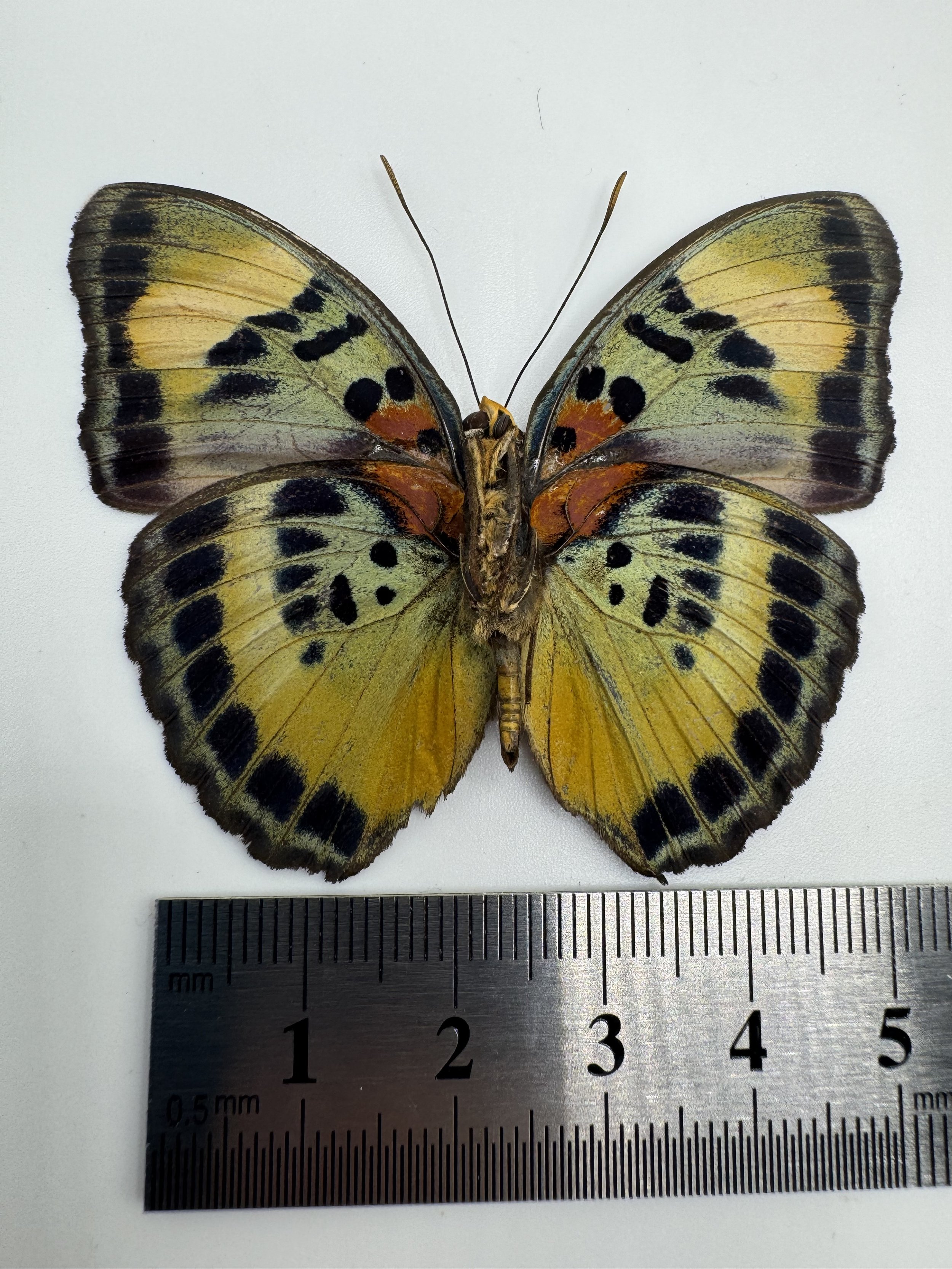 Image 4 of 4
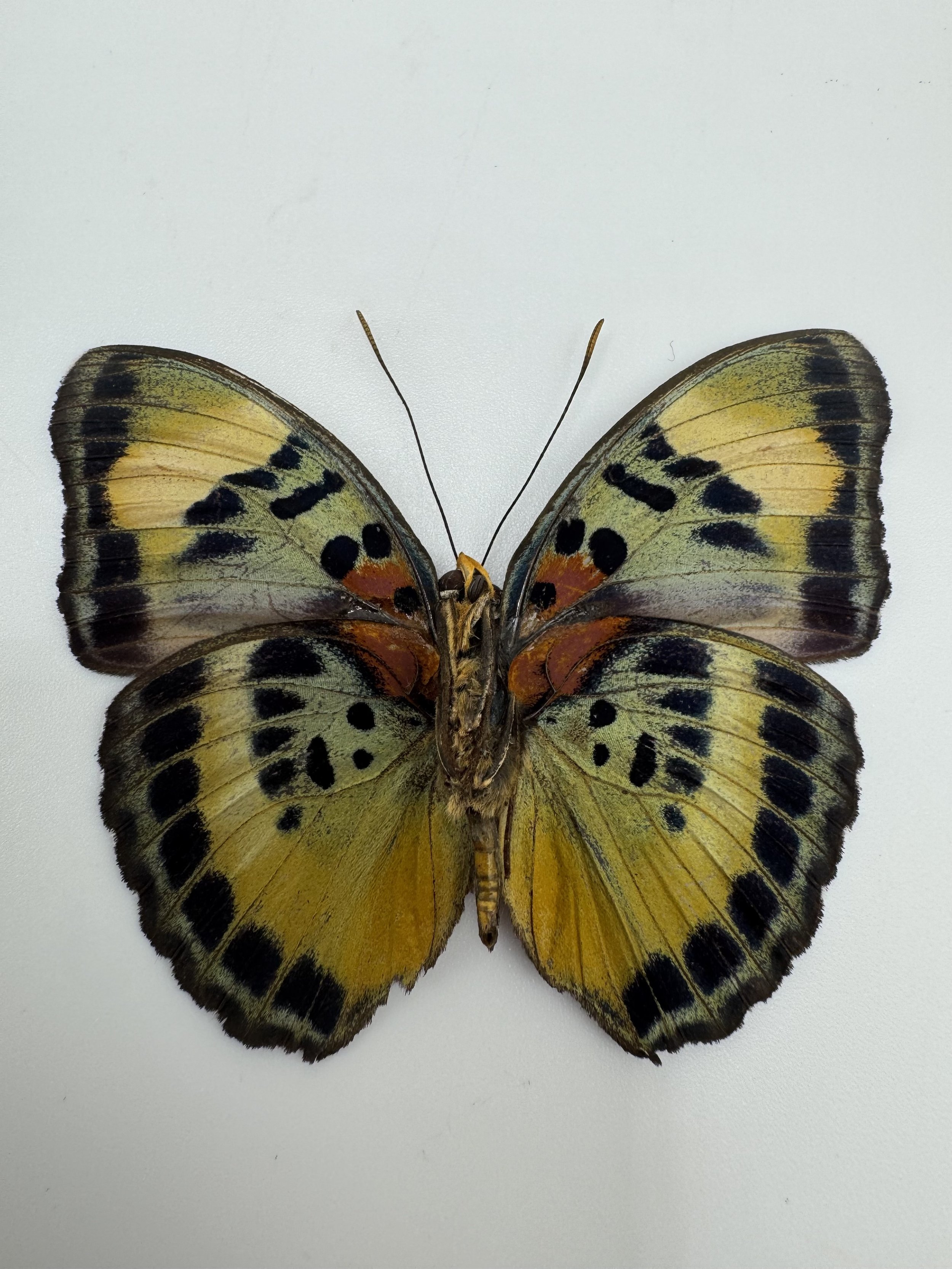
The Long-banded Themis Forester (Euphaedra aureola) is a striking African butterfly belonging to the Nymphalidae family. Its wings feature contrasting dark, yellow, and greenish tones, with distinctive markings that differ between the upper and lower wing surfaces.
Native to West and Central Africa, this species occurs in Nigeria, Cameroon, the Republic of the Congo, and the Central African Republic. It inhabits moist tropical forests, particularly areas with well-preserved forest vegetation.
Interesting Fact:
Unlike many butterflies that primarily visit flowers, adults of Euphaedra aureola frequently feed on fallen fruit. When disturbed, they often fly several meters into the surrounding vegetation before returning to their feeding site.
This specimen is fully spread and professionally mounted in a clear PE display frame, making it ready for immediate display. Collection data is included.
All specimens are ethically sourced, collected responsibly with a focus on sustainability and minimal impact on wild populations.