
 Image 1 of 2
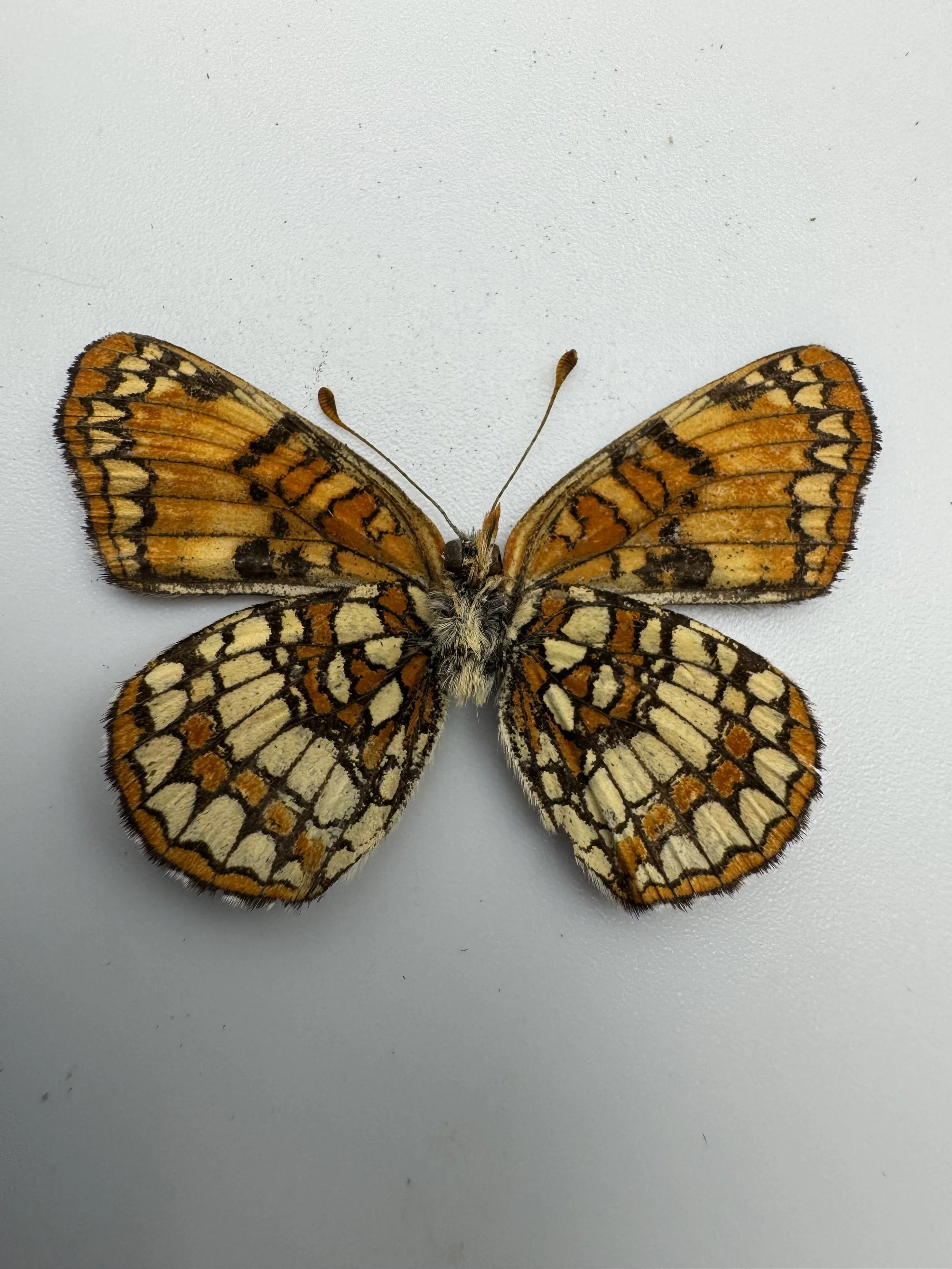 Image 2 of 2
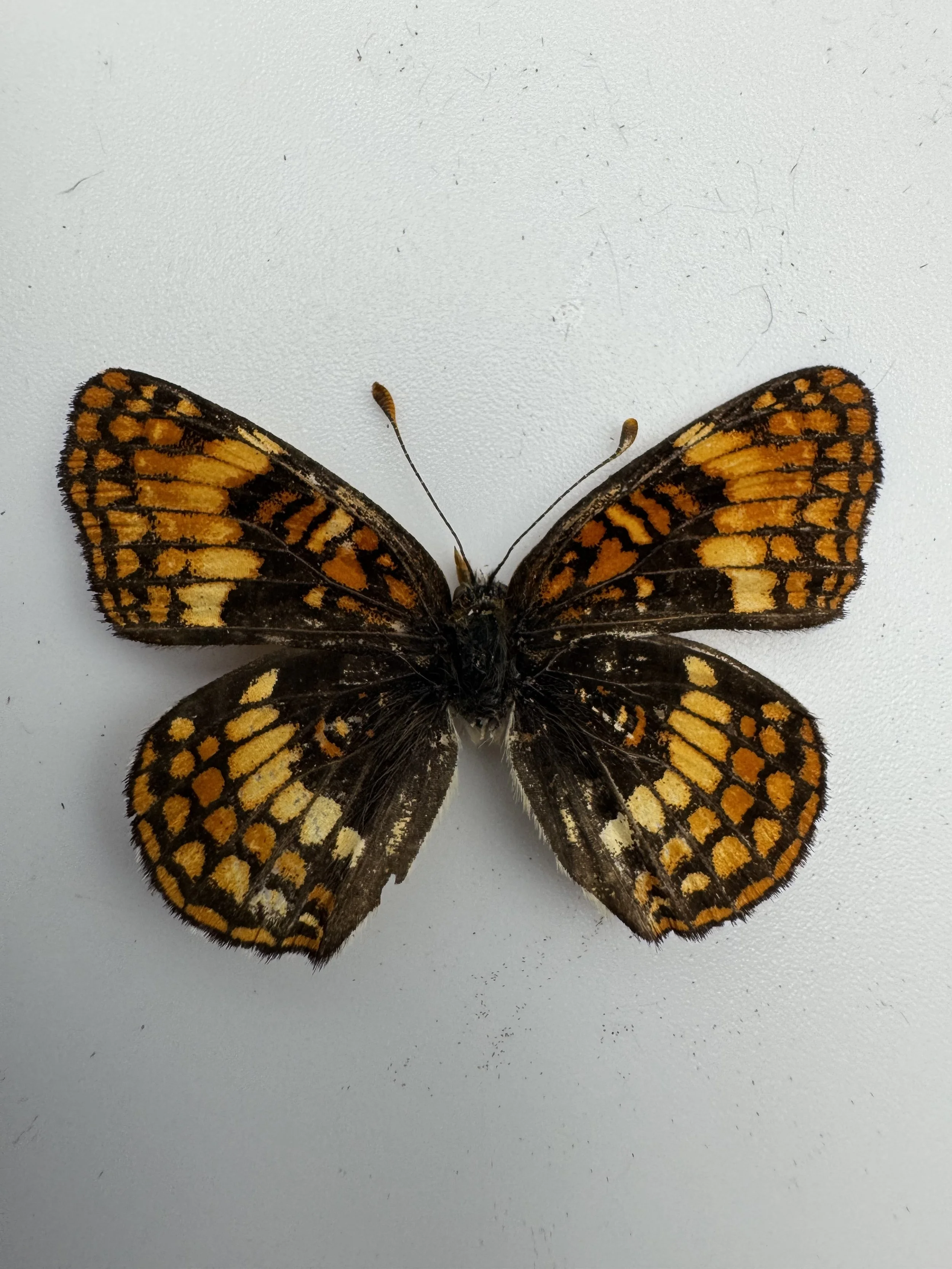
Edith’s Checkerspot (Euphydryas editha colon) is a beautifully patterned butterfly with a mosaic of red, orange, cream, and black markings. This subspecies shows rich coloration and bold patterning typical of the species, making it especially striking when spread.
Native to western North America, this subspecies of Euphydryas editha is found in California and surrounding regions. It is commonly associated with grasslands, open woodlands, and montane habitats where its host plants grow.
Interesting Fact:
This species is well known for its ecological sensitivity and rapid evolutionary responses—different populations can specialize on different host plants, and shifts in host use have been widely studied in evolutionary biology.
This specimen is preserved, fully spread and professionally mounted in a clear PE display frame, making it ready for immediate display. Collection data is included.
All specimens are ethically sourced, collected responsibly with a focus on sustainability and minimal impact on wild populations.
Edith’s Checkerspot (Euphydryas editha colon) is a beautifully patterned butterfly with a mosaic of red, orange, cream, and black markings. This subspecies shows rich coloration and bold patterning typical of the species, making it especially striking when spread.
Native to western North America, this subspecies of Euphydryas editha is found in California and surrounding regions. It is commonly associated with grasslands, open woodlands, and montane habitats where its host plants grow.
Interesting Fact:
This species is well known for its ecological sensitivity and rapid evolutionary responses—different populations can specialize on different host plants, and shifts in host use have been widely studied in evolutionary biology.
This specimen is preserved, fully spread and professionally mounted in a clear PE display frame, making it ready for immediate display. Collection data is included.
All specimens are ethically sourced, collected responsibly with a focus on sustainability and minimal impact on wild populations.