
 Image 1 of 1
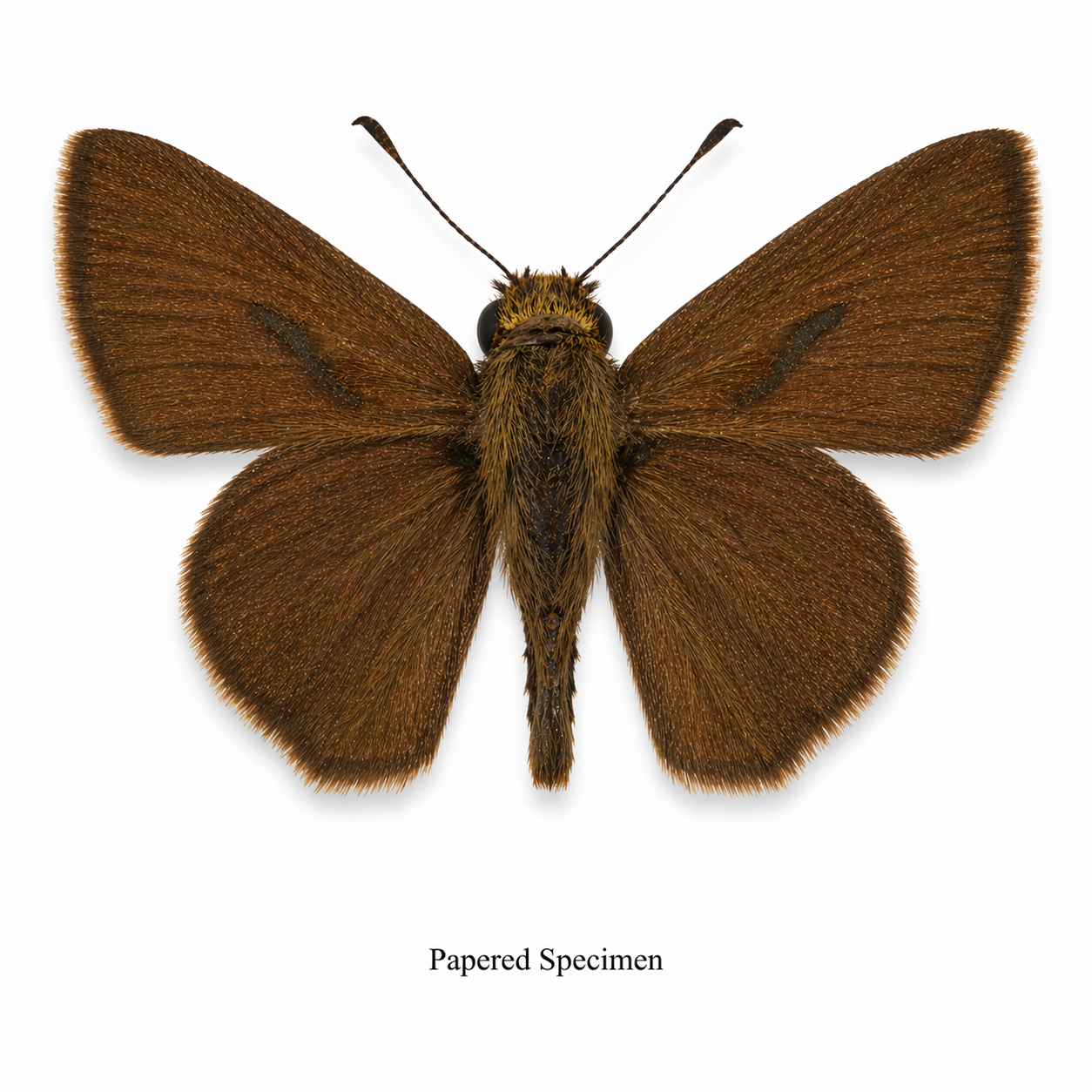
The Dun Skipper (Euphyes vestris metacomet) is a subtle and refined butterfly with soft brown wings and a streamlined shape typical of grass skippers. Its understated coloration allows it to blend seamlessly into grassy habitats.
Native to eastern North America, this subspecies of Euphyes vestris is found in the northeastern United States. It is most commonly associated with moist grassy environments such as wet meadows, marsh edges, and woodland clearings where sedges and grasses grow.
Interesting Fact:
The caterpillars of this species feed primarily on sedges (Carex spp.), and like many skippers, they create silk shelters by folding blades of grass or sedge leaves for protection.
This specimen is preserved and is carefully stored in a protective paper triangle, ensuring it arrives safely and is ready for spreading or long-term collection. Collection data is included.
All specimens are ethically sourced, collected responsibly with a focus on sustainability and minimal impact on wild populations.
Image is a representation drawing and is not scientifically accurate.
The Dun Skipper (Euphyes vestris metacomet) is a subtle and refined butterfly with soft brown wings and a streamlined shape typical of grass skippers. Its understated coloration allows it to blend seamlessly into grassy habitats.
Native to eastern North America, this subspecies of Euphyes vestris is found in the northeastern United States. It is most commonly associated with moist grassy environments such as wet meadows, marsh edges, and woodland clearings where sedges and grasses grow.
Interesting Fact:
The caterpillars of this species feed primarily on sedges (Carex spp.), and like many skippers, they create silk shelters by folding blades of grass or sedge leaves for protection.
This specimen is preserved and is carefully stored in a protective paper triangle, ensuring it arrives safely and is ready for spreading or long-term collection. Collection data is included.
All specimens are ethically sourced, collected responsibly with a focus on sustainability and minimal impact on wild populations.
Image is a representation drawing and is not scientifically accurate.