
 Image 1 of 1
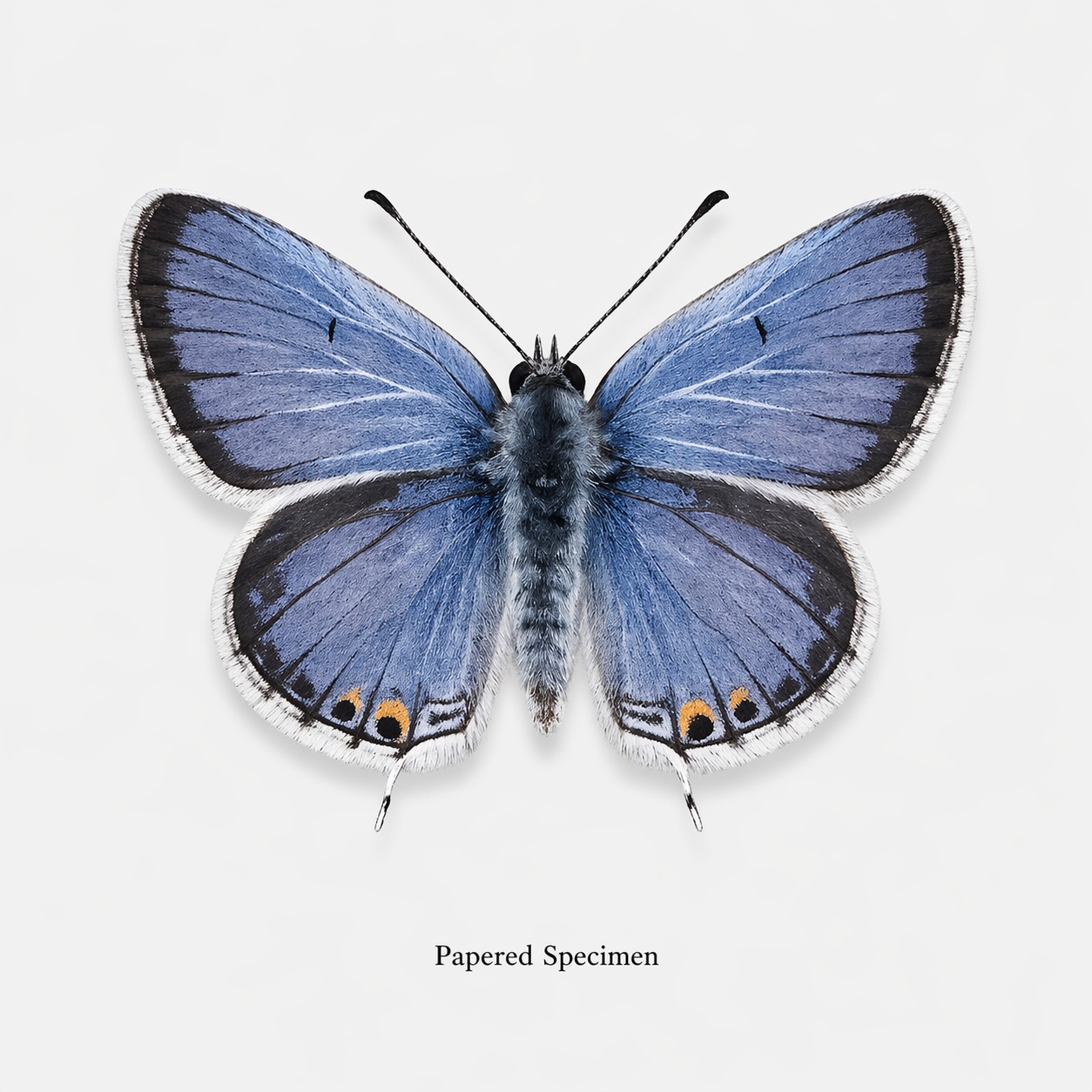
The Eastern Tailed-Blue (Everes comyntas) is a small and delicate butterfly known for its pale blue upper wings in males and more subdued gray-blue tones in females. The underside is light gray with fine black spots and a characteristic pair of short “tails” on the hindwings, often accompanied by orange spots.
Native to North America, Everes comyntas is widespread across the eastern and central United States and into southern Canada. It thrives in open habitats such as fields, roadsides, gardens, and disturbed areas where its host plants are present.
Interesting Fact:
This species has a fascinating mutual relationship with ants—its caterpillars produce a sugary secretion that attracts ants, which in turn help protect them from predators.
This specimen is preserved and is carefully stored in a protective paper triangle, ensuring it arrives safely and is ready for spreading or long-term collection. Collection data is included.
All specimens are ethically sourced, collected responsibly with a focus on sustainability and minimal impact on wild populations.
Image is a representation drawing and is not scientifically accurate.
The Eastern Tailed-Blue (Everes comyntas) is a small and delicate butterfly known for its pale blue upper wings in males and more subdued gray-blue tones in females. The underside is light gray with fine black spots and a characteristic pair of short “tails” on the hindwings, often accompanied by orange spots.
Native to North America, Everes comyntas is widespread across the eastern and central United States and into southern Canada. It thrives in open habitats such as fields, roadsides, gardens, and disturbed areas where its host plants are present.
Interesting Fact:
This species has a fascinating mutual relationship with ants—its caterpillars produce a sugary secretion that attracts ants, which in turn help protect them from predators.
This specimen is preserved and is carefully stored in a protective paper triangle, ensuring it arrives safely and is ready for spreading or long-term collection. Collection data is included.
All specimens are ethically sourced, collected responsibly with a focus on sustainability and minimal impact on wild populations.
Image is a representation drawing and is not scientifically accurate.