
 Image 1 of 1
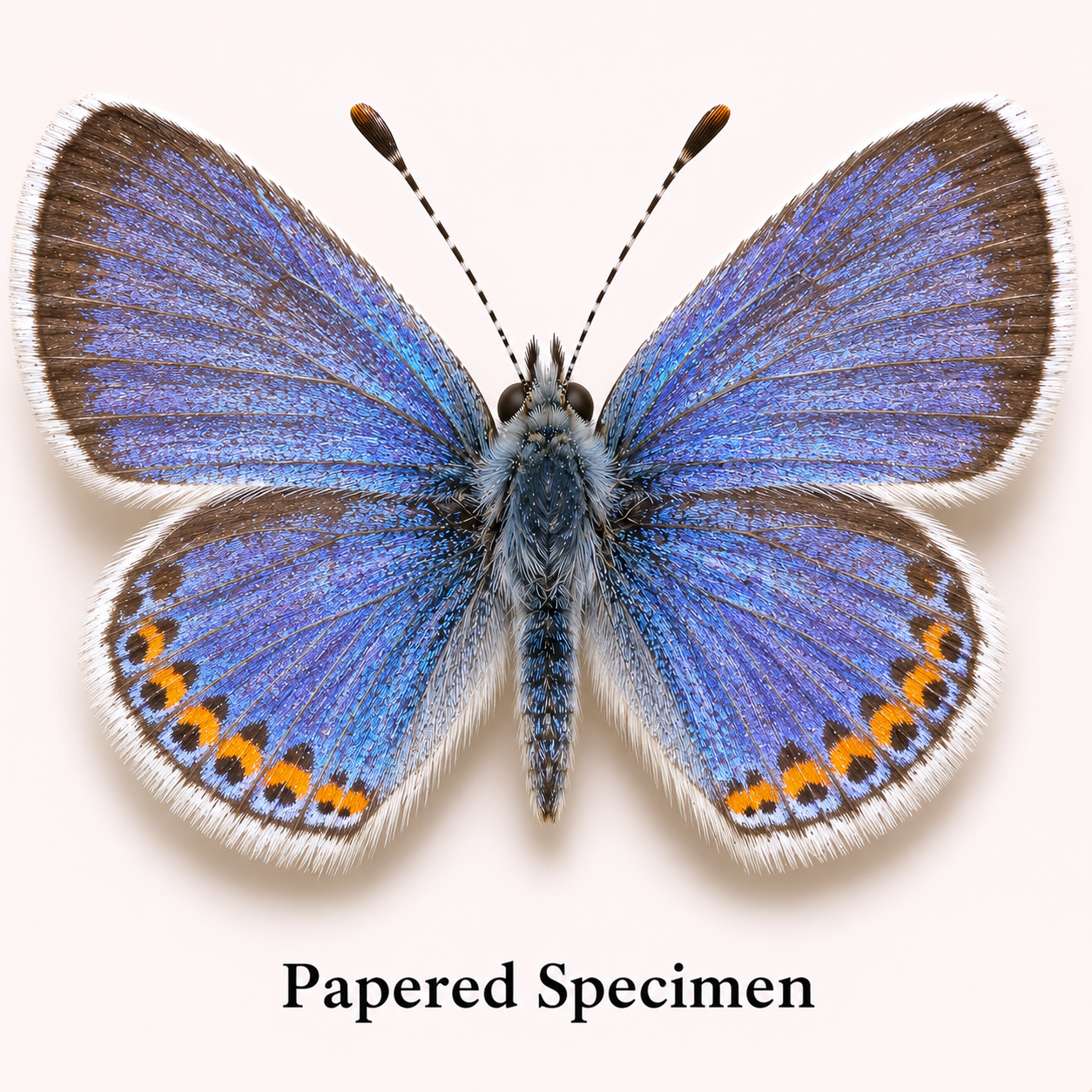
The Acmon Blue (Icaricia acmon) is a small North American butterfly recognized for its beautiful blue wings and distinctive orange markings. Males typically display brilliant violet-blue upper wings with narrow dark borders and a row of orange spots along the hindwing margins, while females are generally brown with varying amounts of blue coloration. The undersides are pale grayish-white with numerous black spots and a striking orange band near the hindwing edges. With a wingspan of approximately ¾ to 1⅛ inches, this member of the Lycaenidae family is one of the most recognizable small blue butterflies of western North America.
Native to western North America, Icaricia acmon is found primarily from Washington and Oregon through California and into northern Baja California, with populations extending into neighboring western states. It inhabits grasslands, open woodlands, coastal scrub, mountain meadows, roadsides, and other sunny environments. Its caterpillars feed on plants in the buckwheat and legume families, particularly wild buckwheats (Eriogonum spp.), lupines (Lupinus spp.), and milkvetches (Astragalus spp.). Adults visit a variety of wildflowers for nectar.
Interesting Fact:
Acmon Blue caterpillars have a fascinating mutualistic relationship with ants, which protect the larvae from predators and parasitic insects in exchange for sugary secretions. The ants may even shelter caterpillars inside their nests when they are not feeding. Unlike many butterfly species that produce only one generation annually, Acmon Blues can produce multiple generations throughout the warmer months. Their coloration also varies seasonally, with early spring individuals sometimes displaying especially vivid blue wings and pronounced orange markings.
This specimen is preserved and is carefully stored in a protective paper triangle, ensuring it arrives safely and is ready for spreading or long-term collection. Collection data is included.
All specimens are ethically sourced, collected responsibly with a focus on sustainability and minimal impact on wild populations.
Image is a representation drawing and is not scientifically accurate.