
 Image 1 of 1
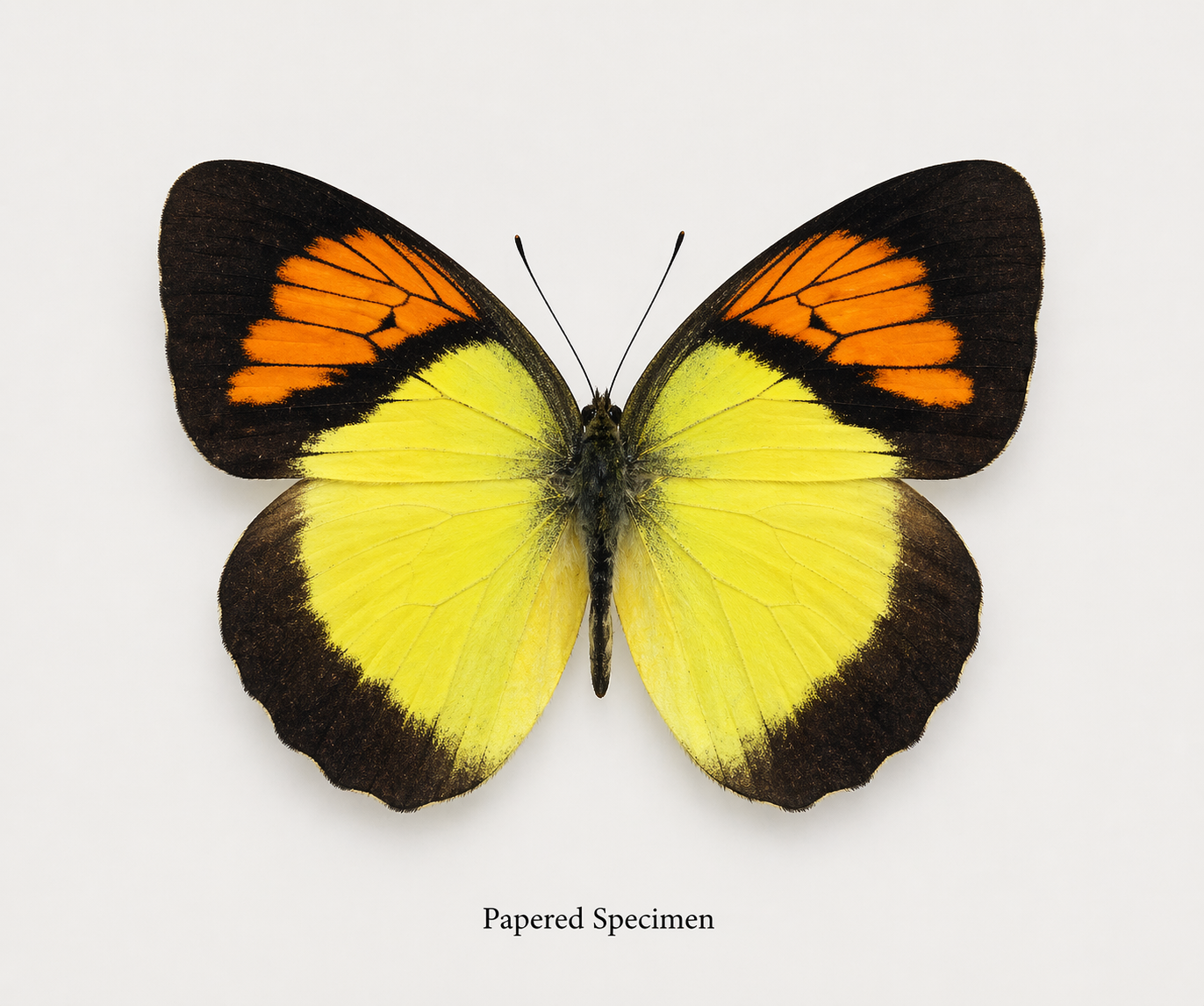
The Yellow Orange Tip (Ixias pyrene) is a bright and eye-catching butterfly with pale yellow to white wings highlighted by vivid orange patches at the tips of the forewings, bordered in black. Its clean coloration and strong contrast make it a standout among pierid butterflies.
Native to Asia, Ixias pyrene is found across South and Southeast Asia, including India, Thailand, and surrounding regions. It is commonly associated with open habitats such as grasslands, scrublands, gardens, and dry forest edges.
Interesting Fact:
This species shows seasonal variation, with dry-season forms appearing paler and more subdued, helping them blend into their environment.
This specimen is preserved and is carefully stored in a protective paper triangle, ensuring it arrives safely and is ready for spreading or long-term collection. Collection data is included.
All specimens are ethically sourced, collected responsibly with a focus on sustainability and minimal impact on wild populations.
Image is a representation drawing and is not scientifically accurate.
The Yellow Orange Tip (Ixias pyrene) is a bright and eye-catching butterfly with pale yellow to white wings highlighted by vivid orange patches at the tips of the forewings, bordered in black. Its clean coloration and strong contrast make it a standout among pierid butterflies.
Native to Asia, Ixias pyrene is found across South and Southeast Asia, including India, Thailand, and surrounding regions. It is commonly associated with open habitats such as grasslands, scrublands, gardens, and dry forest edges.
Interesting Fact:
This species shows seasonal variation, with dry-season forms appearing paler and more subdued, helping them blend into their environment.
This specimen is preserved and is carefully stored in a protective paper triangle, ensuring it arrives safely and is ready for spreading or long-term collection. Collection data is included.
All specimens are ethically sourced, collected responsibly with a focus on sustainability and minimal impact on wild populations.
Image is a representation drawing and is not scientifically accurate.