
 Image 1 of 5
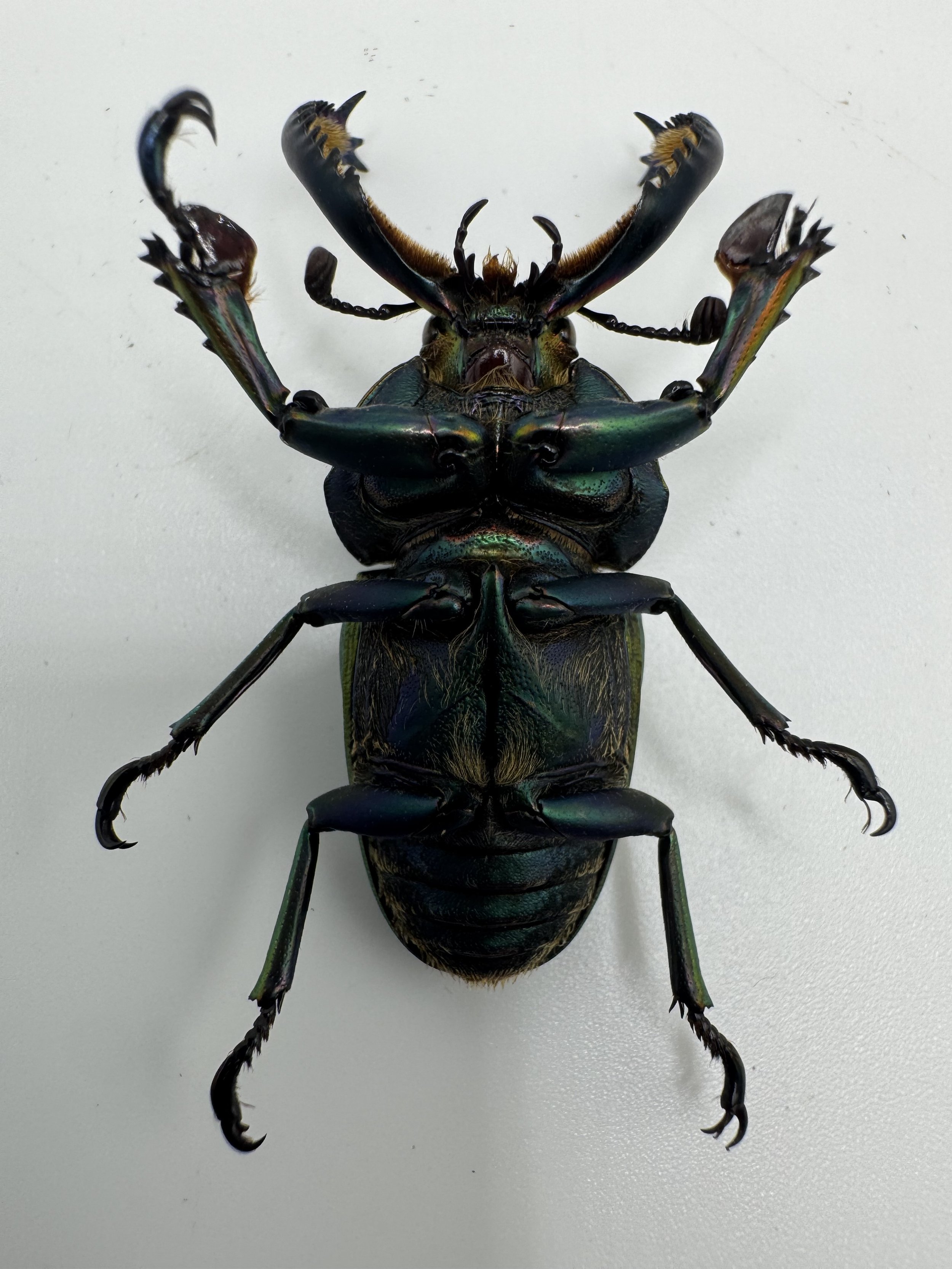 Image 2 of 5
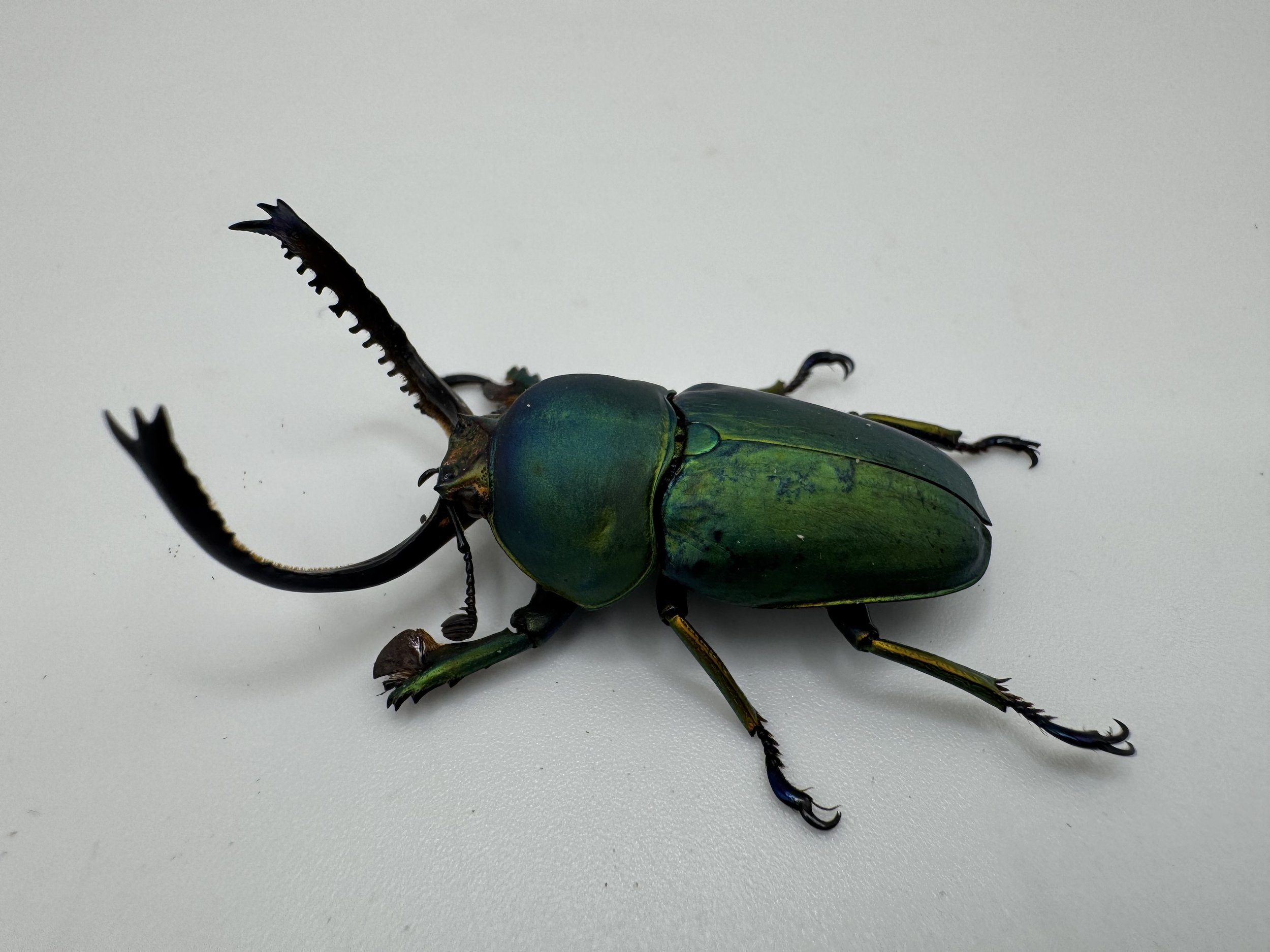 Image 3 of 5
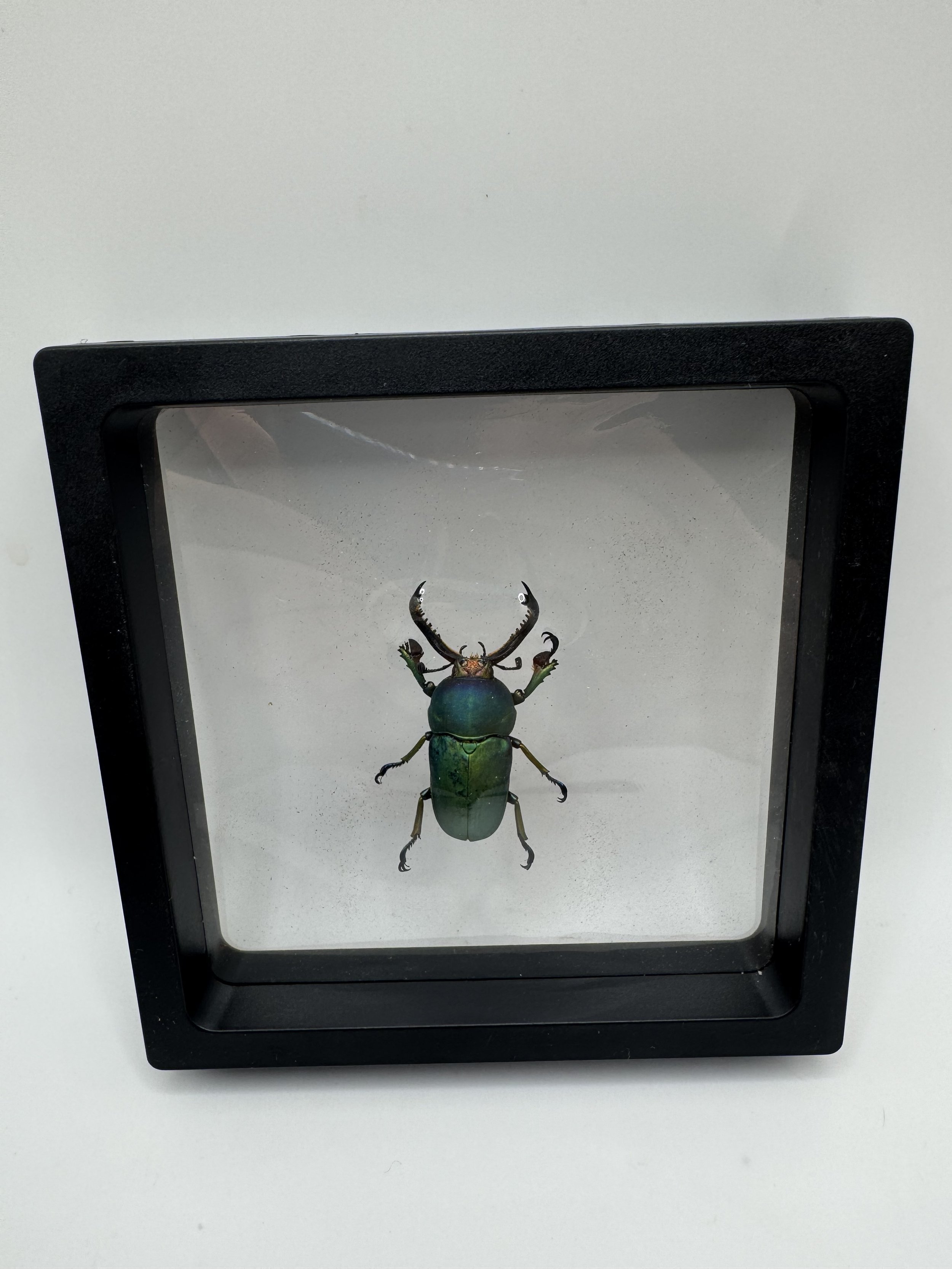 Image 4 of 5
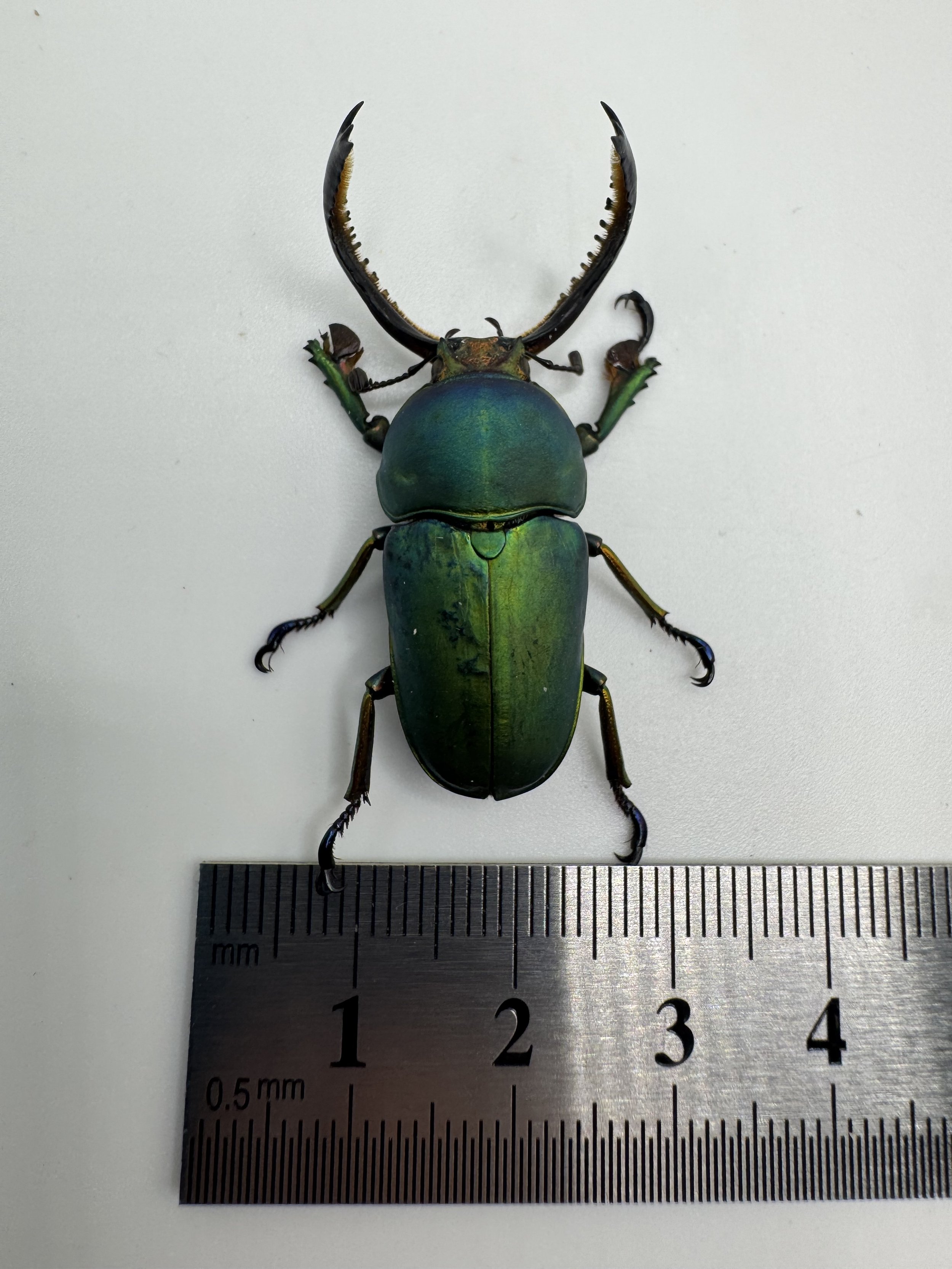 Image 5 of 5
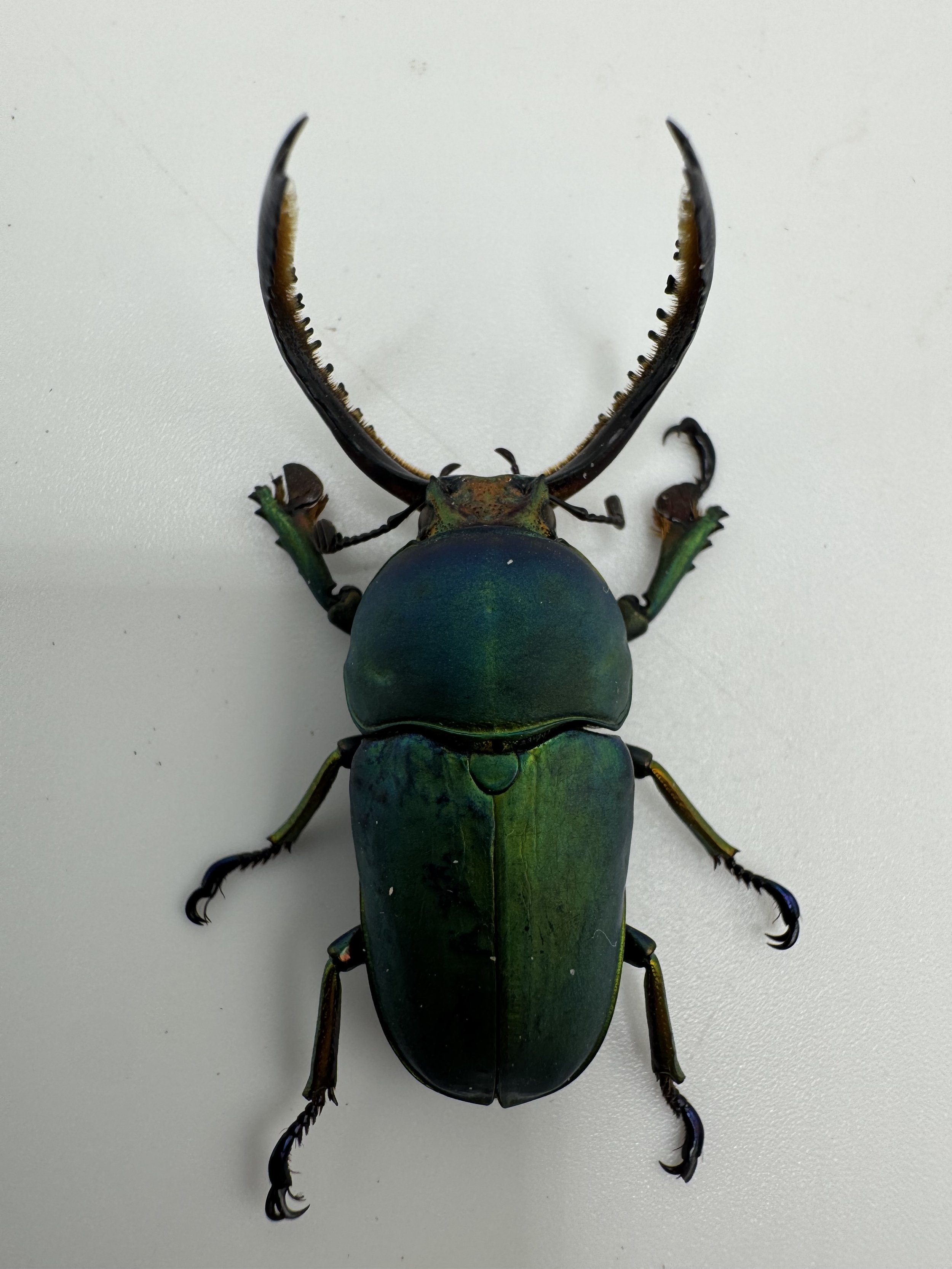
The Sawtooth Stag Beetle (Lamprima adolphinae) is a striking species native to New Guinea, recognized for its brilliant metallic green coloration and impressive, serrated mandibles. Its iridescent exoskeleton can display shades of emerald green, turquoise, blue, and bronze, making it a particularly attractive species for insect collectors.
Male Sawtooth Stag Beetles possess dramatically enlarged mandibles used in competition with rival males. These beetles inhabit tropical and montane forests, where they are associated with decaying wood and forest vegetation. Their distinctive coloration and elaborate jaws make them one of the most recognizable stag beetles of the region.
Interesting Fact:
The mandibles of male Lamprima adolphinae vary considerably depending on body size. Larger males develop elongated, curved jaws lined with numerous tooth-like projections, while smaller males possess shorter, less elaborate mandibles. These structures are used in battles between competing males.
This specimen is professionally mounted in a clear PE display frame, making it ready for immediate display. Collection data is included.
All specimens are ethically sourced, collected responsibly with a focus on sustainability and minimal impact on wild populations.