
 Image 1 of 1
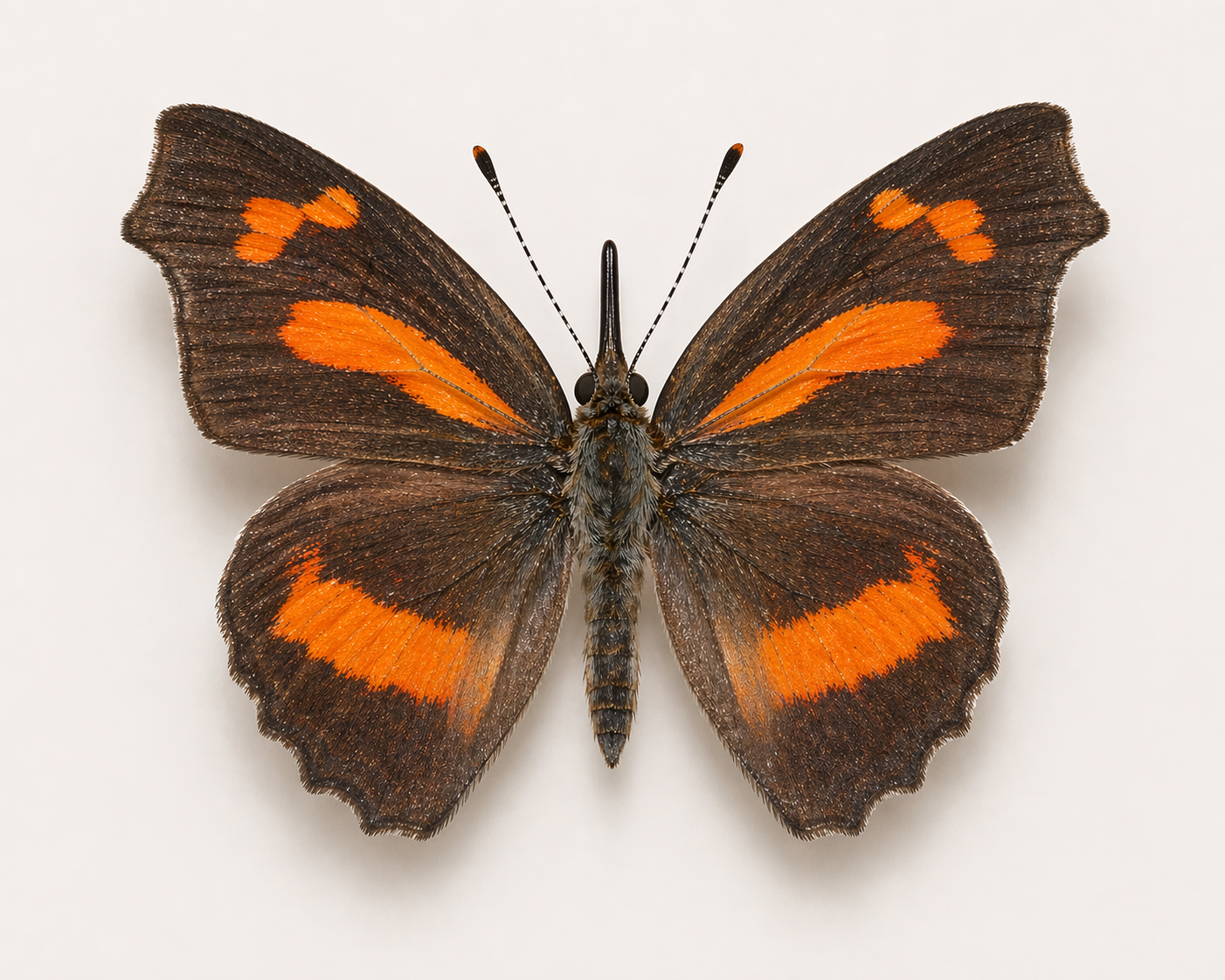
The Club Beak (Libythea myrrha) is a distinctive butterfly with elongated labial palps that form a beak-like projection, giving it a unique profile. Its wings are dark brown with bold orange bands and patches, creating a strong contrast and recognizable pattern.
Native to Asia, Libythea myrrha is found across South and Southeast Asia, including India, Thailand, and surrounding regions. It is commonly associated with forest edges, woodlands, and open habitats.
Interesting Fact:
The unusual “beak” is formed by extended mouthparts and is a defining feature of the Libytheidae family, setting them apart from most other butterflies.
This specimen is preserved and is carefully stored in a protective paper triangle, ensuring it arrives safely and is ready for spreading or long-term collection. Collection data is included.
All specimens are ethically sourced, collected responsibly with a focus on sustainability and minimal impact on wild populations.
Image is a representation drawing and is not scientifically accurate.
The Club Beak (Libythea myrrha) is a distinctive butterfly with elongated labial palps that form a beak-like projection, giving it a unique profile. Its wings are dark brown with bold orange bands and patches, creating a strong contrast and recognizable pattern.
Native to Asia, Libythea myrrha is found across South and Southeast Asia, including India, Thailand, and surrounding regions. It is commonly associated with forest edges, woodlands, and open habitats.
Interesting Fact:
The unusual “beak” is formed by extended mouthparts and is a defining feature of the Libytheidae family, setting them apart from most other butterflies.
This specimen is preserved and is carefully stored in a protective paper triangle, ensuring it arrives safely and is ready for spreading or long-term collection. Collection data is included.
All specimens are ethically sourced, collected responsibly with a focus on sustainability and minimal impact on wild populations.
Image is a representation drawing and is not scientifically accurate.