
 Image 1 of 3
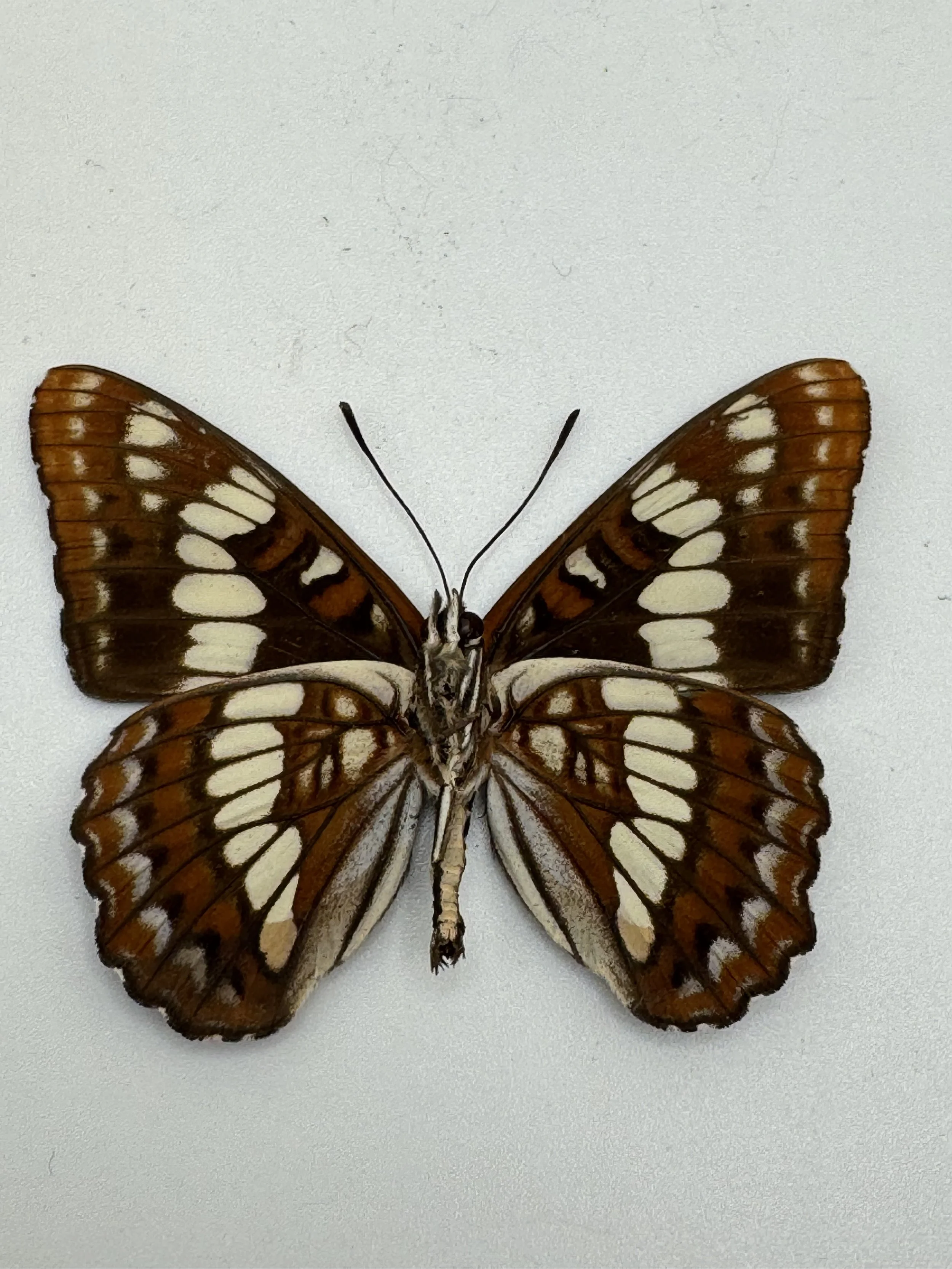 Image 2 of 3
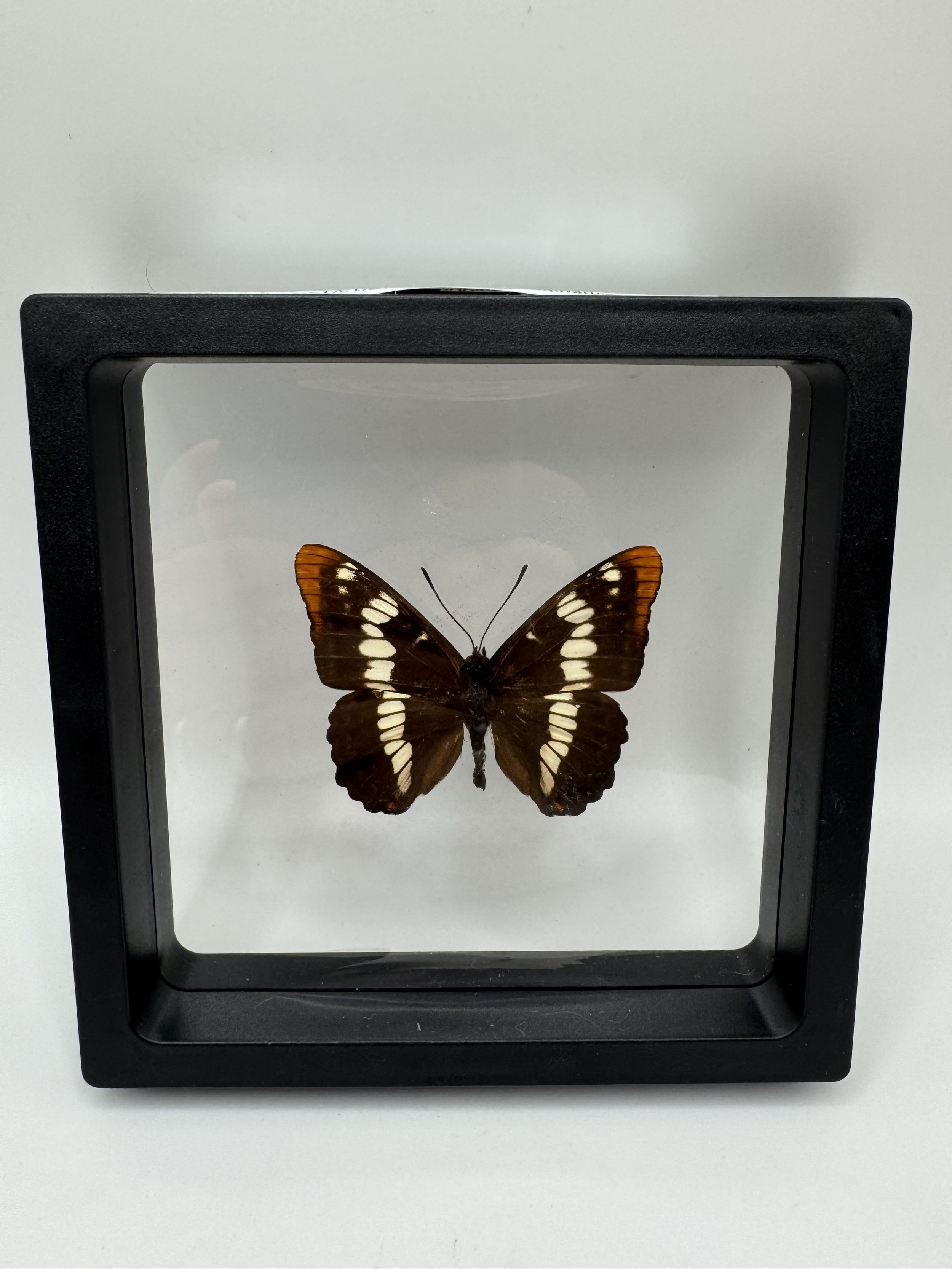 Image 3 of 3
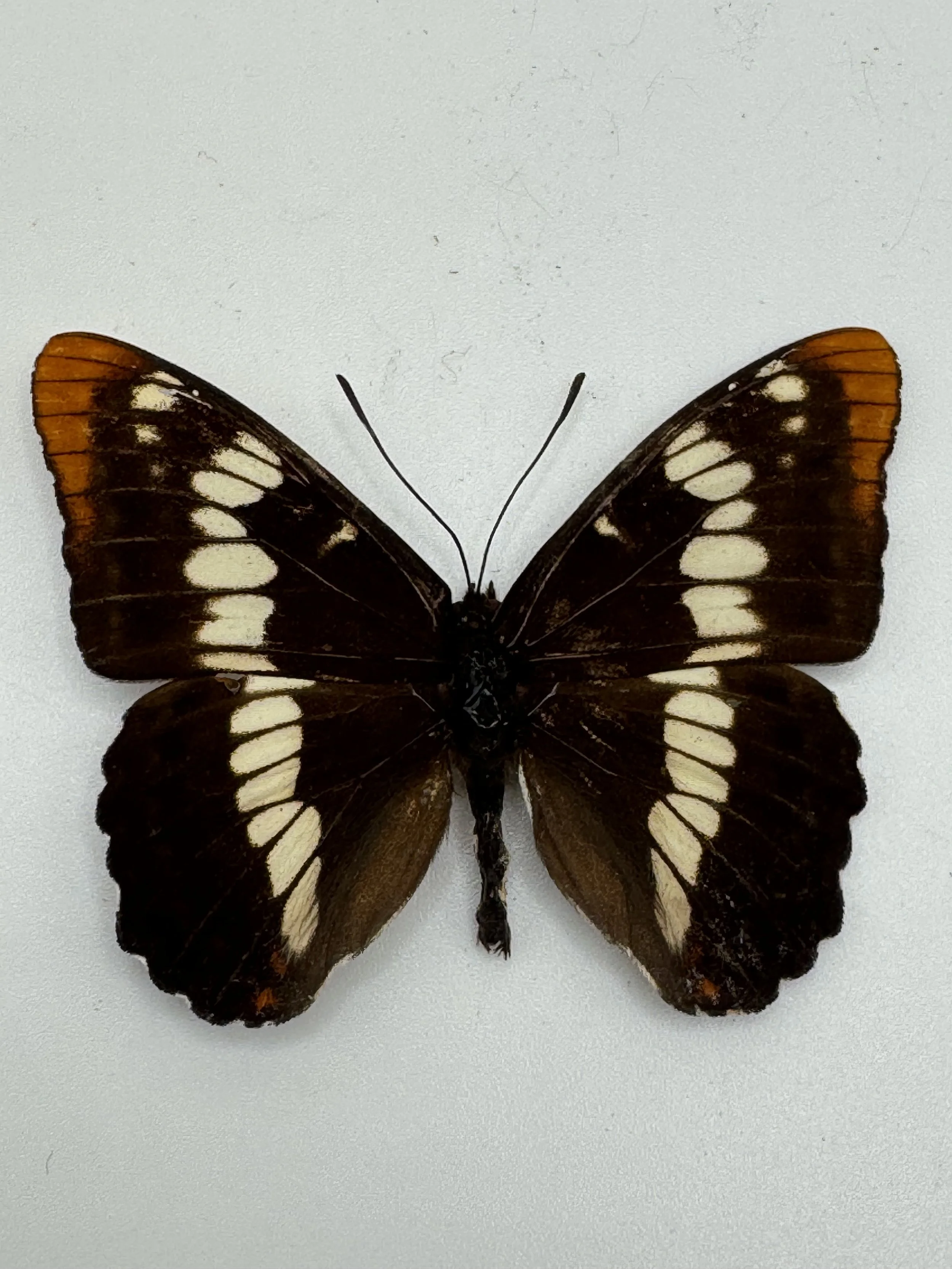
Lorquin’s Admiral (Limenitis lorquini) is a striking butterfly with dark brown to black wings crossed by a bold white band and accented with orange patches near the tips. Its strong, gliding flight and high-contrast pattern make it a standout species in western forests.
Native to western North America, Limenitis lorquini is found from California through the Pacific Northwest and into parts of British Columbia. It is commonly associated with forested areas, riparian corridors, and woodland edges where its host plants grow.
Interesting Fact:
Unlike many butterflies that rely heavily on nectar, this species often feeds on tree sap, rotting fruit, and animal droppings, and is frequently seen basking or gliding through shaded forest habitats.
This specimen is preserved, fully spread and professionally mounted in a clear PE display frame, making it ready for immediate display. Collection data is included.
All specimens are ethically sourced, collected responsibly with a focus on sustainability and minimal impact on wild populations.
Lorquin’s Admiral (Limenitis lorquini) is a striking butterfly with dark brown to black wings crossed by a bold white band and accented with orange patches near the tips. Its strong, gliding flight and high-contrast pattern make it a standout species in western forests.
Native to western North America, Limenitis lorquini is found from California through the Pacific Northwest and into parts of British Columbia. It is commonly associated with forested areas, riparian corridors, and woodland edges where its host plants grow.
Interesting Fact:
Unlike many butterflies that rely heavily on nectar, this species often feeds on tree sap, rotting fruit, and animal droppings, and is frequently seen basking or gliding through shaded forest habitats.
This specimen is preserved, fully spread and professionally mounted in a clear PE display frame, making it ready for immediate display. Collection data is included.
All specimens are ethically sourced, collected responsibly with a focus on sustainability and minimal impact on wild populations.