
 Image 1 of 3
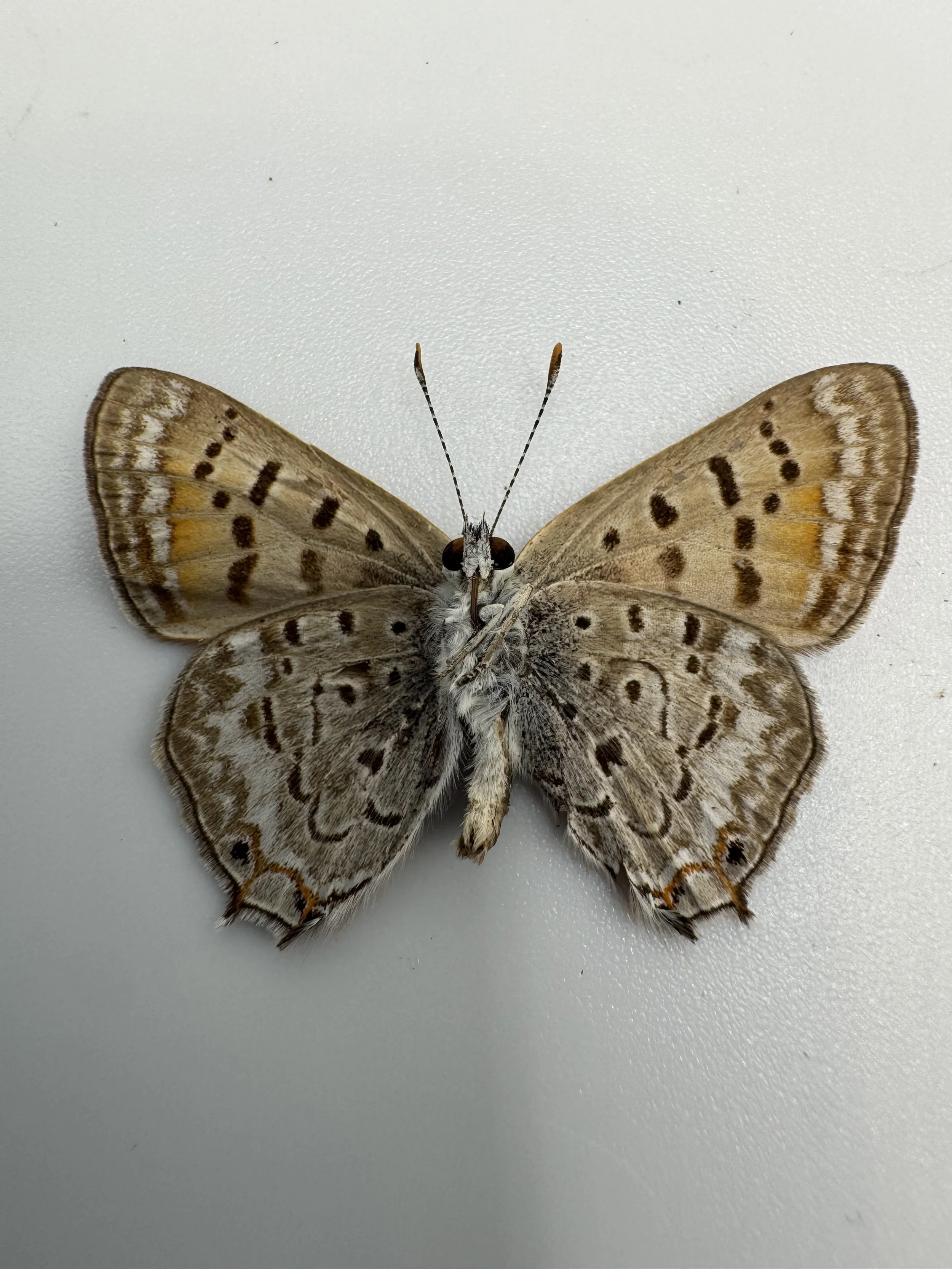 Image 2 of 3
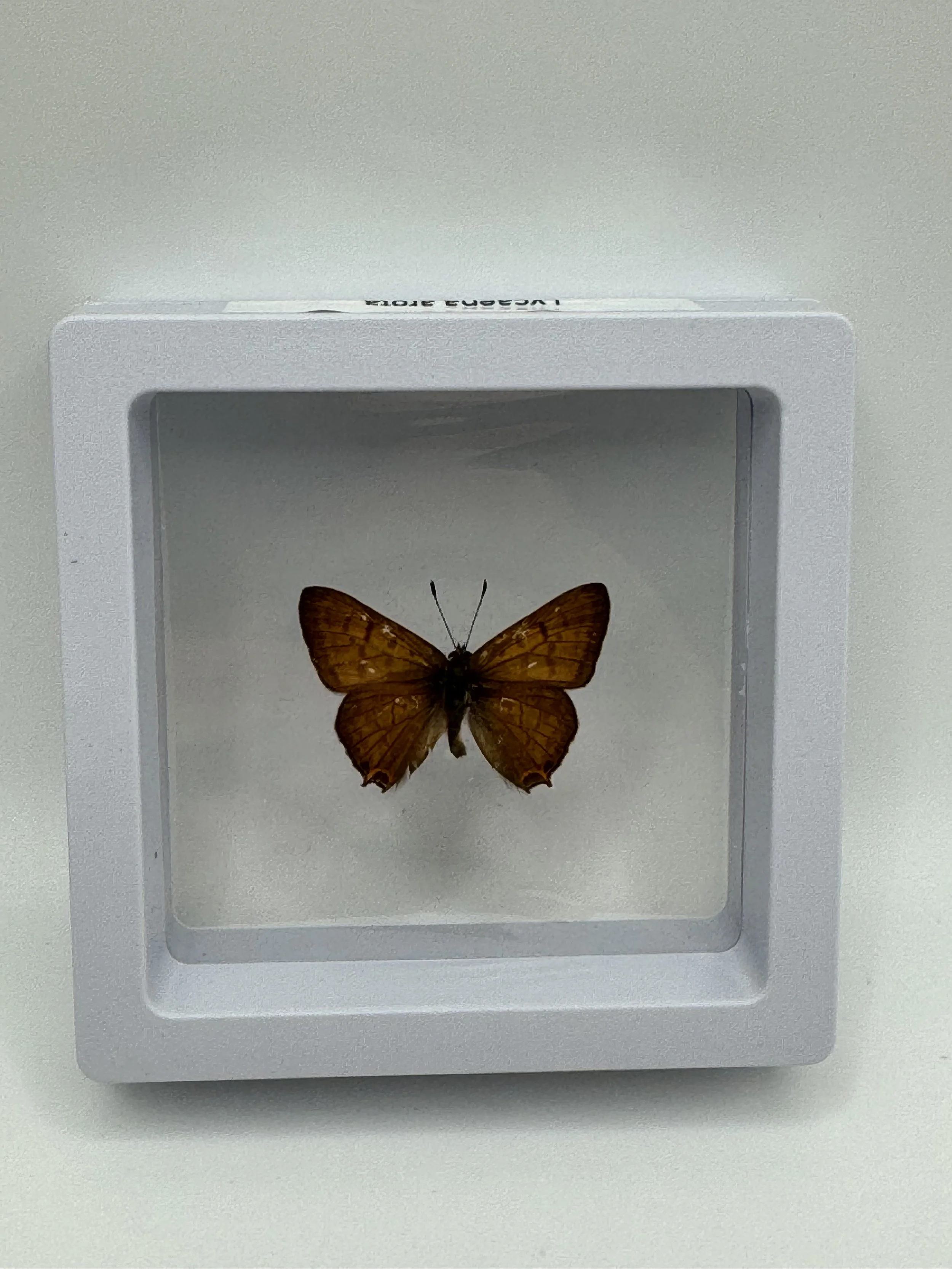 Image 3 of 3
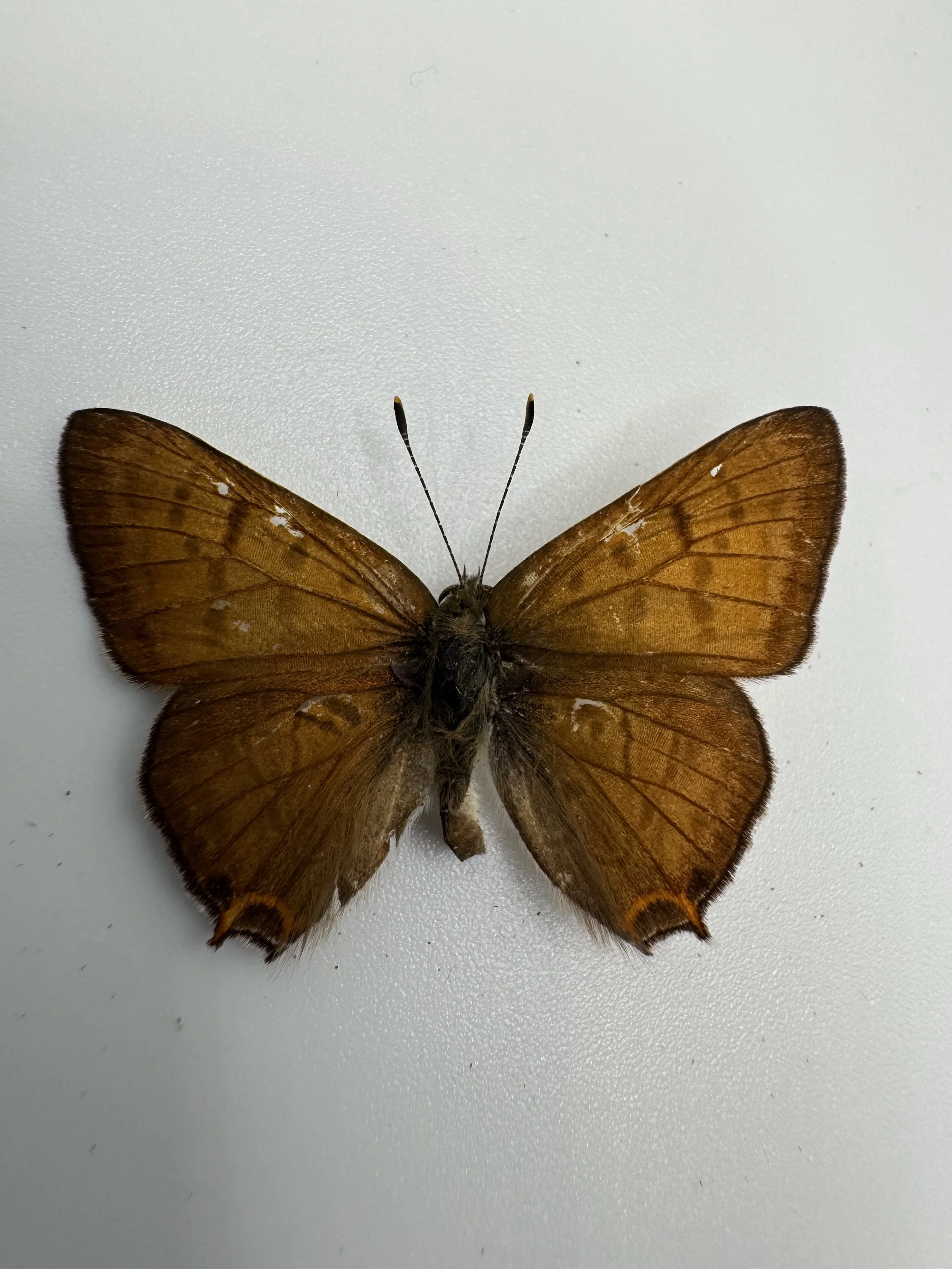
The Tailed Copper (Lycaena arota) is a distinctive butterfly with bright orange wings marked by bold black spotting and fine tails on the hindwings. The underside features pale gray tones with delicate markings, providing excellent camouflage when at rest.
Native to western North America, Lycaena arota is found from California through the Great Basin and into parts of the Pacific Northwest. It is commonly associated with mountainous and foothill habitats, including open woodlands, canyons, and streamside areas.
Interesting Fact:
Unlike many copper butterflies, this species has small tail-like projections on the hindwings, a feature more commonly associated with hairstreaks, which may help divert predator attacks away from vital body parts.
This specimen is preserved, fully spread and professionally mounted in a clear PE display frame, making it ready for immediate display. Collection data is included.
All specimens are ethically sourced, collected responsibly with a focus on sustainability and minimal impact on wild populations.
The Tailed Copper (Lycaena arota) is a distinctive butterfly with bright orange wings marked by bold black spotting and fine tails on the hindwings. The underside features pale gray tones with delicate markings, providing excellent camouflage when at rest.
Native to western North America, Lycaena arota is found from California through the Great Basin and into parts of the Pacific Northwest. It is commonly associated with mountainous and foothill habitats, including open woodlands, canyons, and streamside areas.
Interesting Fact:
Unlike many copper butterflies, this species has small tail-like projections on the hindwings, a feature more commonly associated with hairstreaks, which may help divert predator attacks away from vital body parts.
This specimen is preserved, fully spread and professionally mounted in a clear PE display frame, making it ready for immediate display. Collection data is included.
All specimens are ethically sourced, collected responsibly with a focus on sustainability and minimal impact on wild populations.