
 Image 1 of 3
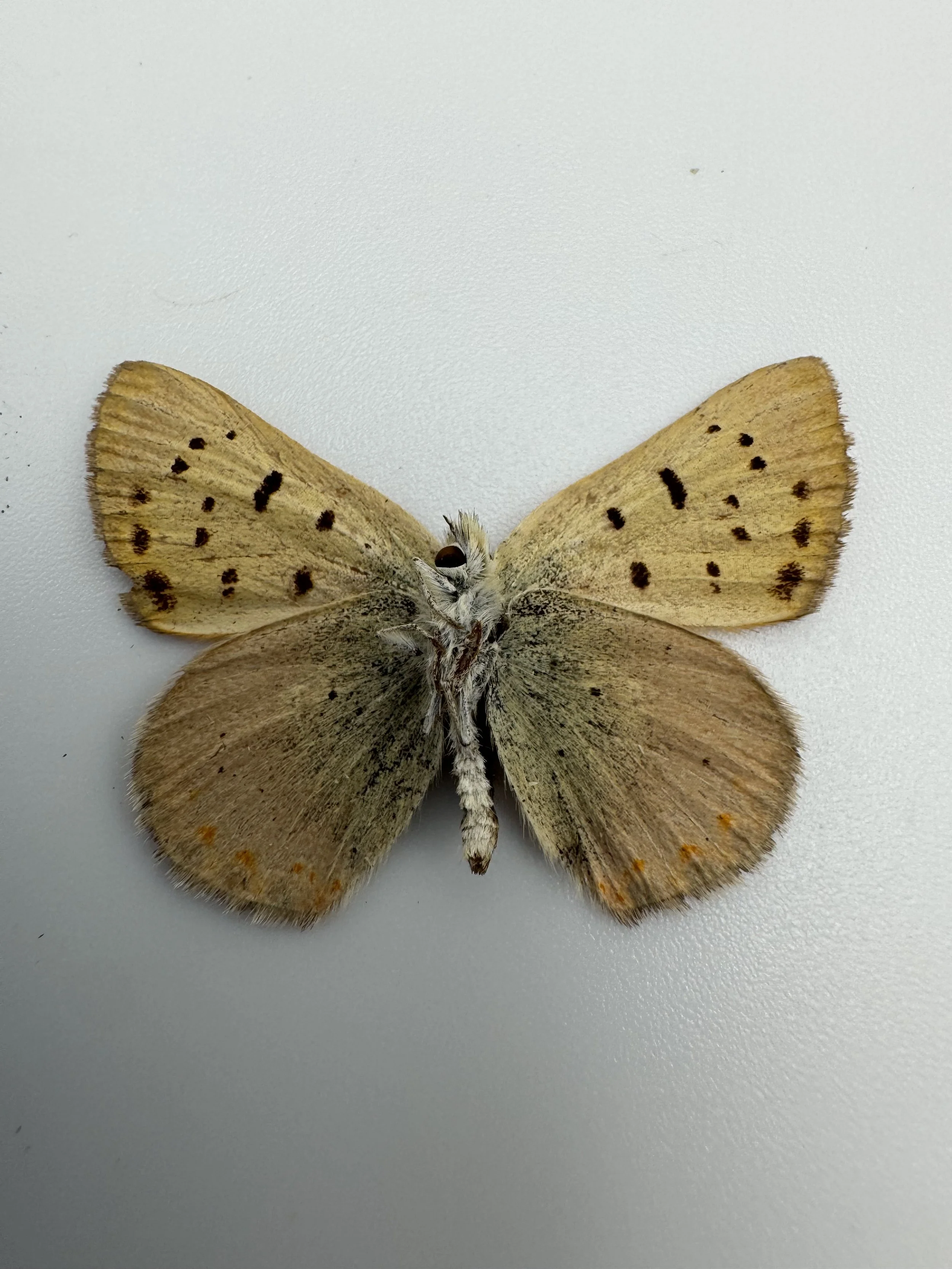 Image 2 of 3
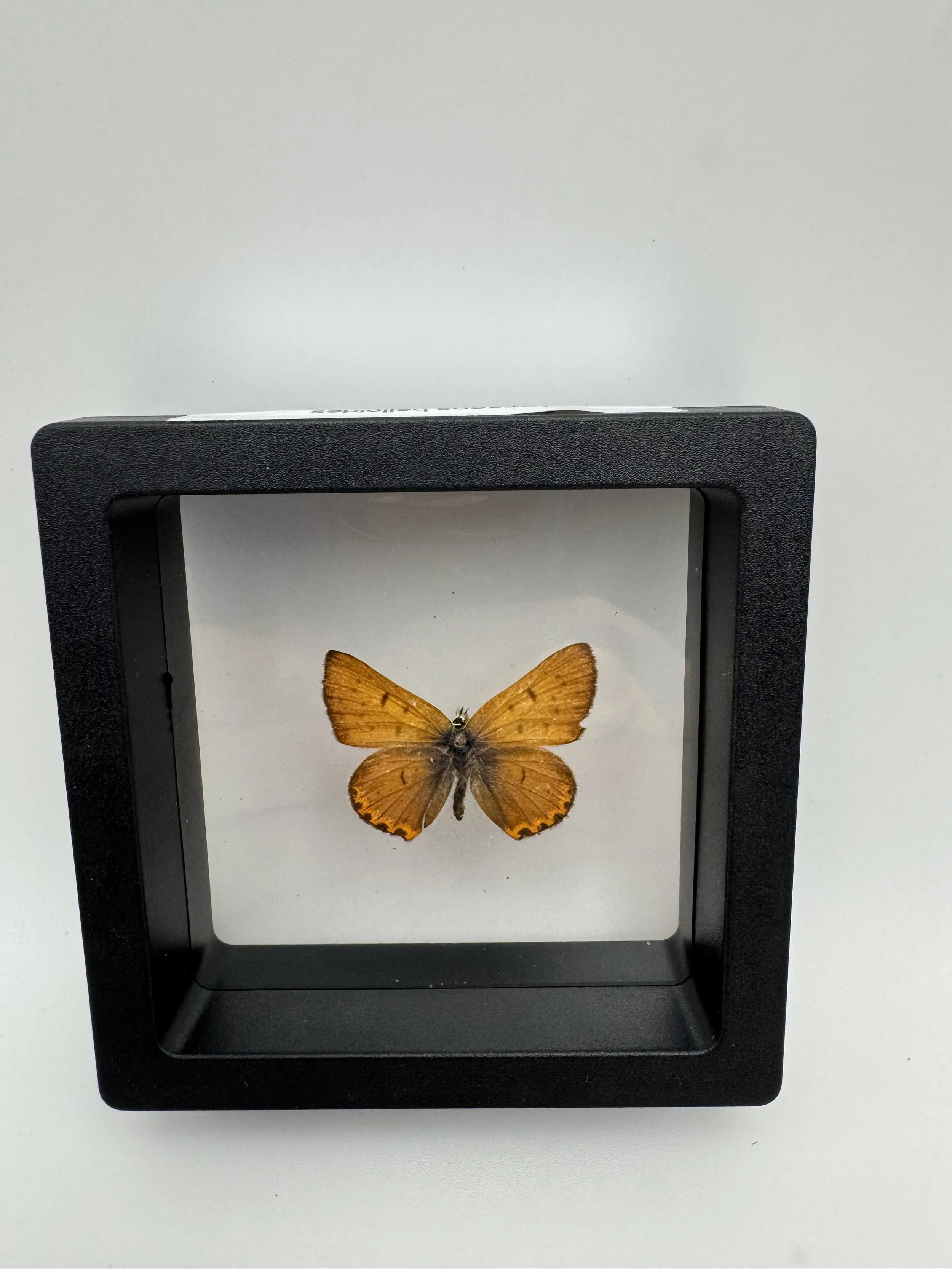 Image 3 of 3
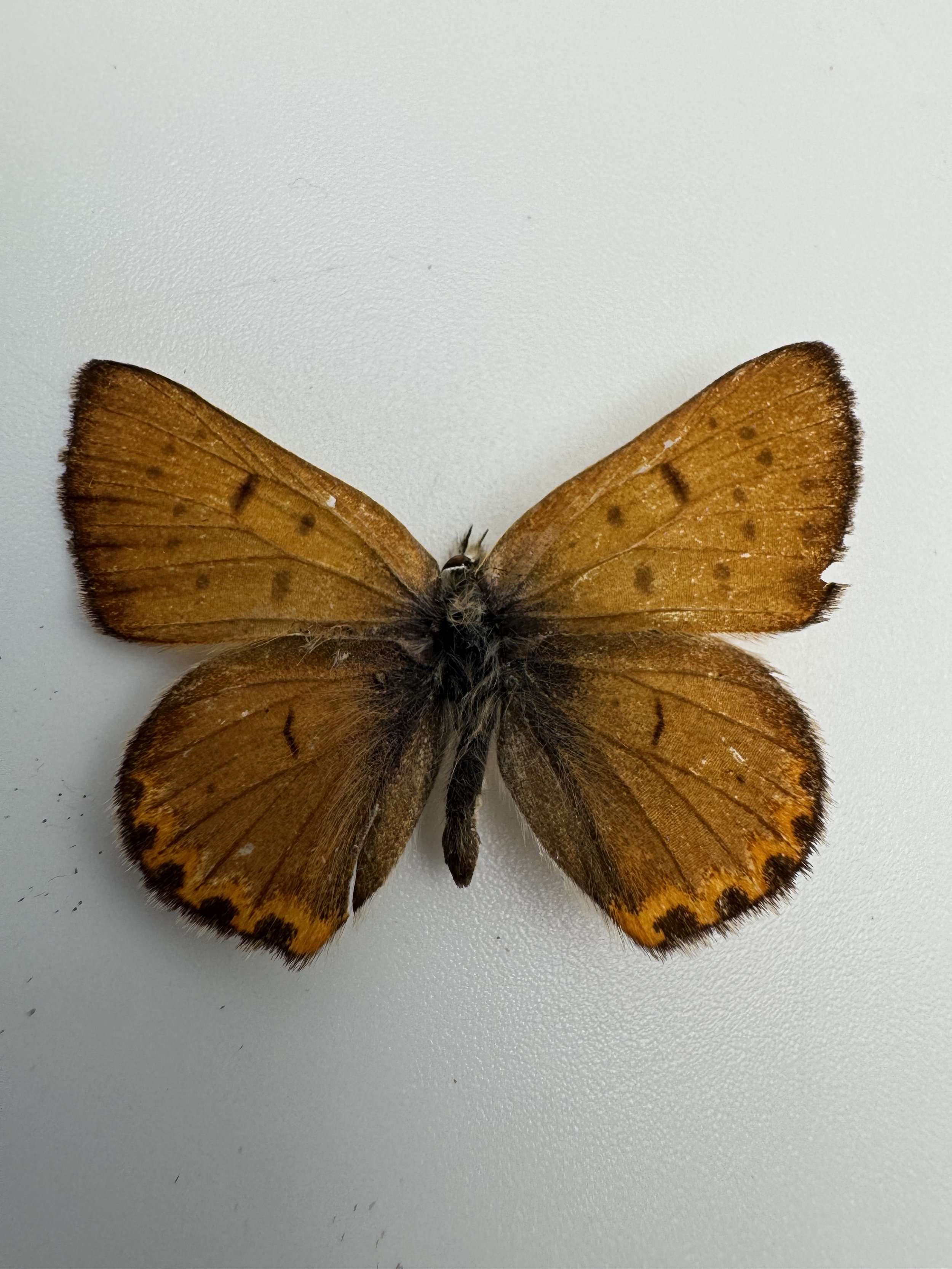
The Purplish Copper (Lycaena helloides helloides) is a small but vibrant butterfly known for its bright orange wings with dark spotting and subtle purplish tones, especially in fresh specimens. The underside is lighter with fine patterning, providing camouflage when at rest.
Native to western North America, this nominotypical subspecies of Lycaena helloides is found from California through the western United States and into parts of Canada. It is commonly associated with moist habitats such as meadows, wetlands, and stream edges where its host plants grow.
Interesting Fact:
The caterpillars of this species feed primarily on dock plants (Rumex spp.), and like many lycaenids, they often interact with ants, which may provide protection in exchange for sugary secretions.
This specimen is preserved, fully spread and professionally mounted in a clear PE display frame, making it ready for immediate display. Collection data is included.
All specimens are ethically sourced, collected responsibly with a focus on sustainability and minimal impact on wild populations.
The Purplish Copper (Lycaena helloides helloides) is a small but vibrant butterfly known for its bright orange wings with dark spotting and subtle purplish tones, especially in fresh specimens. The underside is lighter with fine patterning, providing camouflage when at rest.
Native to western North America, this nominotypical subspecies of Lycaena helloides is found from California through the western United States and into parts of Canada. It is commonly associated with moist habitats such as meadows, wetlands, and stream edges where its host plants grow.
Interesting Fact:
The caterpillars of this species feed primarily on dock plants (Rumex spp.), and like many lycaenids, they often interact with ants, which may provide protection in exchange for sugary secretions.
This specimen is preserved, fully spread and professionally mounted in a clear PE display frame, making it ready for immediate display. Collection data is included.
All specimens are ethically sourced, collected responsibly with a focus on sustainability and minimal impact on wild populations.