
 Image 1 of 4
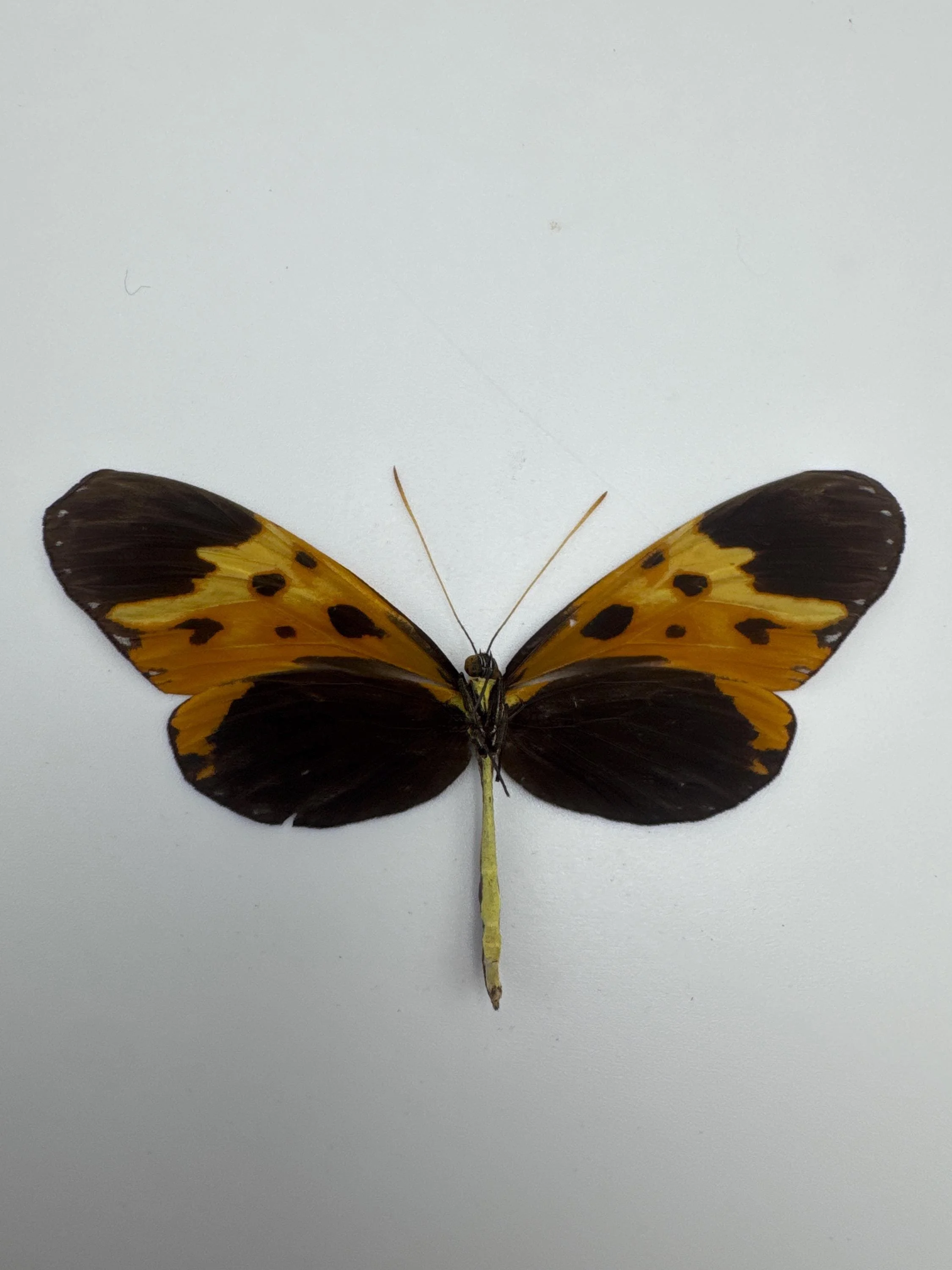 Image 2 of 4
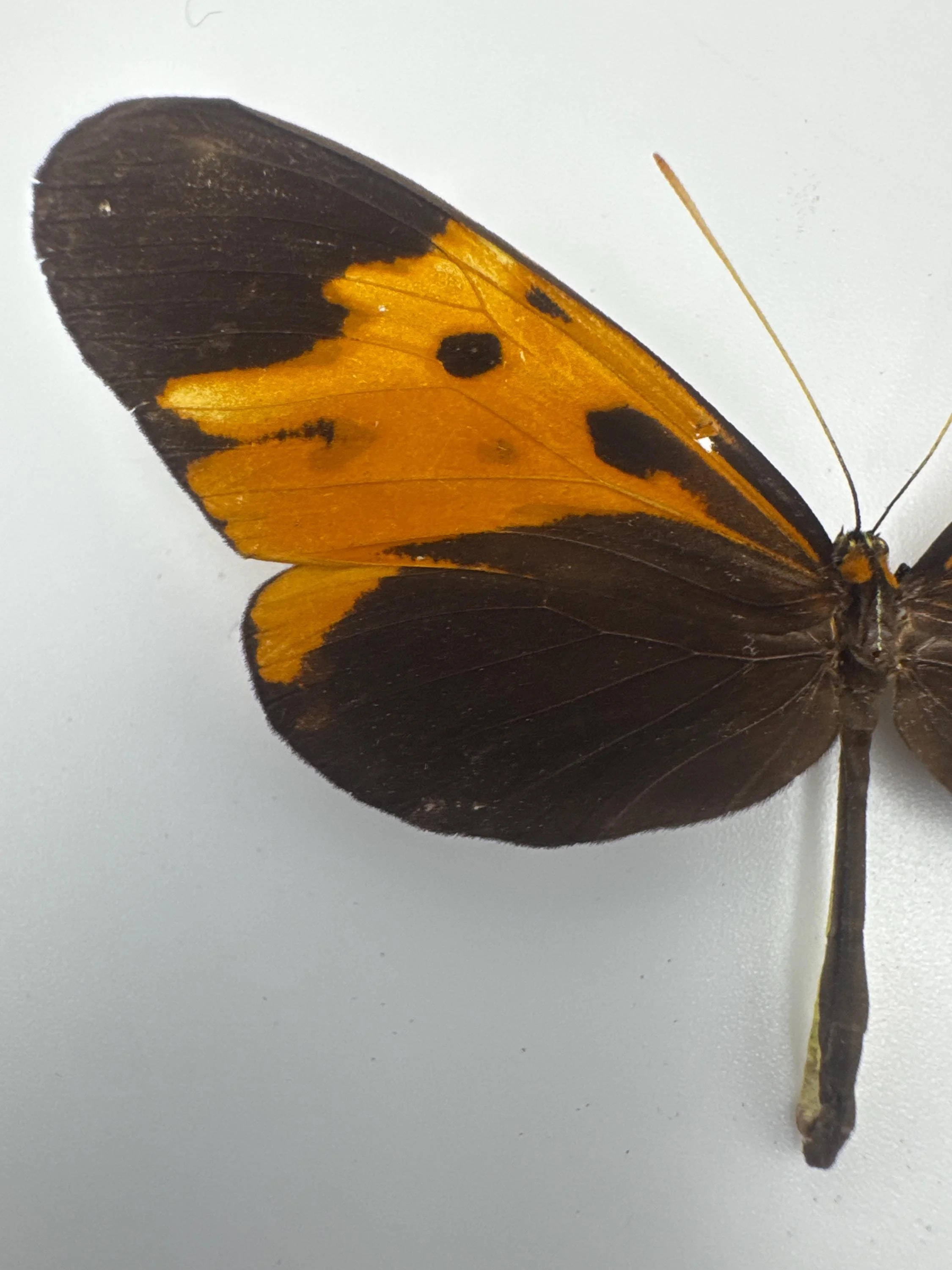 Image 3 of 4
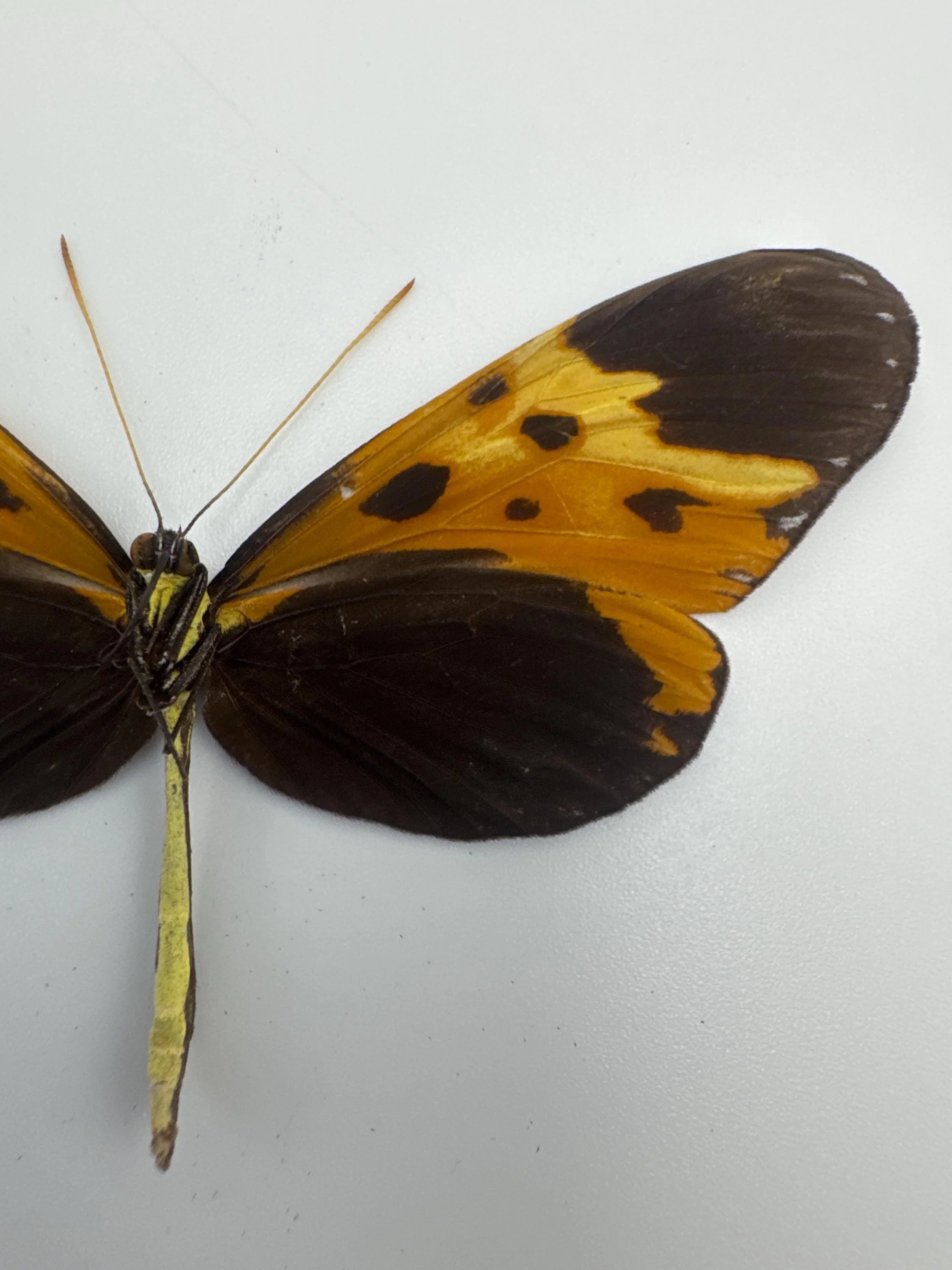 Image 4 of 4
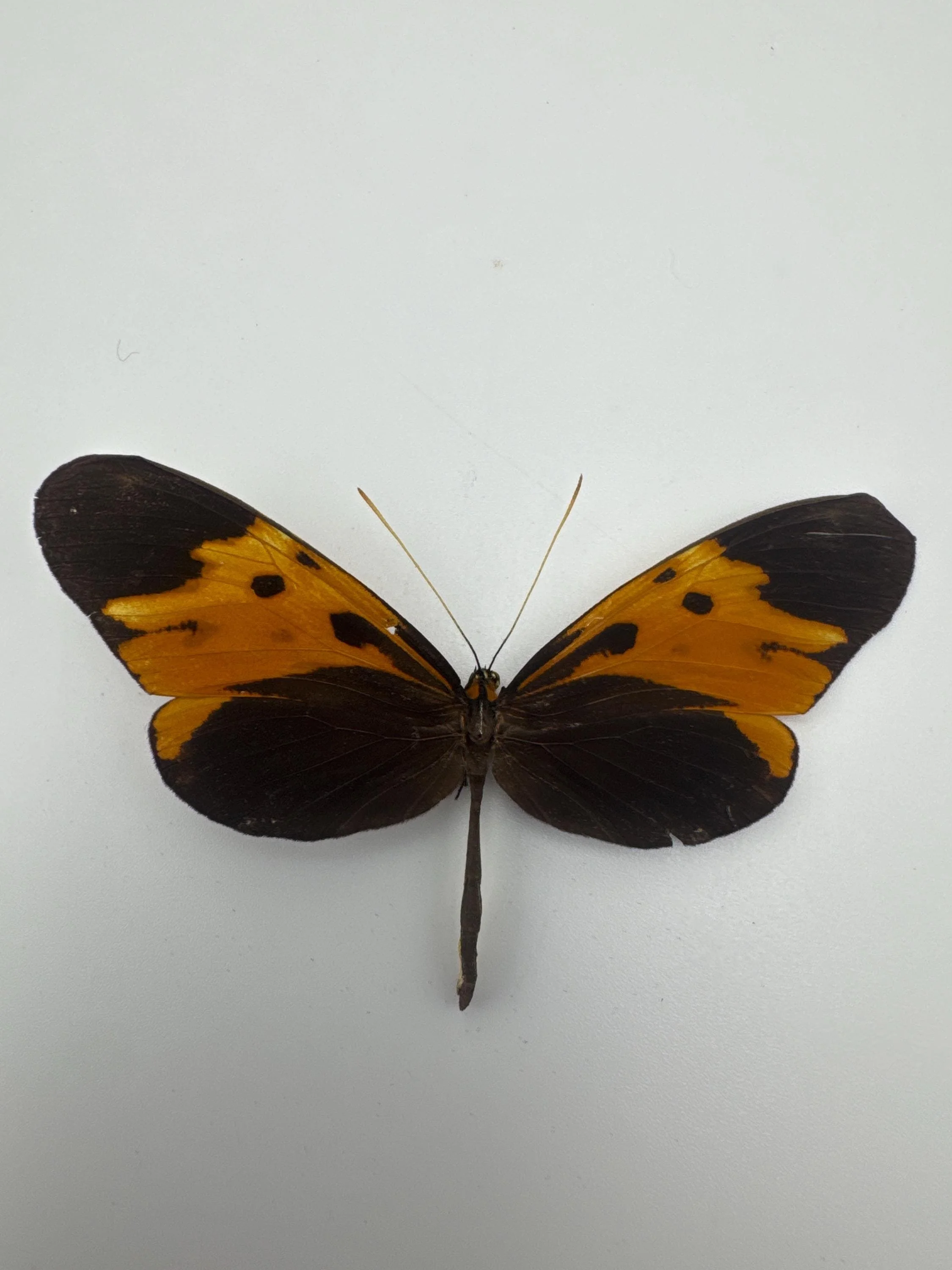
The Mazaeus Tigerwing (Mechanitis mazaeus) is a striking butterfly native to tropical South America, particularly the Amazon Basin. A member of the Nymphalidae family, this species features elongated wings with bold orange, yellow, and black markings. Its distinctive coloration and elegant wing shape make it a beautiful addition to any butterfly collection.
This species inhabits tropical rainforests, where it participates in complex mimicry relationships with other butterflies. Its contrasting wing patterns serve as warning signals to potential predators, helping protect it from being eaten.
Interesting Fact:
The Mazaeus Tigerwing participates in Müllerian mimicry, a fascinating evolutionary adaptation in which multiple chemically defended butterfly species develop similar warning patterns. This shared appearance helps predators learn to avoid them. The species also exhibits considerable geographical variation in its wing patterns.
This specimen is professionally mounted in a clear PE display frame, making it ready for immediate display. Collection data is included.
All specimens are ethically sourced, collected responsibly with a focus on sustainability and minimal impact on wild populations.