
 Image 1 of 1
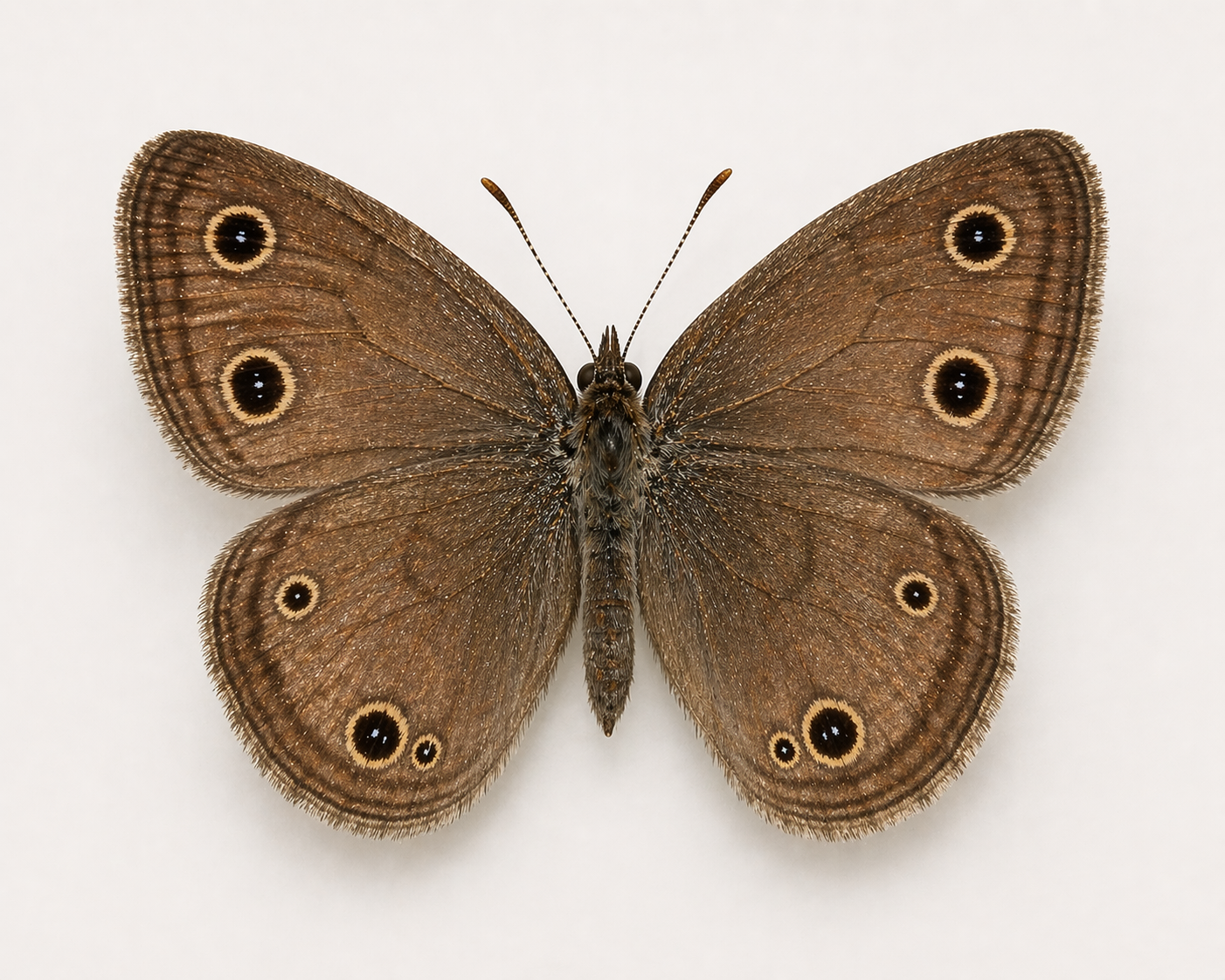
The Little Wood Satyr (Megisto cymela) is a soft brown butterfly known for its understated beauty and distinctive eye spots on the wings. These eye spots, often ringed with pale coloration, help deter predators and add subtle detail to its otherwise muted appearance.
Native to eastern North America, Megisto cymela is found from southern Canada through the eastern United States. It prefers shaded habitats such as deciduous forests, woodland edges, and areas with dappled sunlight where grasses grow.
Interesting Fact:
Unlike many butterflies, the Little Wood Satyr rarely feeds on flowers. Instead, it often takes nourishment from tree sap, rotting fruit, and other organic materials on the forest floor.
This specimen is preserved and is carefully stored in a protective paper triangle, ensuring it arrives safely and is ready for spreading or long-term collection. Collection data is included.
All specimens are ethically sourced, collected responsibly with a focus on sustainability and minimal impact on wild populations.
Image is a representation drawing and is not scientifically accurate.
The Little Wood Satyr (Megisto cymela) is a soft brown butterfly known for its understated beauty and distinctive eye spots on the wings. These eye spots, often ringed with pale coloration, help deter predators and add subtle detail to its otherwise muted appearance.
Native to eastern North America, Megisto cymela is found from southern Canada through the eastern United States. It prefers shaded habitats such as deciduous forests, woodland edges, and areas with dappled sunlight where grasses grow.
Interesting Fact:
Unlike many butterflies, the Little Wood Satyr rarely feeds on flowers. Instead, it often takes nourishment from tree sap, rotting fruit, and other organic materials on the forest floor.
This specimen is preserved and is carefully stored in a protective paper triangle, ensuring it arrives safely and is ready for spreading or long-term collection. Collection data is included.
All specimens are ethically sourced, collected responsibly with a focus on sustainability and minimal impact on wild populations.
Image is a representation drawing and is not scientifically accurate.