
 Image 1 of 1
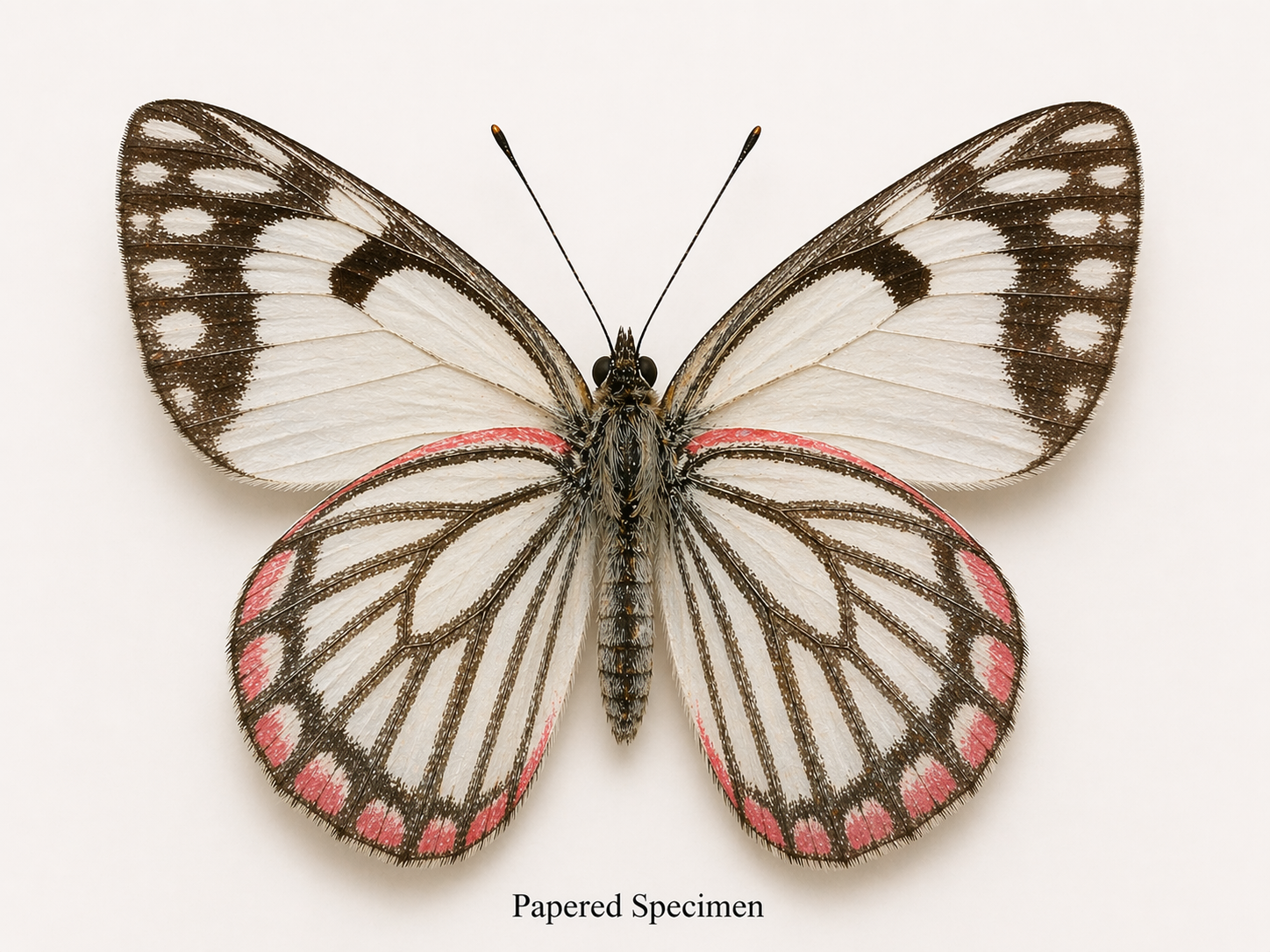
The Pine White (Neophasia menapia) is a distinctive butterfly with white wings marked by bold black veins and borders, giving it a striking, high-contrast appearance. Unlike many white butterflies, its patterning is more angular and pronounced, especially in flight.
Native to western North America, Neophasia menapia is found from California through the Pacific Northwest and into parts of western Canada. It is closely associated with coniferous forests, particularly pine and fir habitats where its host plants grow.
Interesting Fact:
This species is unusual among butterflies because it flies primarily in late summer and fall, rather than spring or early summer like most whites. Its caterpillars feed on conifers such as pine and fir (Pinus and Abies).
This specimen is preserved and is carefully stored in a protective paper triangle, ensuring it arrives safely and is ready for spreading or long-term collection. Collection data is included.
All specimens are ethically sourced, collected responsibly with a focus on sustainability and minimal impact on wild populations.
Image is a representation drawing and is not scientifically accurate.
The Pine White (Neophasia menapia) is a distinctive butterfly with white wings marked by bold black veins and borders, giving it a striking, high-contrast appearance. Unlike many white butterflies, its patterning is more angular and pronounced, especially in flight.
Native to western North America, Neophasia menapia is found from California through the Pacific Northwest and into parts of western Canada. It is closely associated with coniferous forests, particularly pine and fir habitats where its host plants grow.
Interesting Fact:
This species is unusual among butterflies because it flies primarily in late summer and fall, rather than spring or early summer like most whites. Its caterpillars feed on conifers such as pine and fir (Pinus and Abies).
This specimen is preserved and is carefully stored in a protective paper triangle, ensuring it arrives safely and is ready for spreading or long-term collection. Collection data is included.
All specimens are ethically sourced, collected responsibly with a focus on sustainability and minimal impact on wild populations.
Image is a representation drawing and is not scientifically accurate.