
 Image 1 of 3
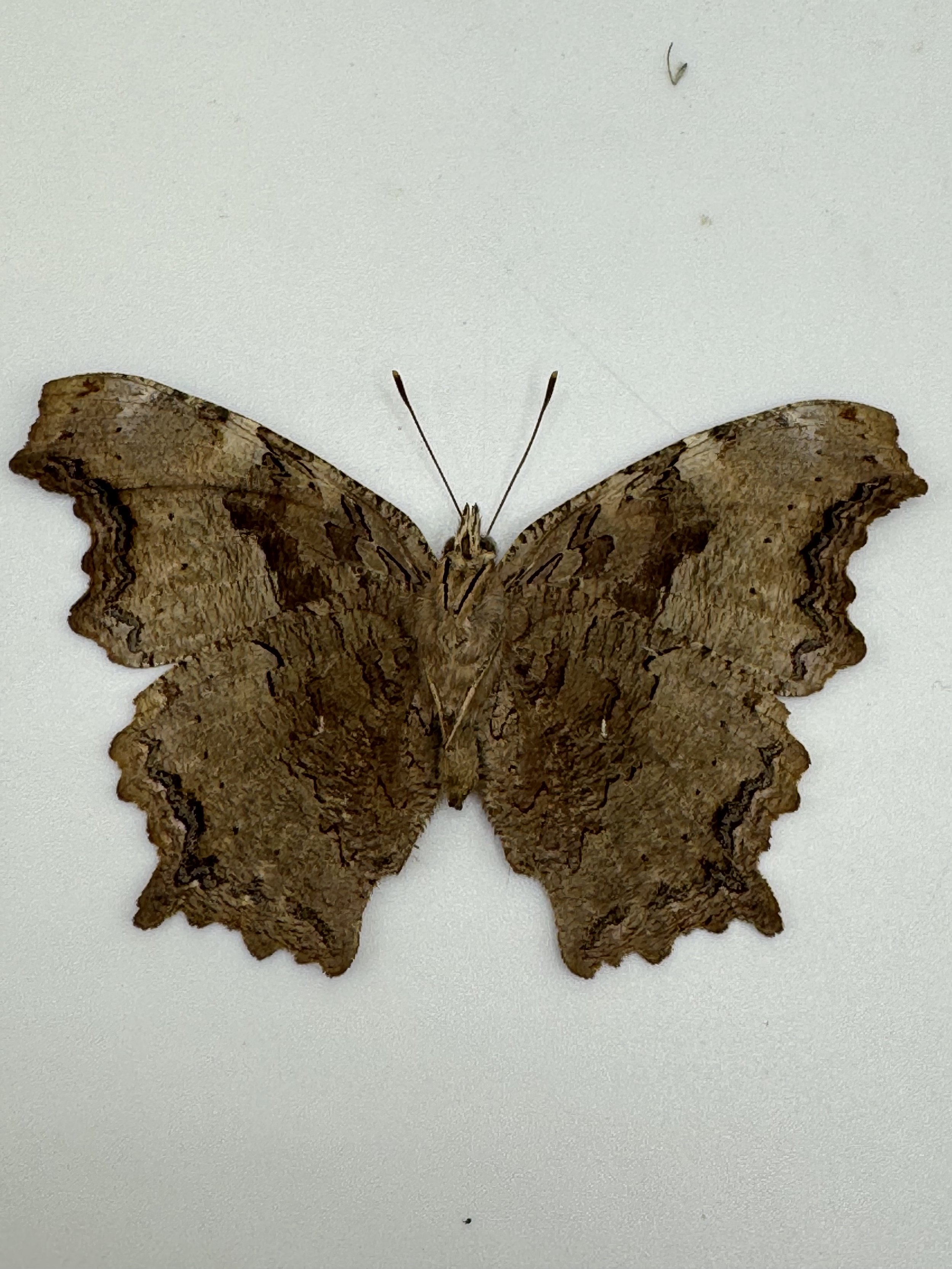 Image 2 of 3
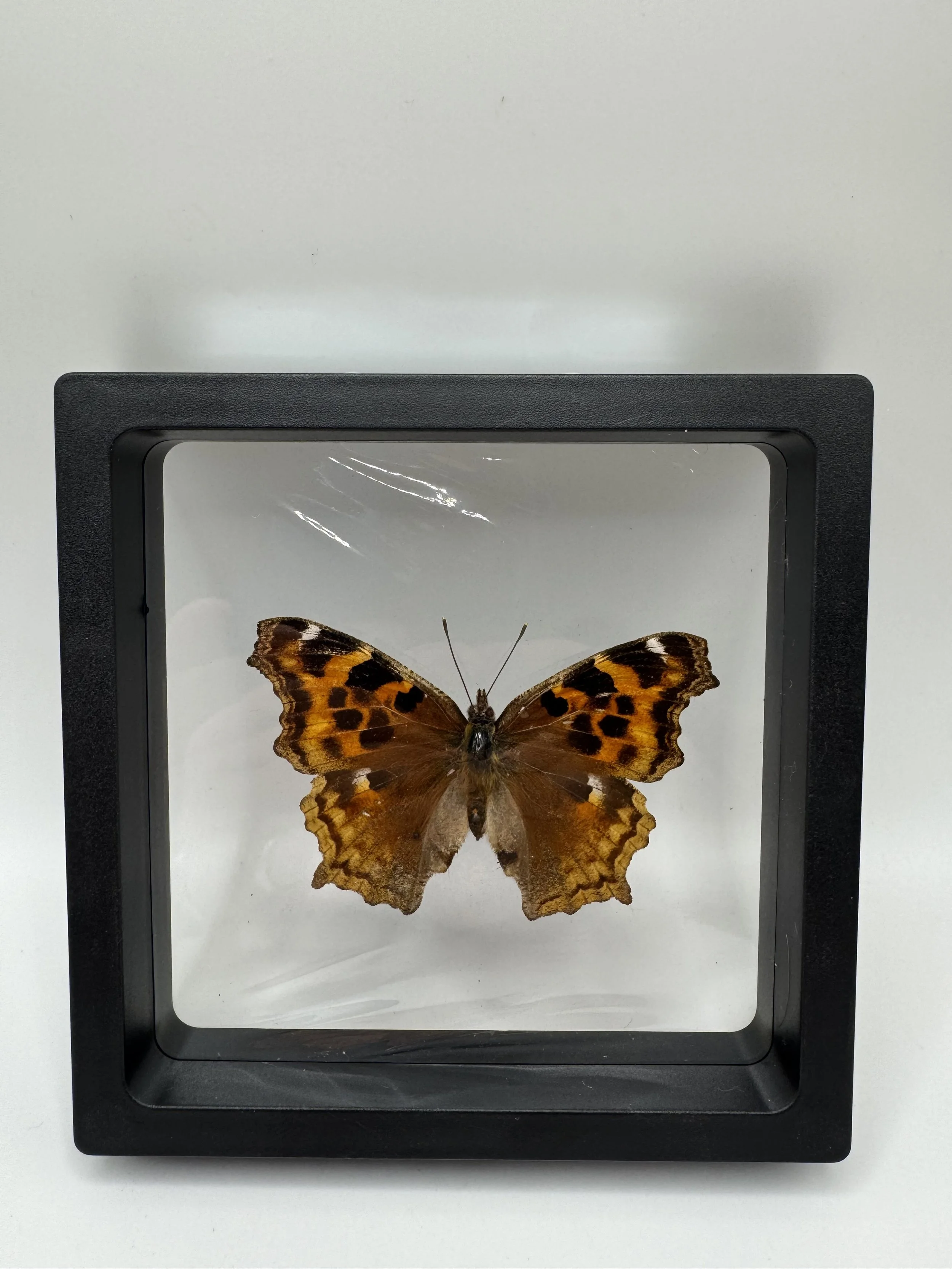 Image 3 of 3
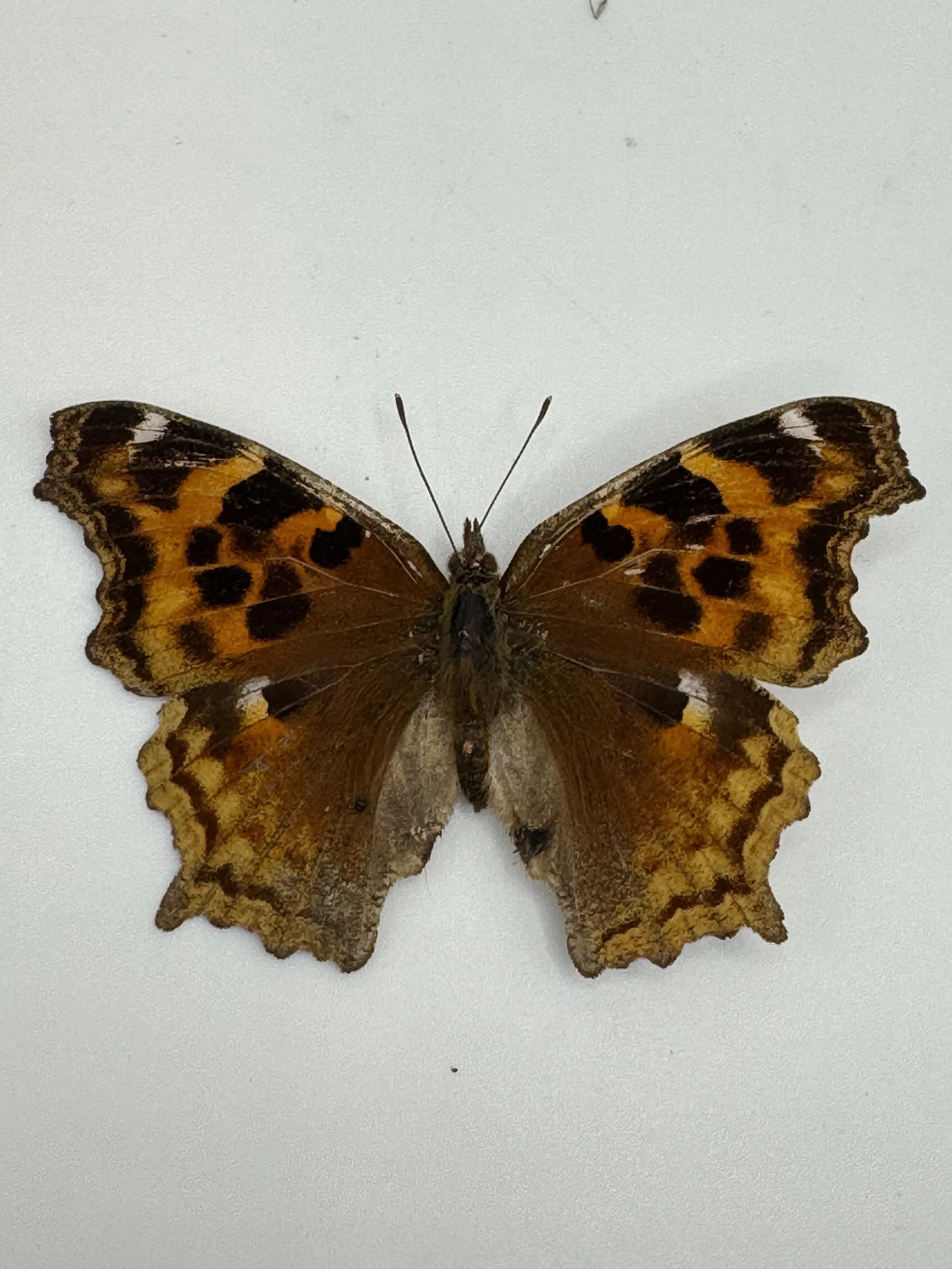
The Compton Tortoiseshell (Nymphalis vaualbum j-album) is a large and distinctive butterfly with irregular, angular wing edges and a mottled pattern of orange, brown, and cream. The underside resembles bark or dead leaves, providing excellent camouflage when at rest.
Native to the Northern Hemisphere, this subspecies of Nymphalis vaualbum is found across northern North America, particularly in Canada and the northern United States. It is commonly associated with boreal forests, woodlands, and areas near streams.
Interesting Fact:
Like other tortoiseshells, this species overwinters as an adult, emerging early in spring. It is also known for its erratic appearances—sometimes abundant in certain years and nearly absent in others.
This specimen is preserved, fully spread and professionally mounted in a clear PE display frame, making it ready for immediate display. Collection data is included.
All specimens are ethically sourced, collected responsibly with a focus on sustainability and minimal impact on wild populations.
The Compton Tortoiseshell (Nymphalis vaualbum j-album) is a large and distinctive butterfly with irregular, angular wing edges and a mottled pattern of orange, brown, and cream. The underside resembles bark or dead leaves, providing excellent camouflage when at rest.
Native to the Northern Hemisphere, this subspecies of Nymphalis vaualbum is found across northern North America, particularly in Canada and the northern United States. It is commonly associated with boreal forests, woodlands, and areas near streams.
Interesting Fact:
Like other tortoiseshells, this species overwinters as an adult, emerging early in spring. It is also known for its erratic appearances—sometimes abundant in certain years and nearly absent in others.
This specimen is preserved, fully spread and professionally mounted in a clear PE display frame, making it ready for immediate display. Collection data is included.
All specimens are ethically sourced, collected responsibly with a focus on sustainability and minimal impact on wild populations.