
 Image 1 of 4
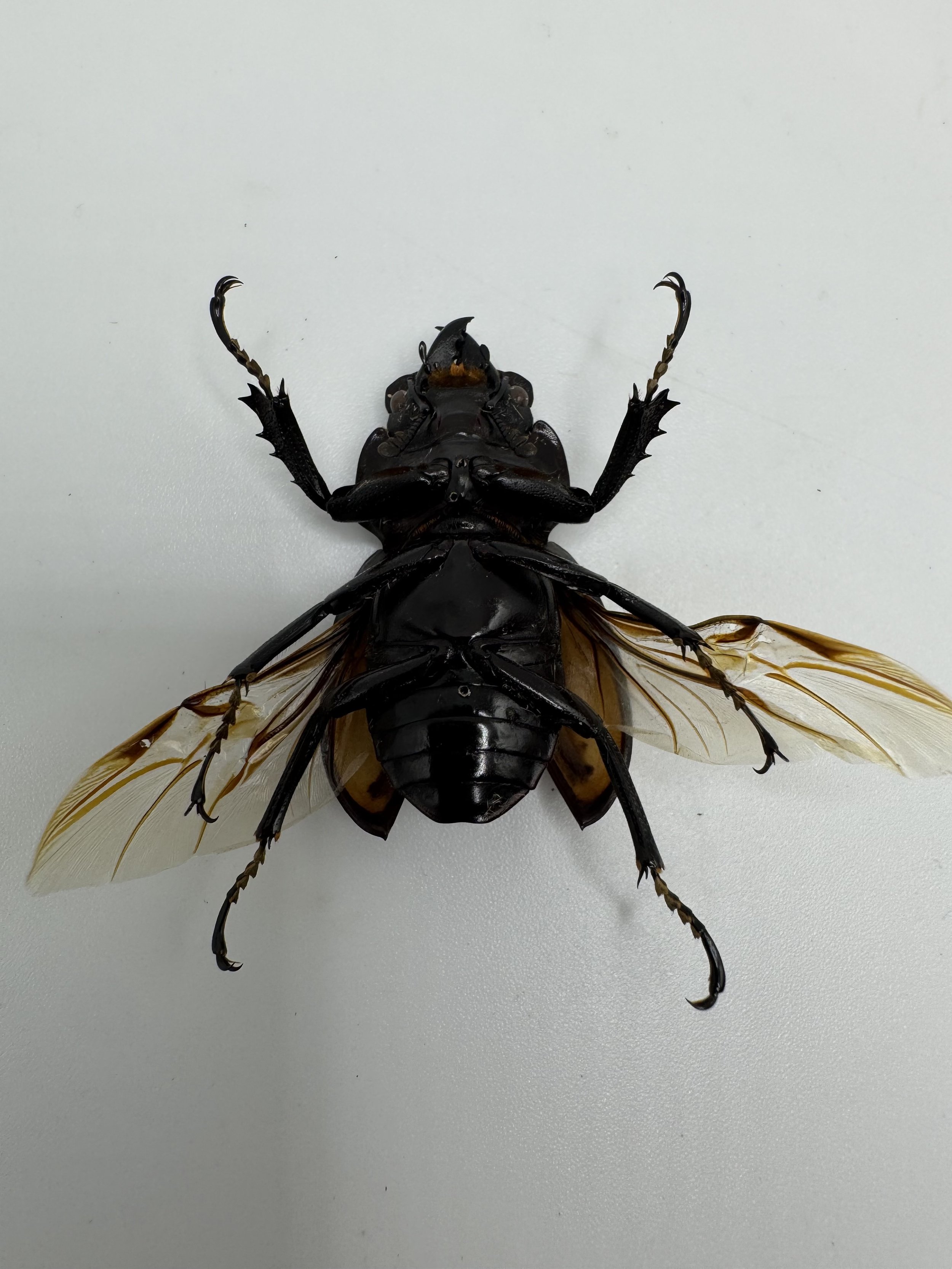 Image 2 of 4
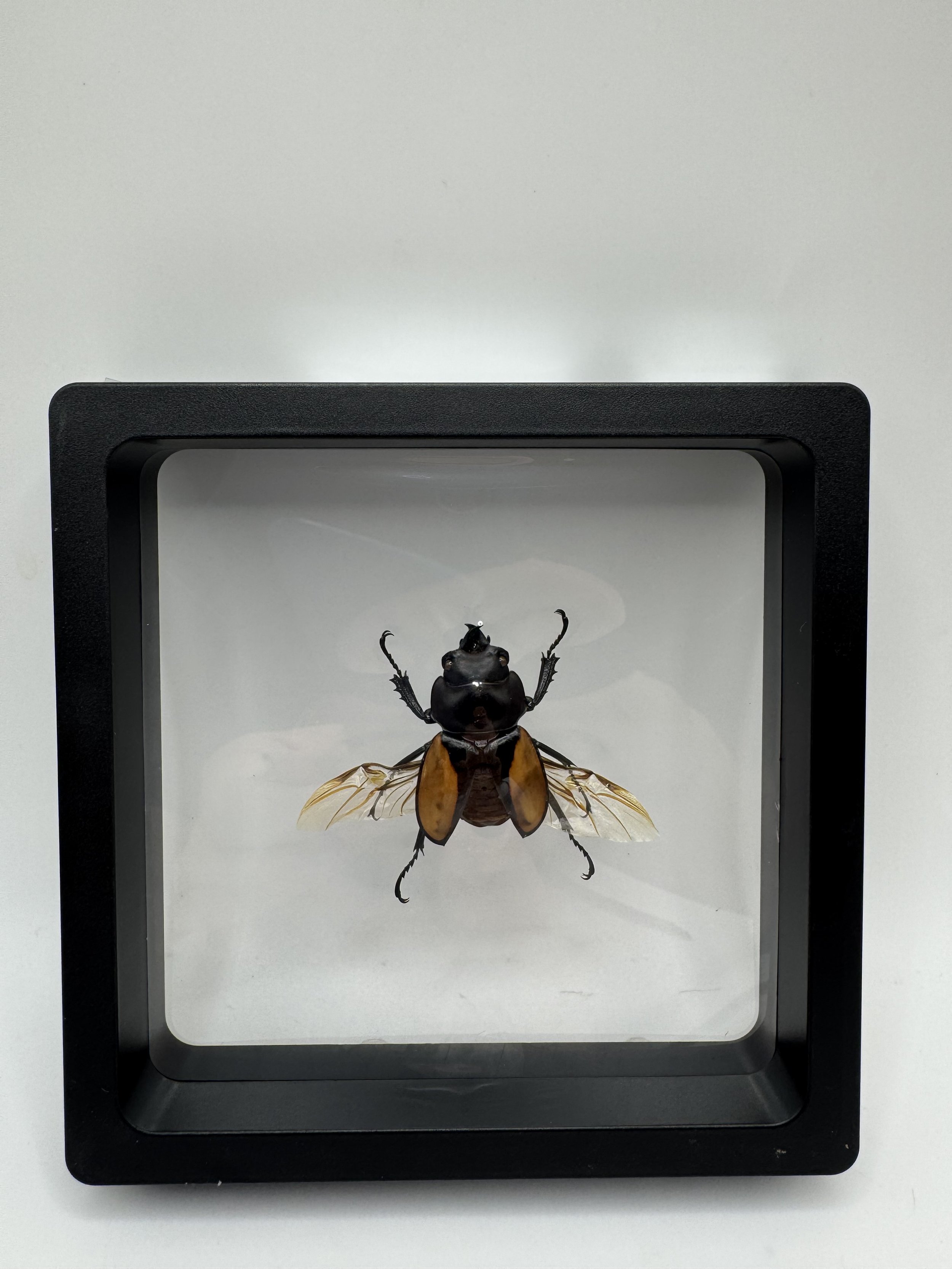 Image 3 of 4
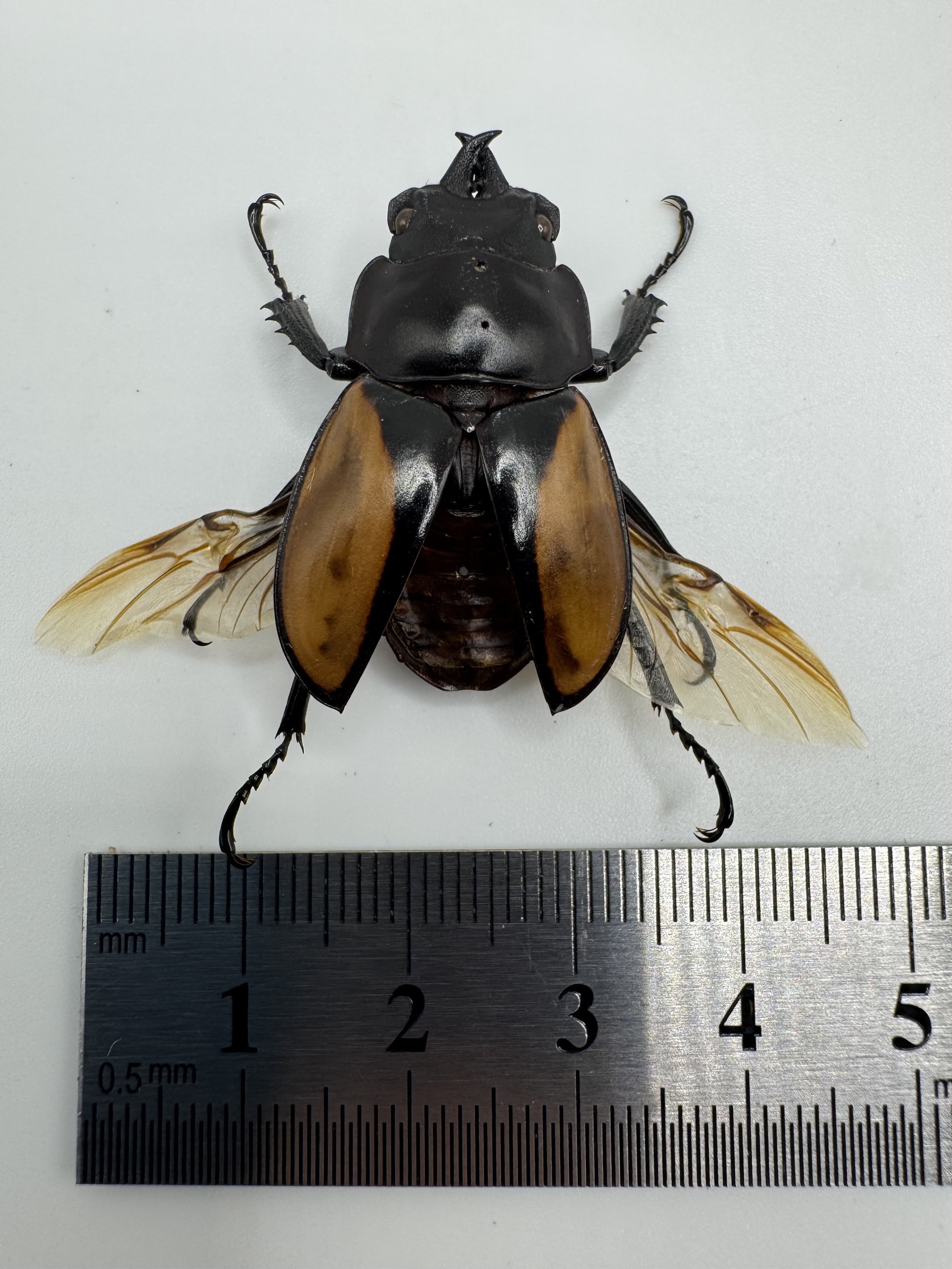 Image 4 of 4
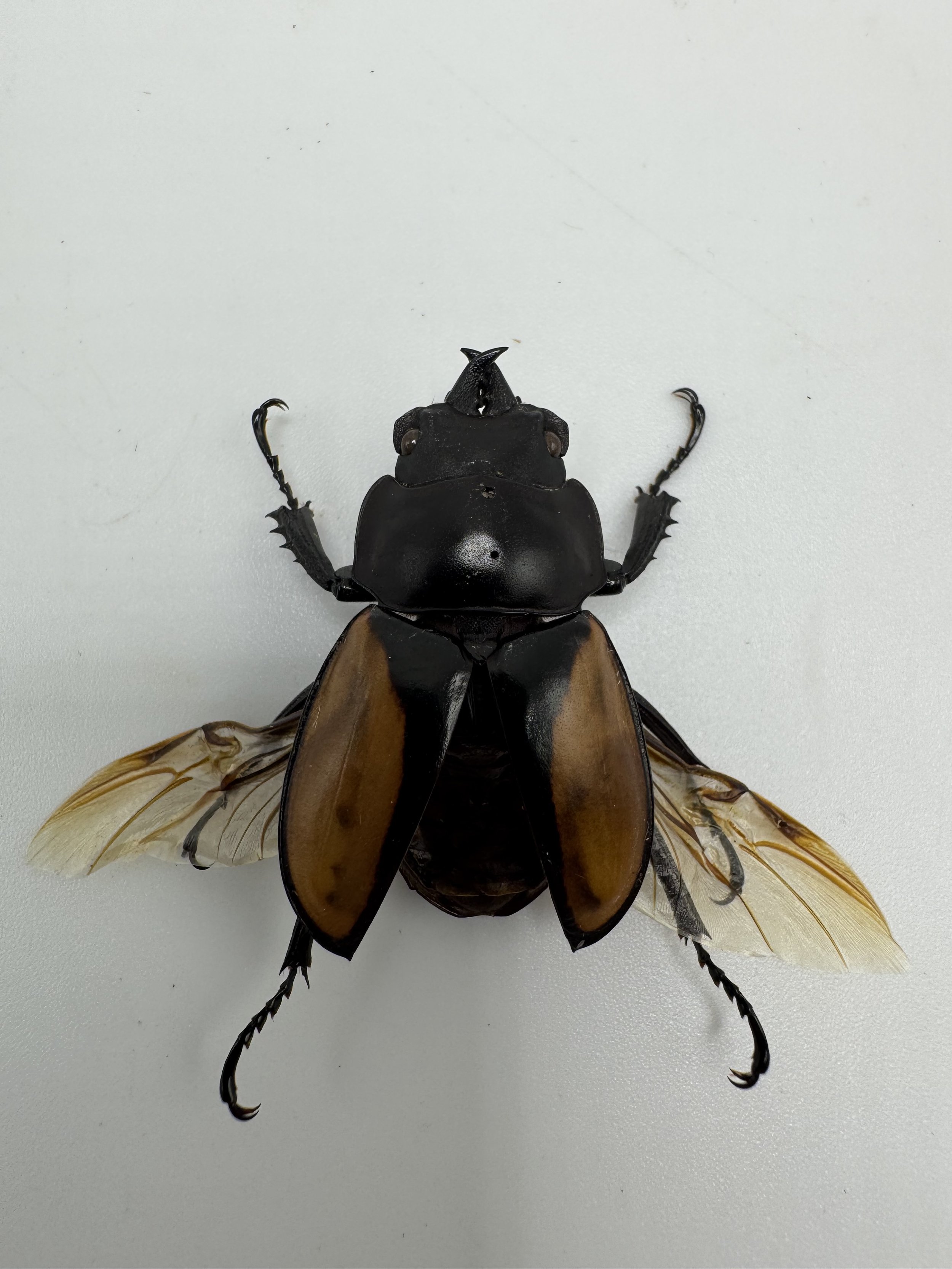
Odontolabis ludekingi is a striking species of stag beetle known for its large, powerful mandibles and distinctive coloration. Males feature a glossy black head and thorax contrasted against golden-brown wing covers, creating a dramatic two-toned appearance.
Native to Southeast Asia, including the Indonesian island of Sumatra, this species inhabits tropical forest environments. Adults feed on tree sap and decaying fruit, while their larvae develop in decomposing wood, helping break down organic material.
Interesting Fact:
Male Odontolabis ludekingi possess enlarged mandibles used primarily for combat rather than feeding. During territorial disputes or competition for mates, males use these impressive jaws to grapple with, lift, and displace rival males. Mandible size and shape can vary considerably between individuals.
This specimen is professionally mounted in a clear PE display frame, making it ready for immediate display. Collection data is included.
All specimens are ethically sourced, collected responsibly with a focus on sustainability and minimal impact on wild populations.