The Emerald Dung Beetle (Onthophagus mouhoti) is a striking species native to Southeast Asia, particularly Thailand, recognized for its glossy metallic green coloration and impressive horn structures. Its dark emerald to nearly black exoskeleton displays subtle iridescent reflections, making it an attractive species for insect collectors.
Male Emerald Dung Beetles possess elongated, curved horns and distinctive projections on the thorax that are used in competition with rival males. Like other dung beetles, this species plays an important ecological role by burying animal dung, recycling nutrients into the soil, and providing food for its developing larvae.
Interesting Fact:
Male Onthophagus mouhoti beetles have an unusual arrangement of horns that gives them a resemblance to a miniature Triceratops. These specialized structures are used during battles between males competing for access to mates, while females lack the males’ elaborate horn development.
This specimen is professionally mounted in a clear PE display frame, making it ready for immediate display. Collection data is included.
All specimens are ethically sourced, collected responsibly with a focus on sustainability and minimal impact on wild populations.

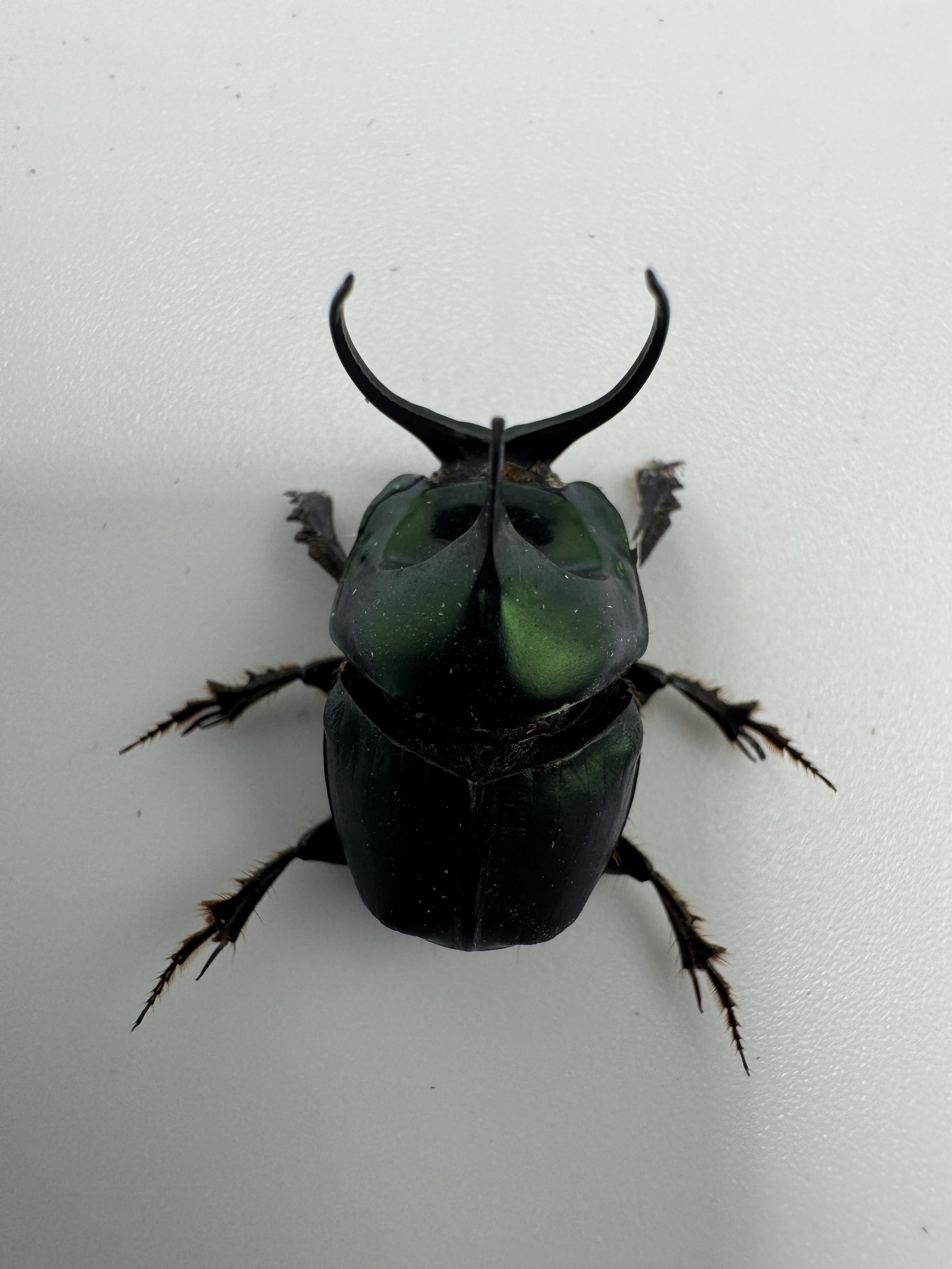 Image 1 of 9
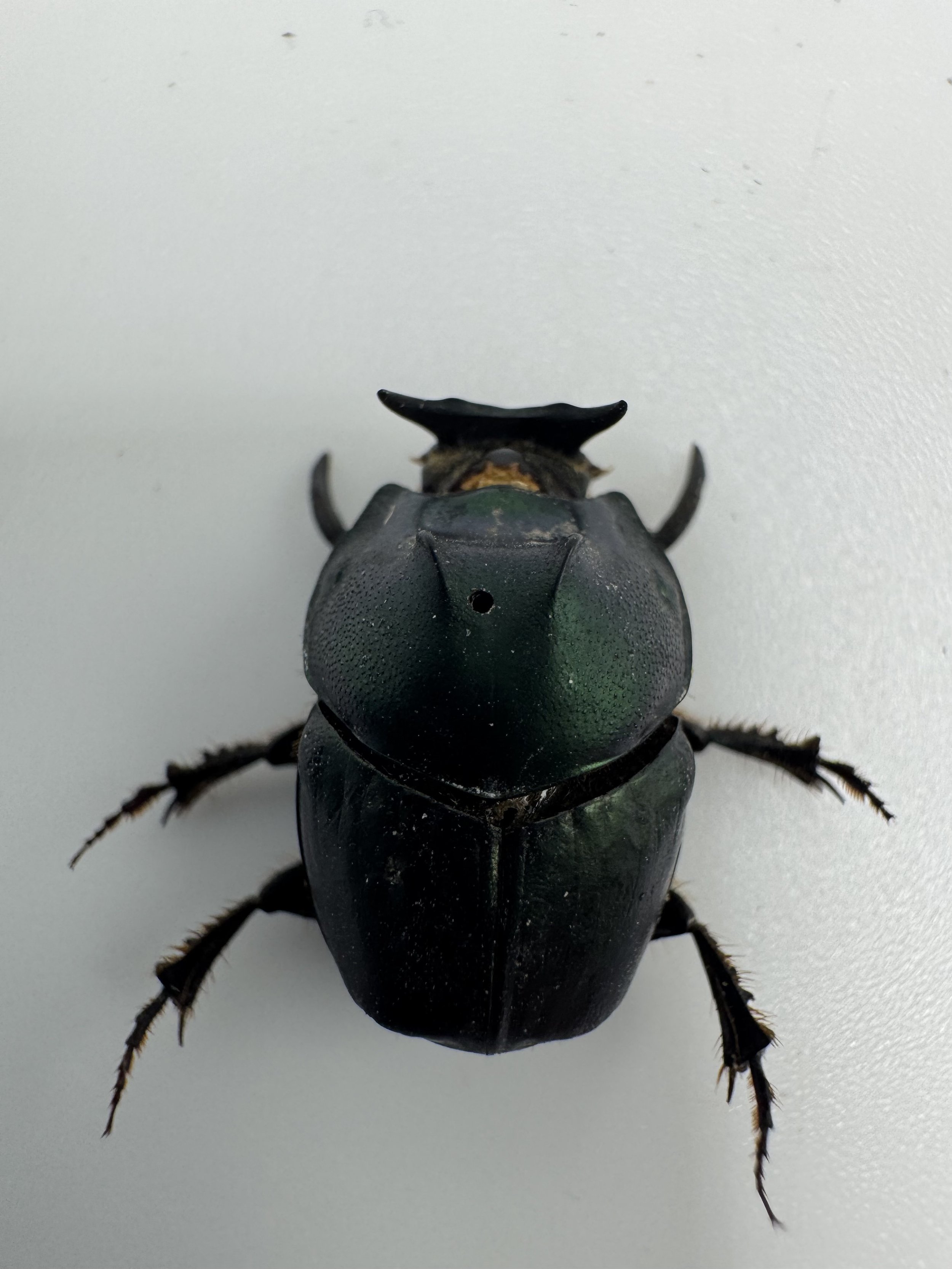 Image 2 of 9
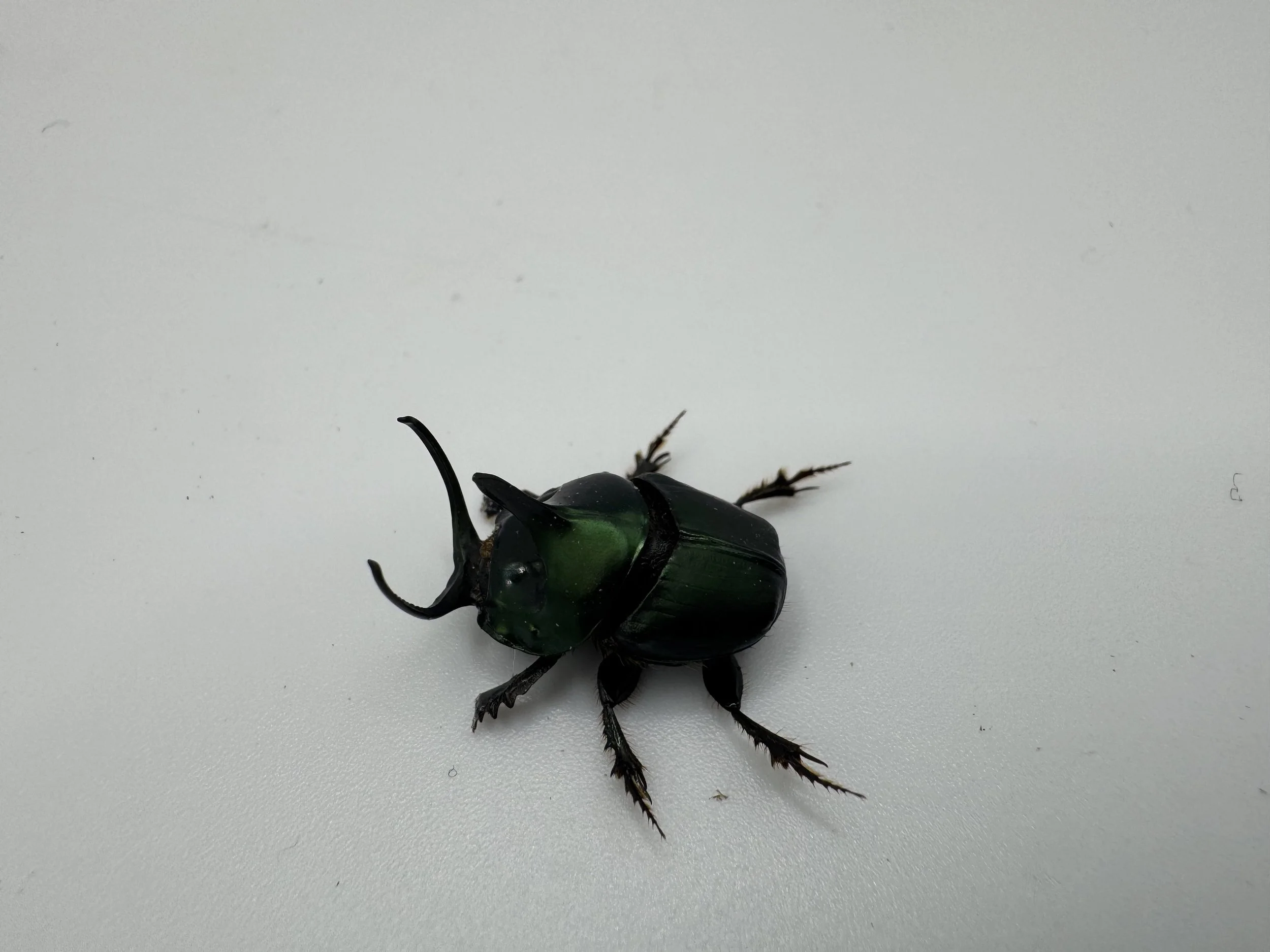 Image 3 of 9
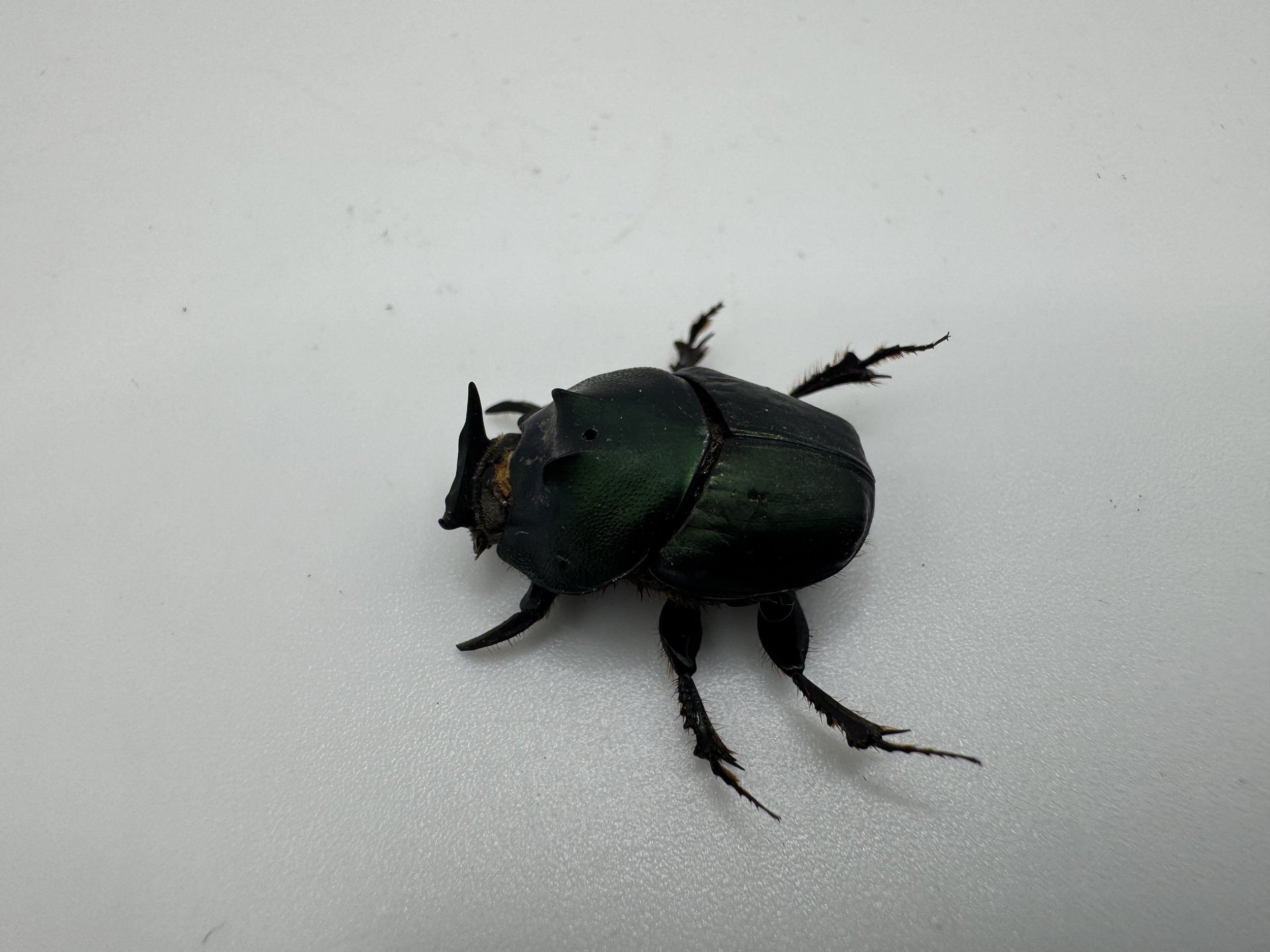 Image 4 of 9
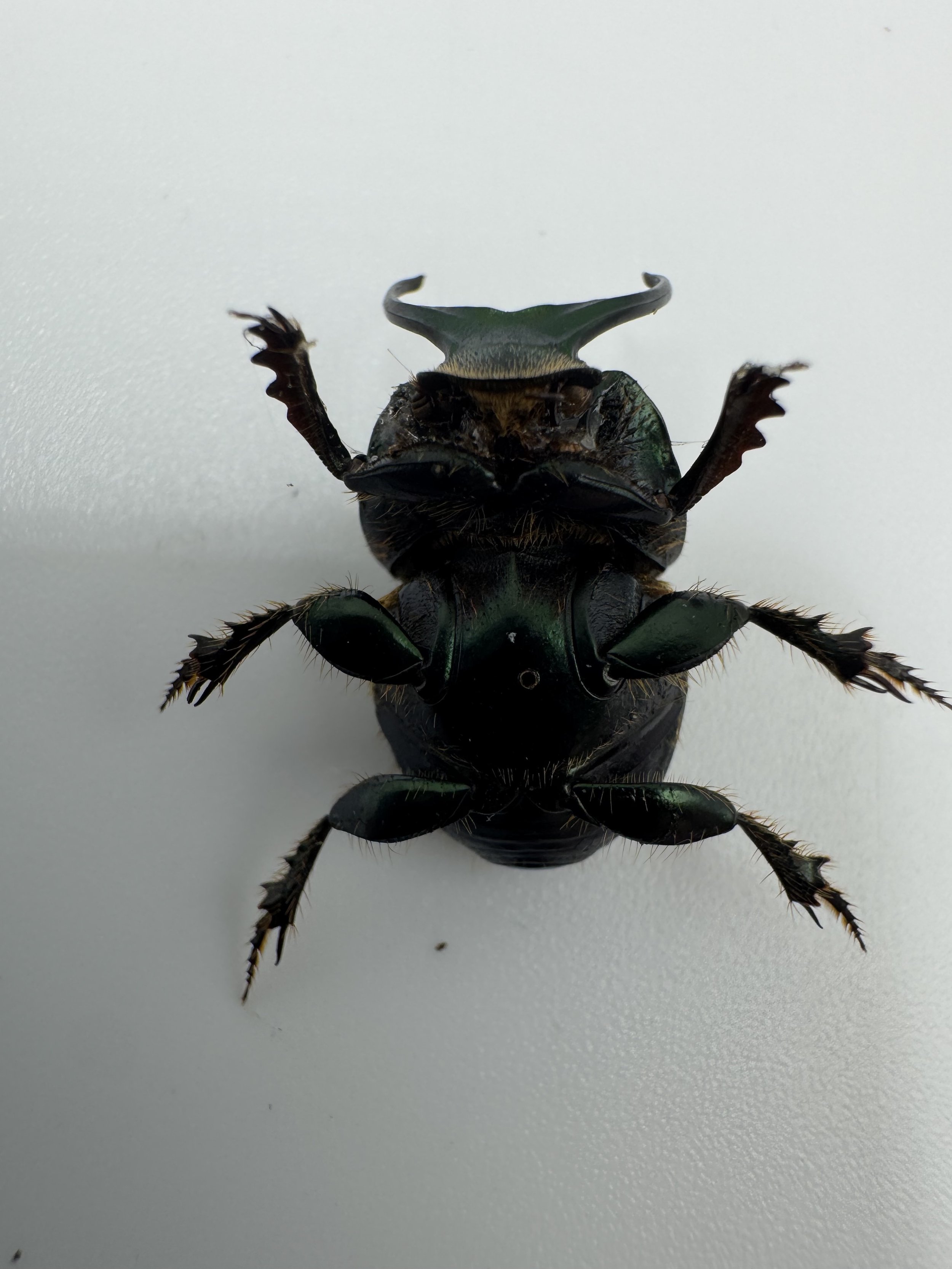 Image 5 of 9
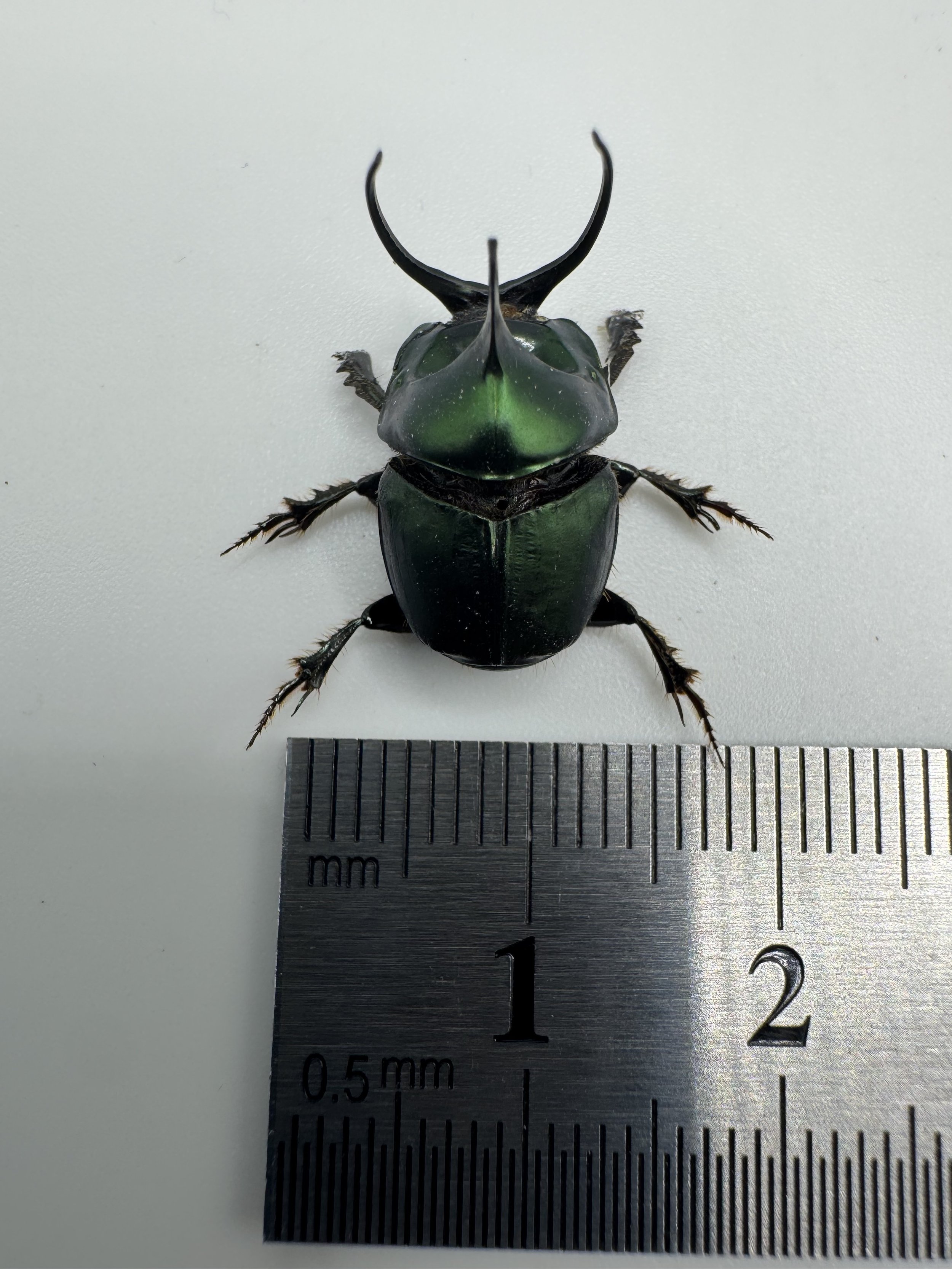 Image 6 of 9
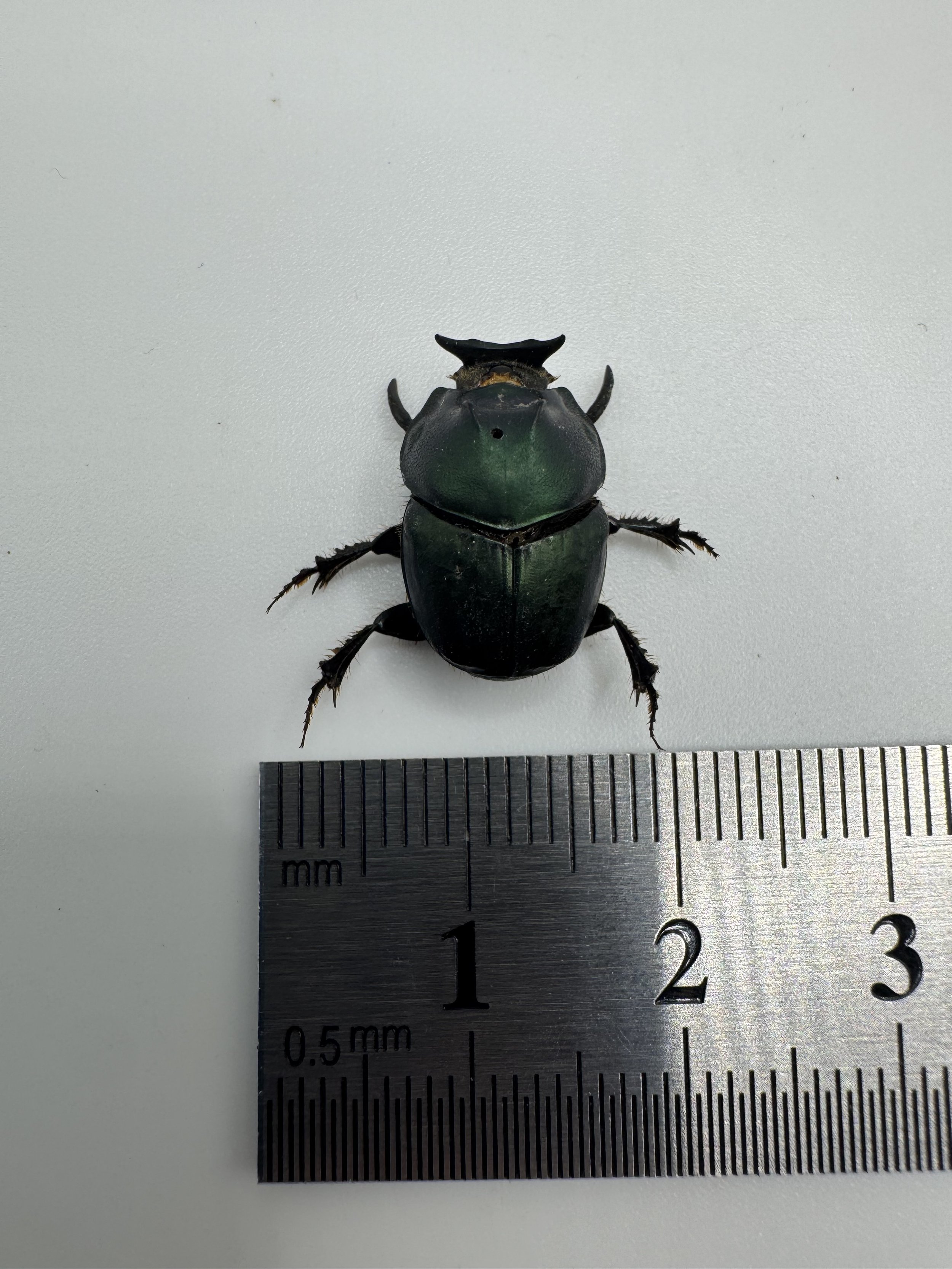 Image 7 of 9
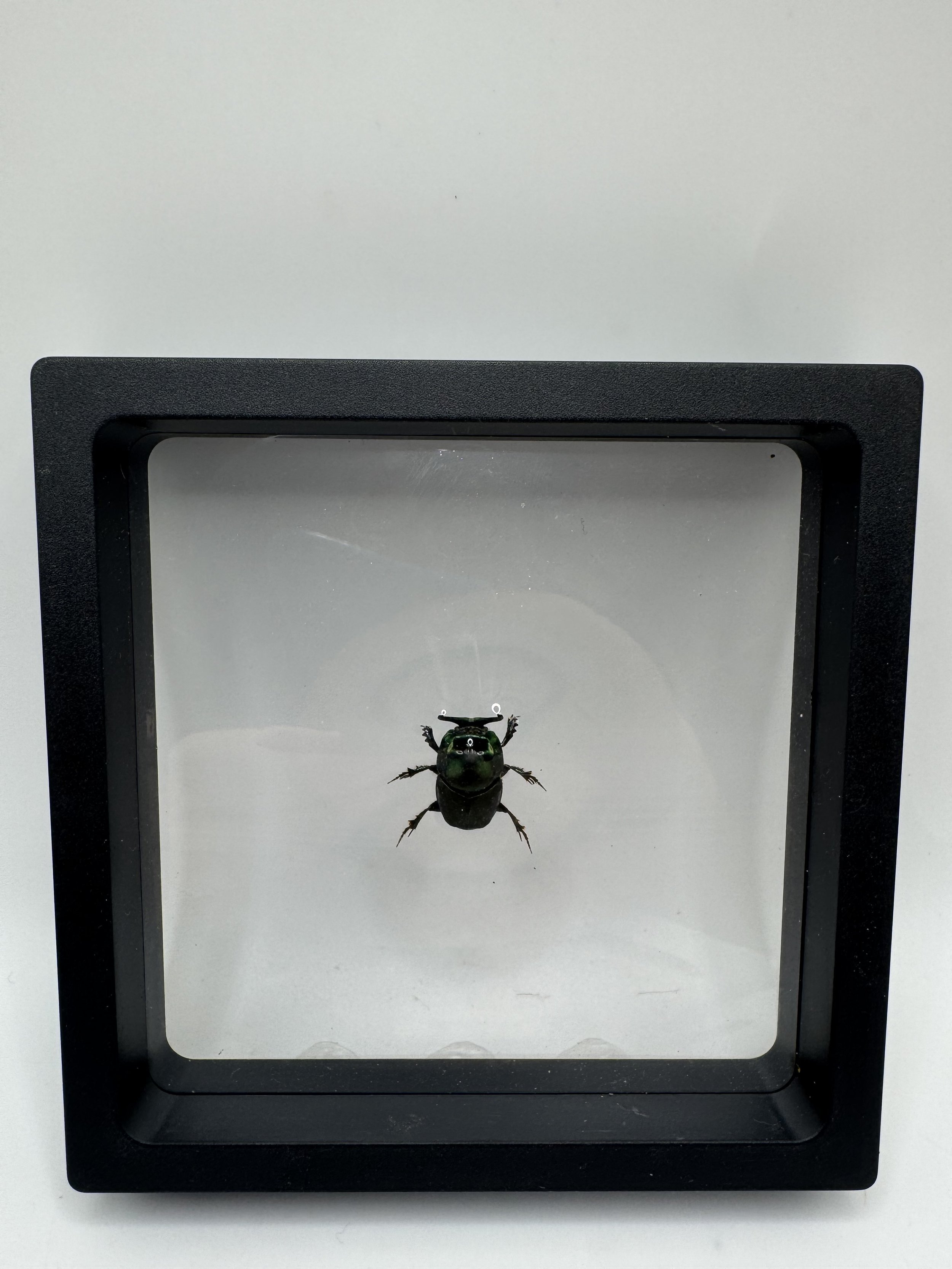 Image 8 of 9
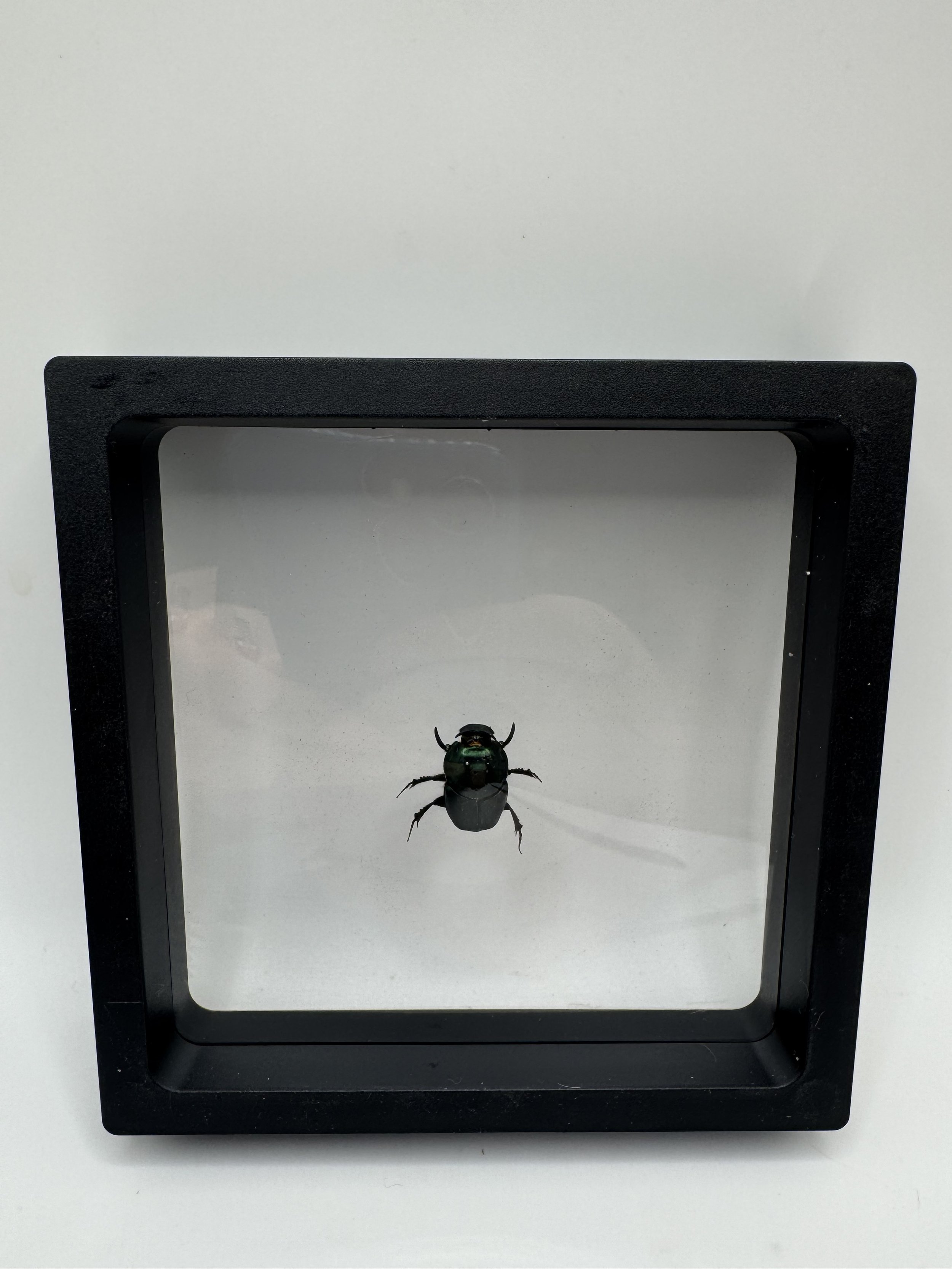 Image 9 of 9