
 Image 1 of 1
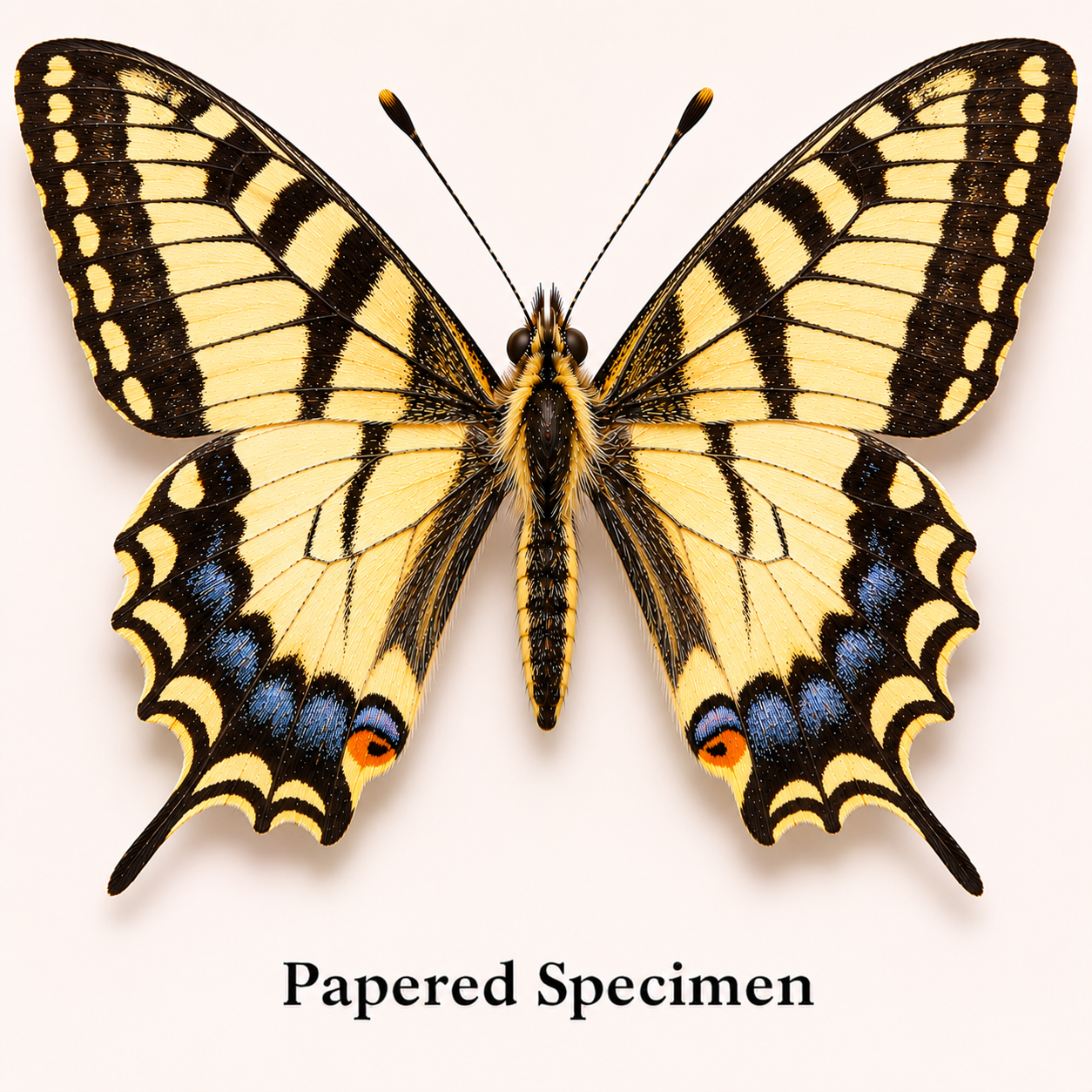
The Pale Swallowtail (Papilio eurymedon) is a beautiful North American butterfly recognized for its elegant creamy-white wings crossed by bold black stripes. Its distinctive coloration resembles that of the Western Tiger Swallowtail, but its pale, almost white background distinguishes it from its yellow-winged relatives. The hindwings feature long, slender tails, delicate blue markings, and small orange spots near their inner margins. With a wingspan of approximately 2½ to 3½ inches, this member of the Papilionidae family is one of the most striking swallowtail butterflies found throughout western North America.
Native to western North America, Papilio eurymedon ranges from southern British Columbia through Washington, Oregon, and California into northern Baja California, extending eastward into Montana, Colorado, and New Mexico. It inhabits oak woodlands, chaparral, mountain canyons, forest clearings, foothills, and riparian corridors. Its caterpillars feed on various native trees and shrubs, particularly California coffeeberry (Frangula californica), wild lilacs (Ceanothus spp.), and wild cherries (Prunus spp.). Adults visit a variety of wildflowers for nectar, including California buckeye, yerba santa, wallflowers, and native lilies.
Interesting Fact:
The Pale Swallowtail is unusual among California’s swallowtail butterflies because it generally produces only one generation annually, with adults emerging during spring and summer depending on elevation. Males frequently gather in large groups along damp streambanks and muddy roadsides to absorb dissolved minerals, a behavior known as mud-puddling. This species is also especially attracted to native lilies, particularly Washington lily (Lilium washingtonianum). In the Sierra Nevada, Pale Swallowtails visiting these flowers are sometimes observed with their bodies covered in bright orange lily pollen. Like other swallowtails, their caterpillars possess a specialized defensive organ called an osmeterium, which releases an unpleasant odor when threatened.
This specimen is preserved and is carefully stored in a protective paper triangle, ensuring it arrives safely and is ready for spreading or long-term collection. Collection data is included.
All specimens are ethically sourced, collected responsibly with a focus on sustainability and minimal impact on wild populations.
Image is a representation drawing and is not scientifically accurate.