
 Image 1 of 4
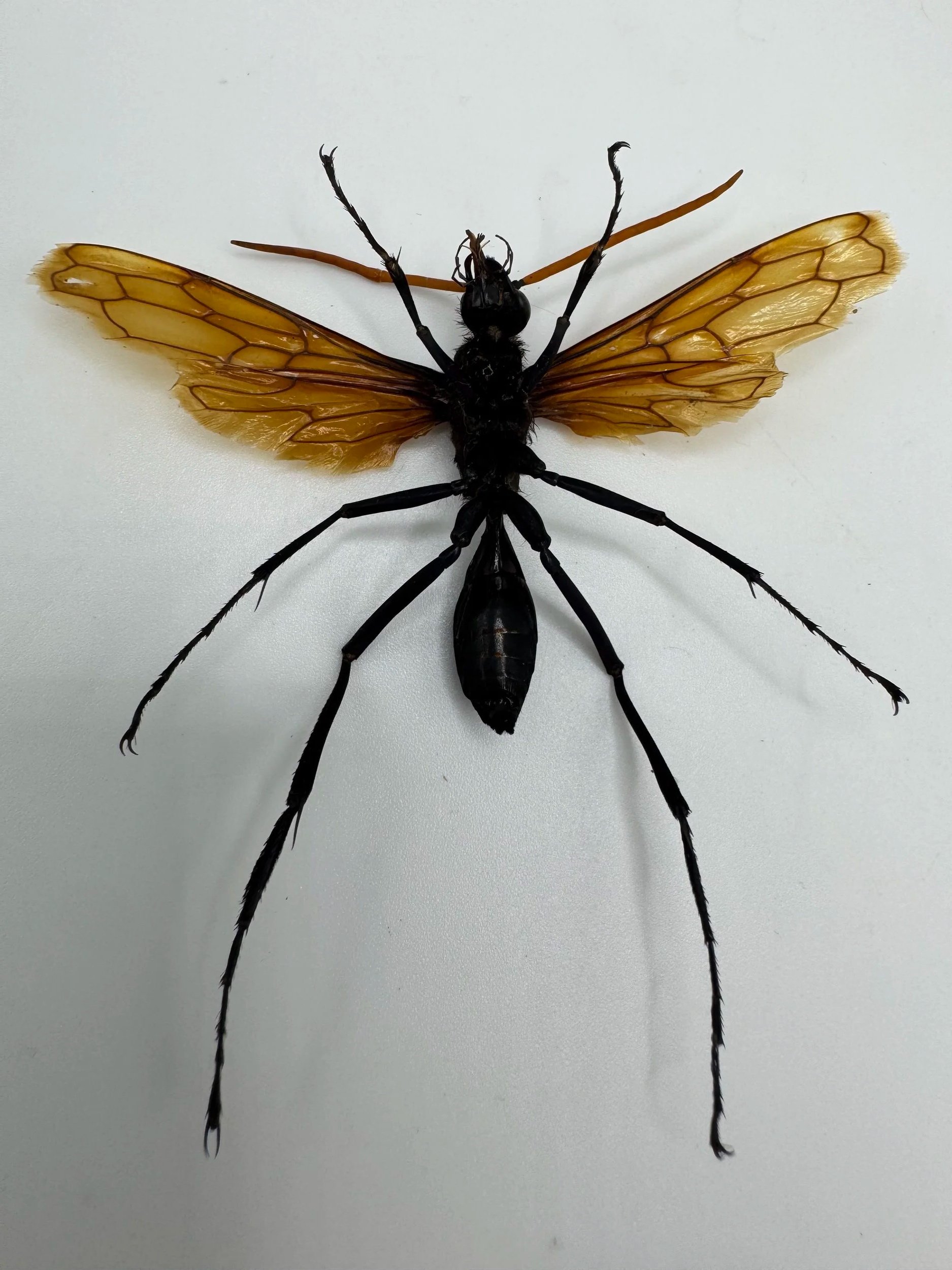 Image 2 of 4
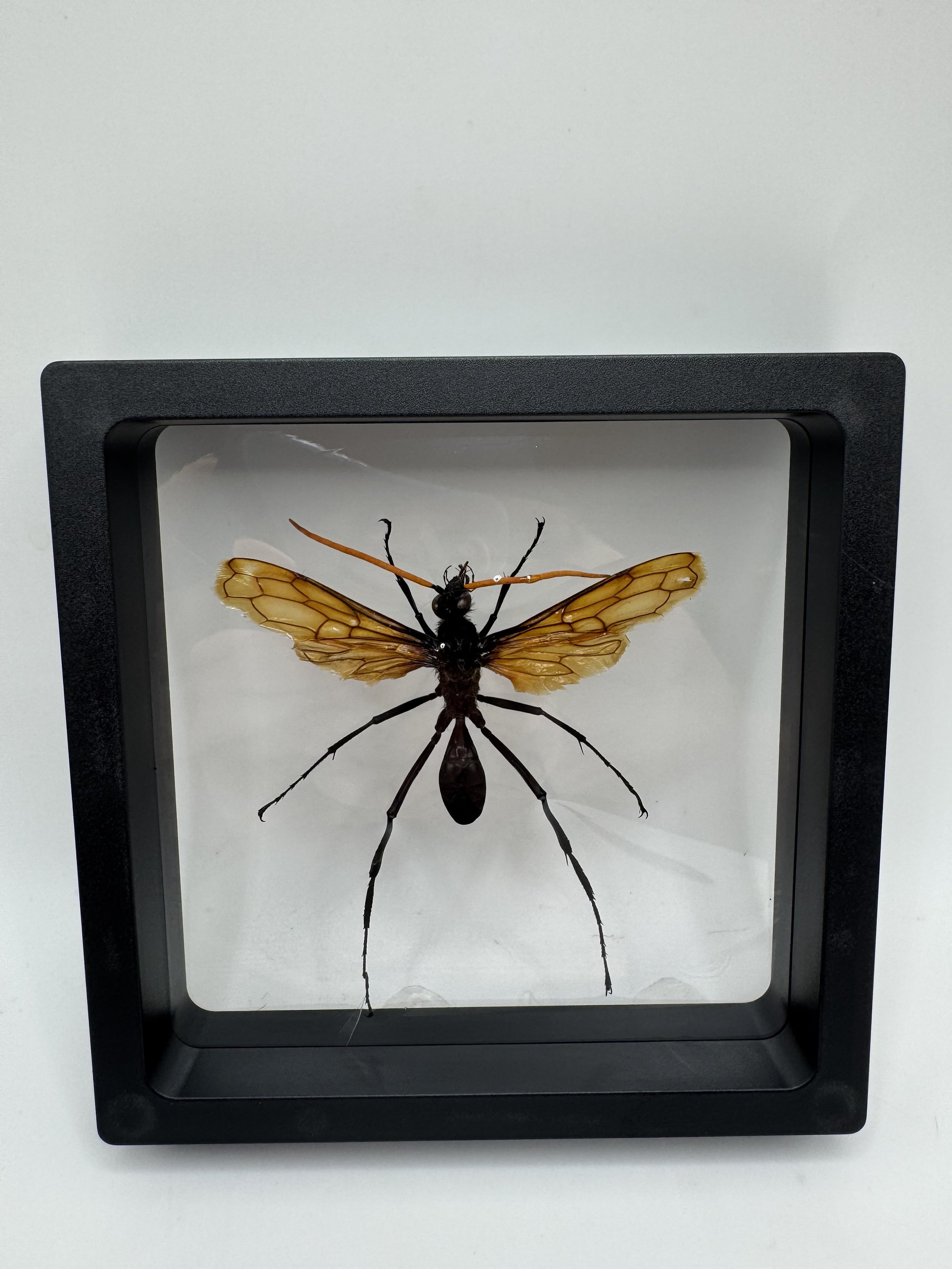 Image 3 of 4
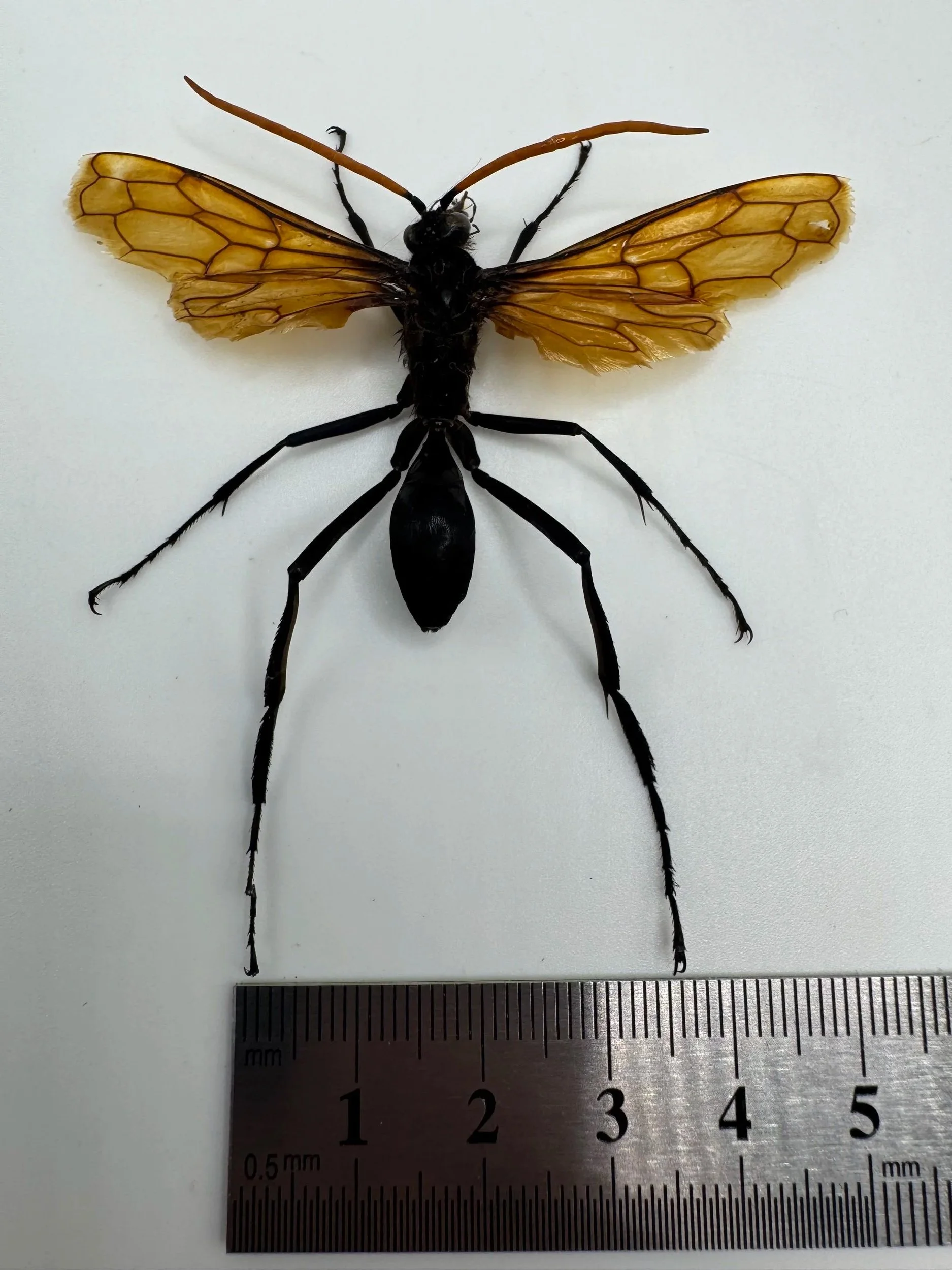 Image 4 of 4
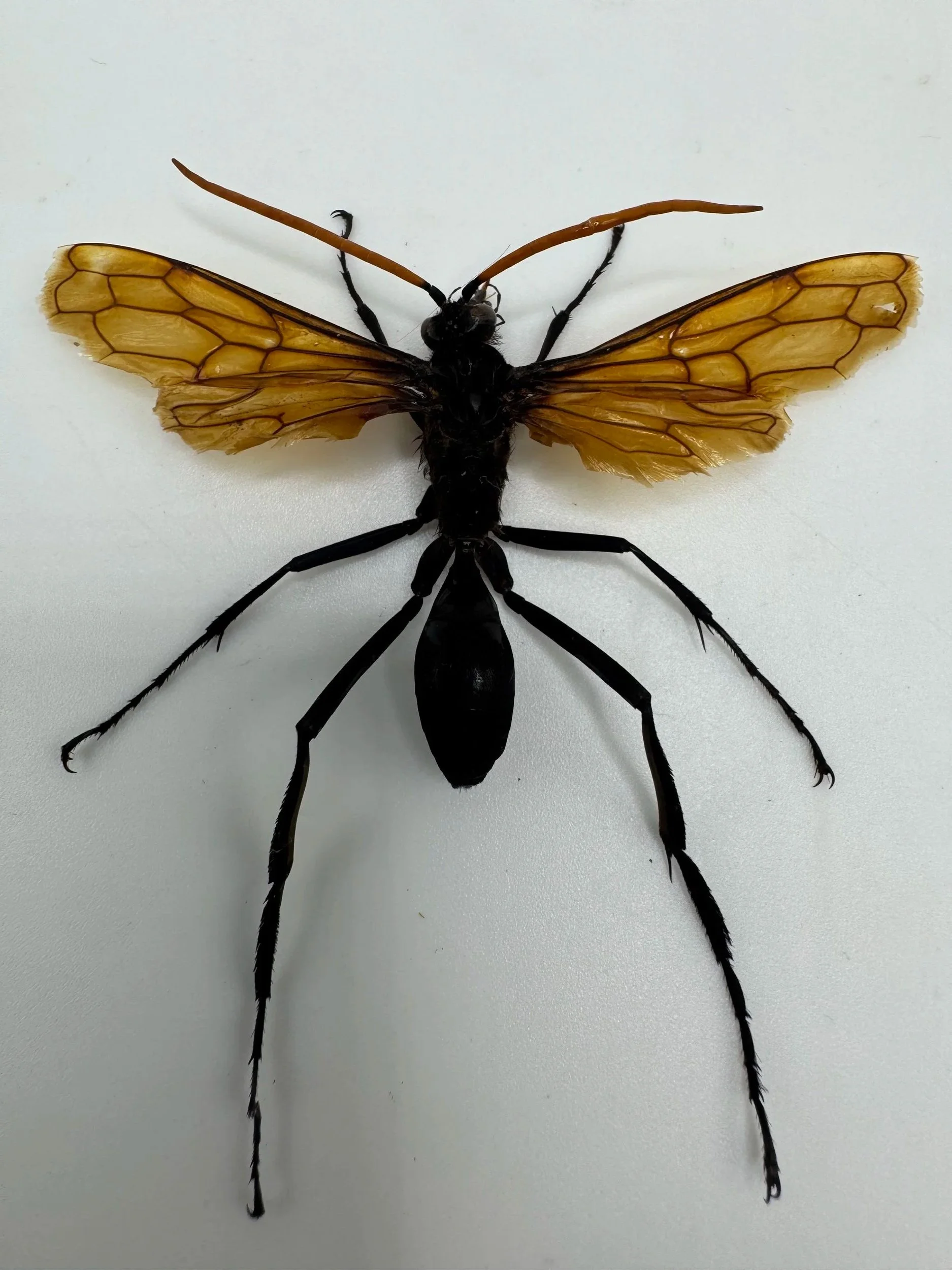
Pepsis grossa is an impressive species of tarantula hawk wasp recognized for its large size, brilliant orange wings, and dark metallic blue-black body. This striking species belongs to the family Pompilidae and is among the largest spider-hunting wasps in North America.
Native to the Americas, including the deserts of Arizona and the southwestern United States, this species inhabits arid and semi-arid environments. Adults primarily feed on flower nectar, while females hunt large spiders, particularly tarantulas, to provide food for their developing larvae.
Interesting Fact:
Tarantula hawk wasps are famous for possessing one of the most painful stings in the insect world. Female Pepsis grossa use their powerful stingers to paralyze tarantulas, which are then transported to a burrow where a single egg is deposited on the spider. The developing larva feeds on the immobilized tarantula, using it as a living food source until completing its development.
This specimen is professionally mounted in a clear PE display frame, making it ready for immediate display. Collection data is included.
All specimens are ethically sourced, collected responsibly with a focus on sustainability and minimal impact on wild populations.