
 Image 1 of 1
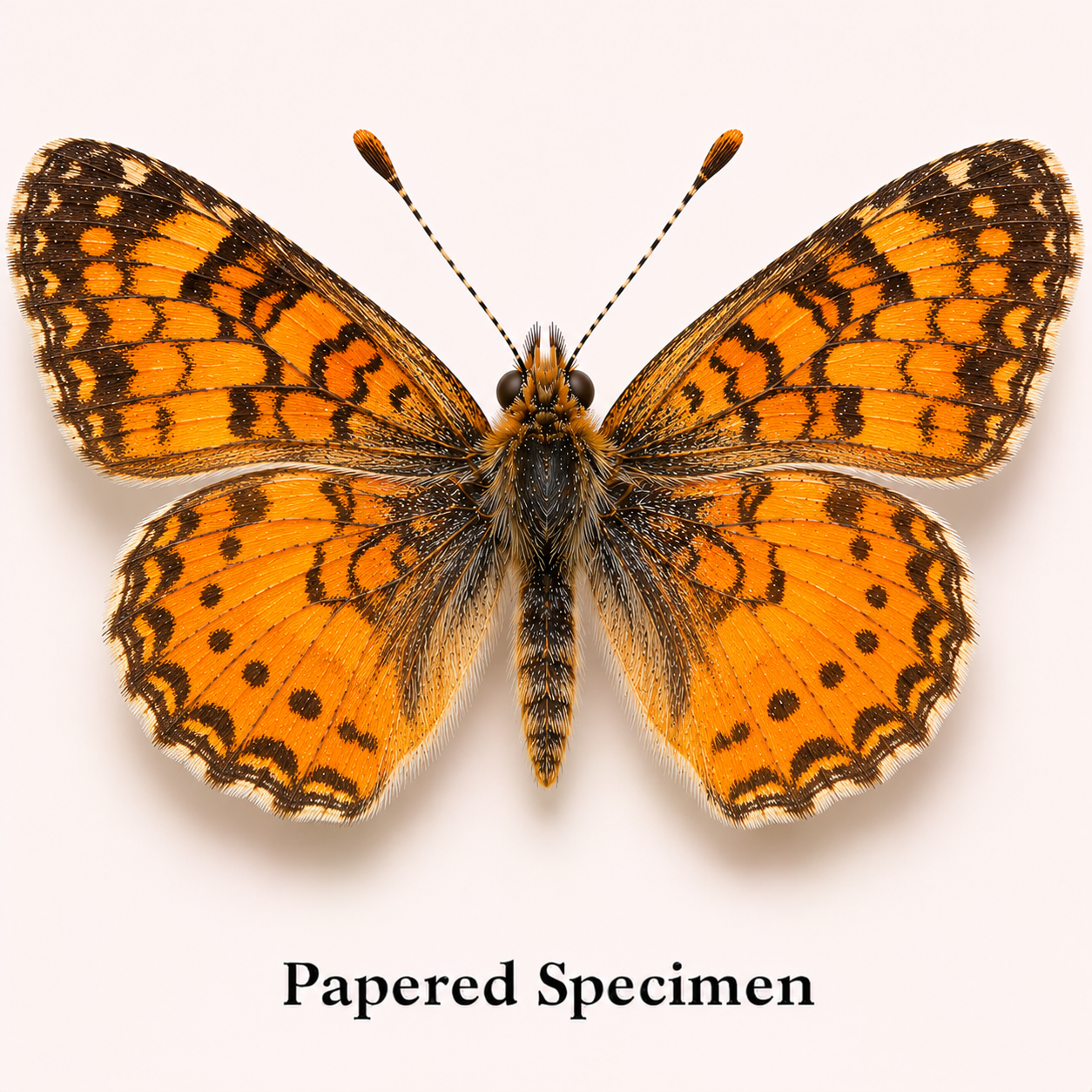
The Mylitta Crescent (Phyciodes mylitta) is a beautiful North American butterfly recognized for its vibrant reddish-orange wings accented by intricate dark brown and black markings. The upper wings feature a distinctive checkered pattern of orange and dark markings, while the undersides display softer yellow-orange coloration with irregular rusty-brown patterns. Females typically have more pronounced contrasting markings than males. With a wingspan of approximately 1⅛ to 1½ inches, this member of the Nymphalidae family is one of the most recognizable crescent butterflies found throughout western North America.
Native to western North America, Phyciodes mylitta ranges from southern British Columbia through the western United States, including California, Oregon, Washington, Nevada, and the Rocky Mountains, extending south into Mexico. It inhabits grasslands, mountain meadows, open woodlands, roadsides, disturbed areas, and sunny environments where its caterpillar host plants are abundant. Its caterpillars feed primarily on thistles, including native thistles (Cirsium spp.), milk thistle (Silybum marianum), and introduced thistles (Carduus spp.). Adults visit a variety of wildflowers for nectar, including thistles, yerba santa, and rabbitbrush.
Interesting Fact:
The Mylitta Crescent has adapted remarkably well to changes in its environment. Although its caterpillars originally depended primarily on native thistles, the introduction of European thistle species has allowed this butterfly to expand into agricultural fields, roadsides, and urban habitats. Females lay clusters of eggs on the undersides of thistle leaves, and the young caterpillars often feed together within protective silk shelters. Partially grown caterpillars survive the winter in dormancy before resuming development in spring. Unlike many butterflies that produce only one generation annually, Mylitta Crescents can produce multiple generations throughout the warmer months, with adults sometimes remaining active into November in California.
This specimen is preserved and is carefully stored in a protective paper triangle, ensuring it arrives safely and is ready for spreading or long-term collection. Collection data is included.
All specimens are ethically sourced, collected responsibly with a focus on sustainability and minimal impact on wild populations.
Image is a representation drawing and is not scientifically accurate.