
 Image 1 of 2
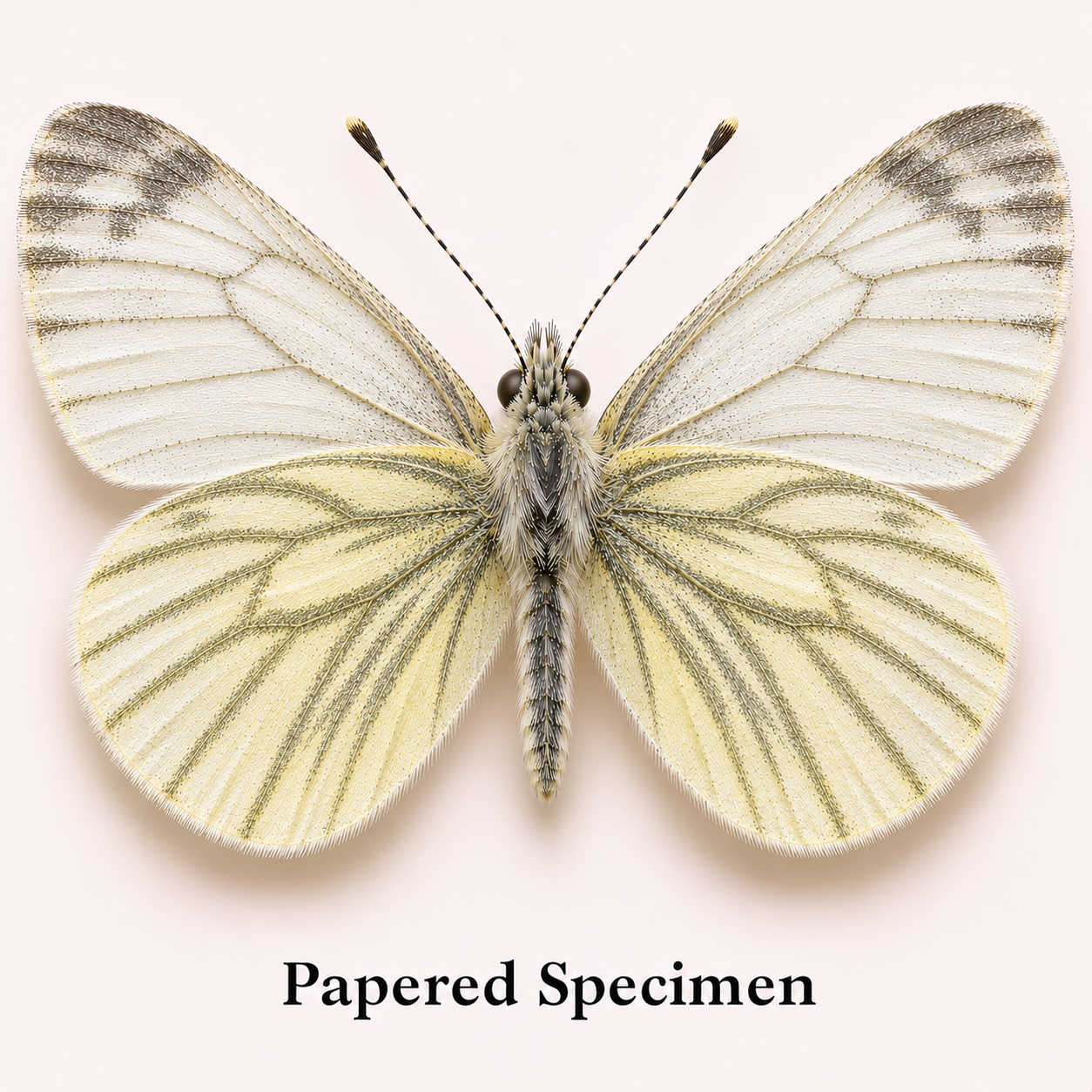 Image 2 of 2
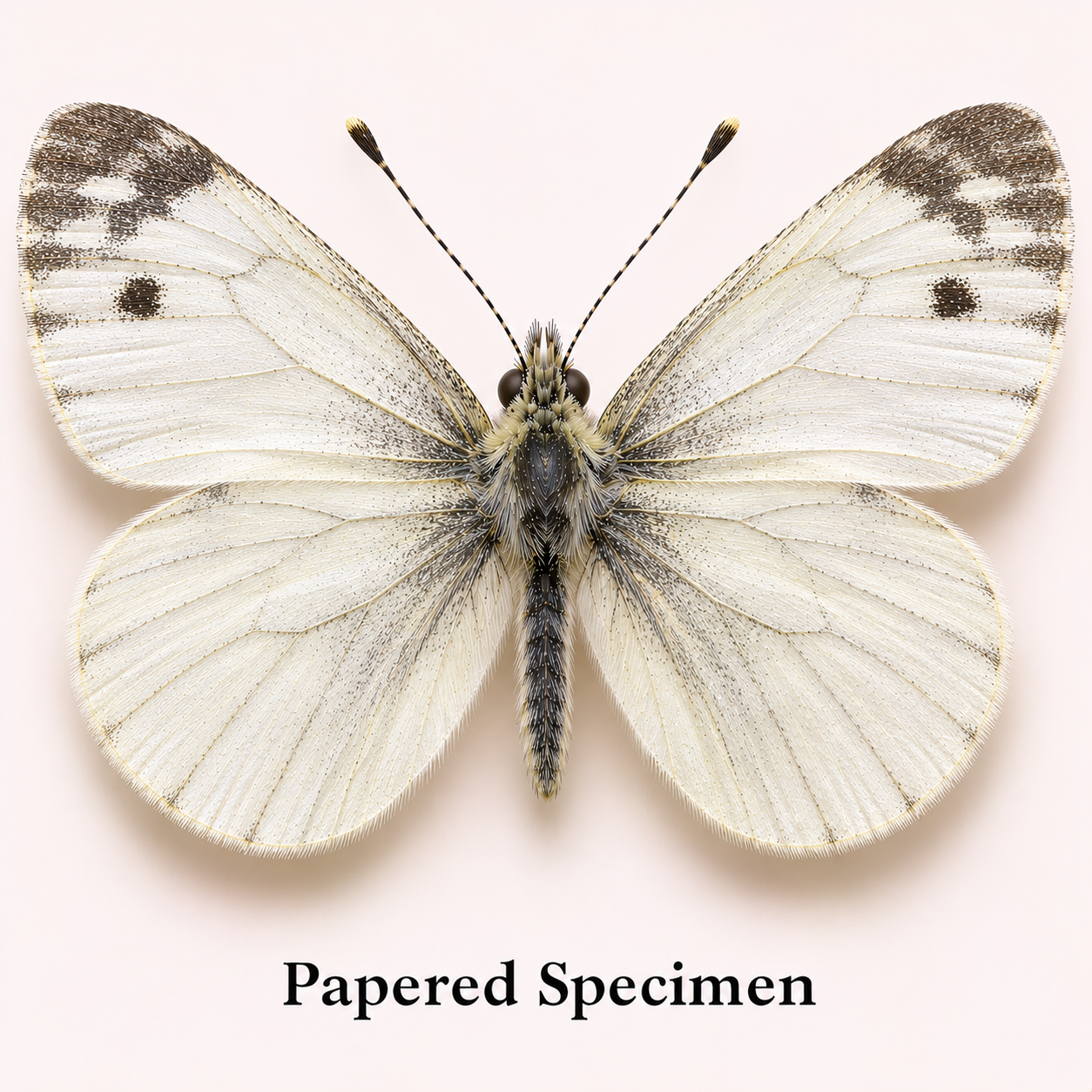
The Green-Veined White (Pieris napi) is a delicate butterfly recognized for its creamy-white wings accented by distinctive dark markings and subtle greenish-gray veining. The upper wings feature dark gray to black tips, with females typically displaying more prominent dark spots than males. The undersides are pale yellowish-white with gray-green scales outlining the veins, creating the intricate pattern responsible for the butterfly’s common name. With a wingspan of approximately 1½ to 2 inches, this member of the Pieridae family is an elegant representative of the white butterflies.
Native to Europe and temperate regions of Asia, Pieris napi inhabits moist meadows, woodland edges, hedgerows, stream corridors, gardens, and other environments with abundant vegetation. Its caterpillars feed primarily on plants in the mustard family (Brassicaceae), including cuckooflower (Cardamine pratensis), garlic mustard (Alliaria petiolata), and watercress (Nasturtium officinale). Adults visit a variety of wildflowers for nectar, particularly in sheltered, damp environments.
Interesting Fact:
The Green-Veined White undergoes a remarkable seasonal transformation known as seasonal polyphenism. Butterflies emerging during spring frequently display much stronger gray-green veining on their wing undersides, while summer generations may have considerably lighter markings. Despite its name, the veins are not actually green; their distinctive coloration results from a combination of yellowish and dark scales. Females lay their eggs individually on the leaves of suitable host plants, and the green caterpillars blend remarkably well with surrounding vegetation. This species typically produces two generations annually in temperate climates and survives winter in the chrysalis stage before emerging the following spring.
This specimen is preserved and is carefully stored in a protective paper triangle, ensuring it arrives safely and is ready for spreading or long-term collection. Collection data is included.
All specimens are ethically sourced, collected responsibly with a focus on sustainability and minimal impact on wild populations.
Image is a representation drawing and is not scientifically accurate.