
 Image 1 of 1
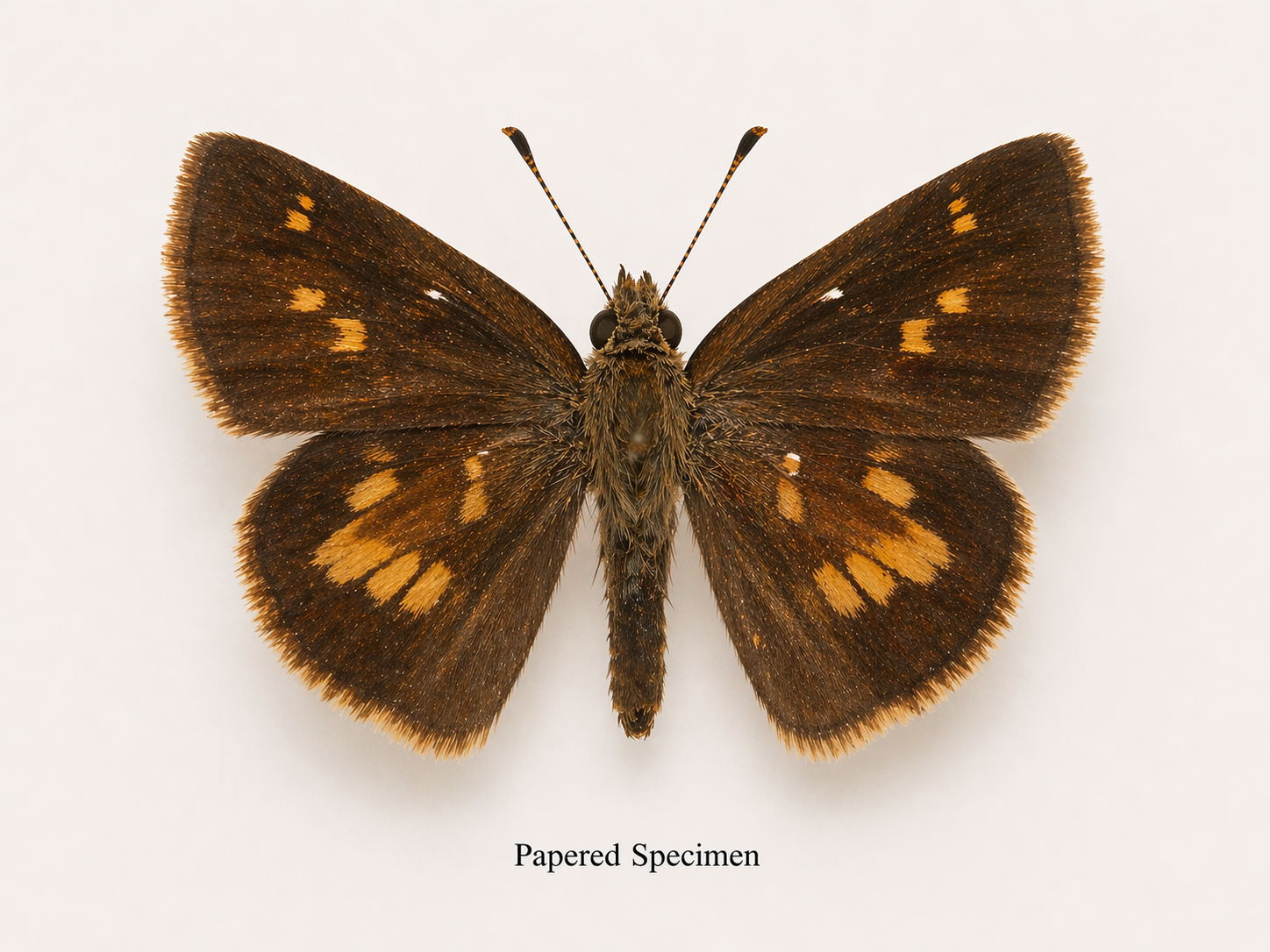
The Mulberry Wing (Poanes massasoit) is a rich, dark skipper with deep chocolate-brown wings accented by subtle orange highlights and a characteristic elongated forewing shape. Its low, darting flight and preference for dense grasses make it a somewhat elusive species.
Native to eastern North America, Poanes massasoit is found from southern Canada through the northeastern and Great Lakes regions of the United States. It is closely associated with wet habitats such as bogs, fens, and marshy meadows where tall grasses and sedges dominate.
Interesting Fact:
This species relies heavily on wetland habitats, with its caterpillars feeding primarily on sedges (Carex spp.), making it sensitive to habitat loss and changes in hydrology.
This specimen is preserved and is carefully stored in a protective paper triangle, ensuring it arrives safely and is ready for spreading or long-term collection. Collection data is included.
All specimens are ethically sourced, collected responsibly with a focus on sustainability and minimal impact on wild populations.
Image is a representation drawing and is not scientifically accurate.
The Mulberry Wing (Poanes massasoit) is a rich, dark skipper with deep chocolate-brown wings accented by subtle orange highlights and a characteristic elongated forewing shape. Its low, darting flight and preference for dense grasses make it a somewhat elusive species.
Native to eastern North America, Poanes massasoit is found from southern Canada through the northeastern and Great Lakes regions of the United States. It is closely associated with wet habitats such as bogs, fens, and marshy meadows where tall grasses and sedges dominate.
Interesting Fact:
This species relies heavily on wetland habitats, with its caterpillars feeding primarily on sedges (Carex spp.), making it sensitive to habitat loss and changes in hydrology.
This specimen is preserved and is carefully stored in a protective paper triangle, ensuring it arrives safely and is ready for spreading or long-term collection. Collection data is included.
All specimens are ethically sourced, collected responsibly with a focus on sustainability and minimal impact on wild populations.
Image is a representation drawing and is not scientifically accurate.