
 Image 1 of 1
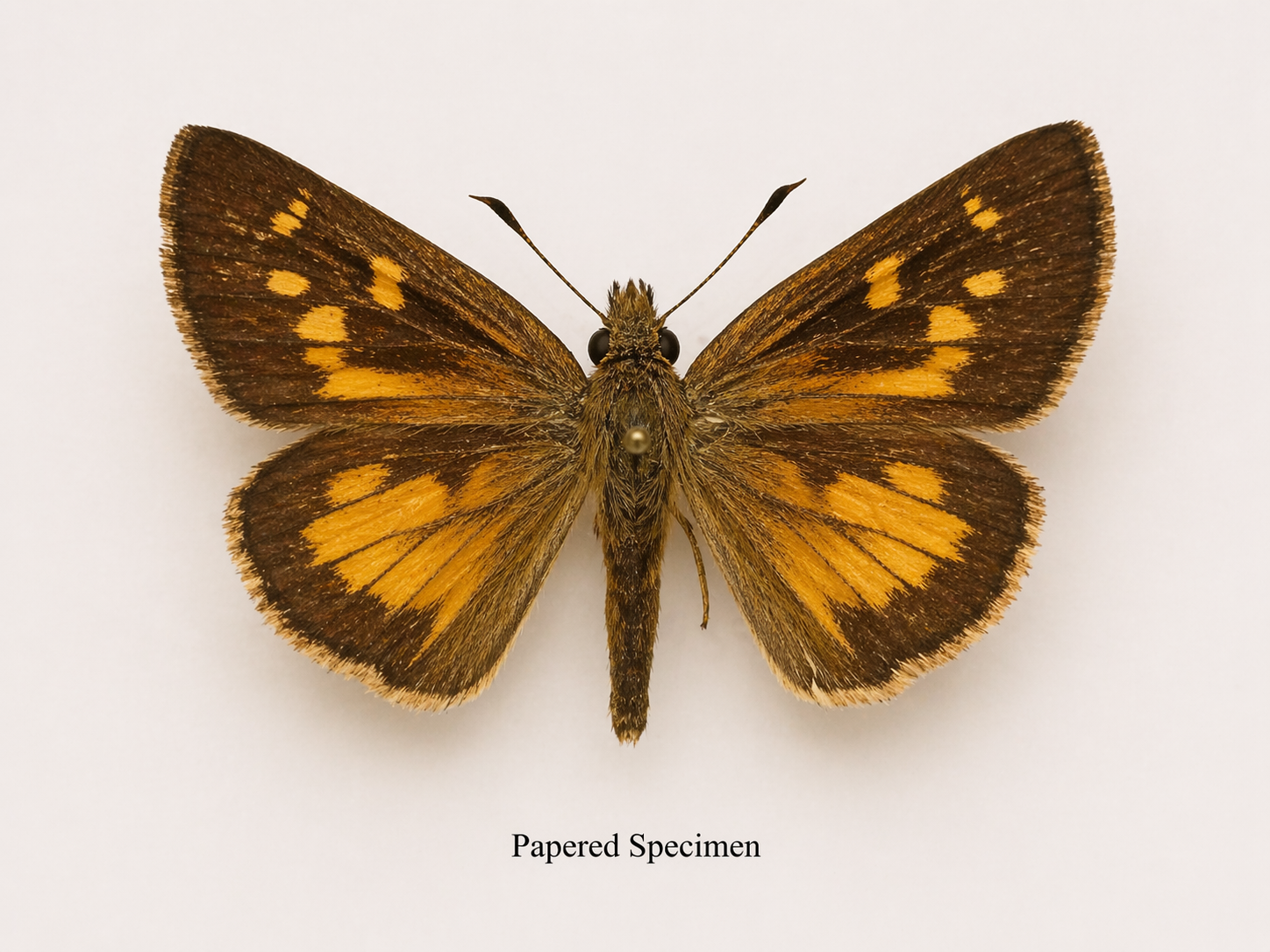
The Broad-winged Skipper (Poanes viator) is a distinctive grass skipper with warm orange-brown wings and a noticeably broader wing shape than many related species. Its rich coloration and strong, low flight make it well adapted to dense grassy habitats.
Native to eastern North America, Poanes viator is found from southern Canada through the eastern United States. It is most commonly associated with wetlands, including marshes, swamps, and wet meadows where its host plants grow.
Interesting Fact:
This species is closely tied to cattails (Typha spp.), which serve as a primary host plant for its caterpillars—making it one of the few skippers strongly associated with these iconic wetland plants.
This specimen is preserved and is carefully stored in a protective paper triangle, ensuring it arrives safely and is ready for spreading or long-term collection. Collection data is included.
All specimens are ethically sourced, collected responsibly with a focus on sustainability and minimal impact on wild populations.
Image is a representation drawing and is not scientifically accurate.
The Broad-winged Skipper (Poanes viator) is a distinctive grass skipper with warm orange-brown wings and a noticeably broader wing shape than many related species. Its rich coloration and strong, low flight make it well adapted to dense grassy habitats.
Native to eastern North America, Poanes viator is found from southern Canada through the eastern United States. It is most commonly associated with wetlands, including marshes, swamps, and wet meadows where its host plants grow.
Interesting Fact:
This species is closely tied to cattails (Typha spp.), which serve as a primary host plant for its caterpillars—making it one of the few skippers strongly associated with these iconic wetland plants.
This specimen is preserved and is carefully stored in a protective paper triangle, ensuring it arrives safely and is ready for spreading or long-term collection. Collection data is included.
All specimens are ethically sourced, collected responsibly with a focus on sustainability and minimal impact on wild populations.
Image is a representation drawing and is not scientifically accurate.