
 Image 1 of 1
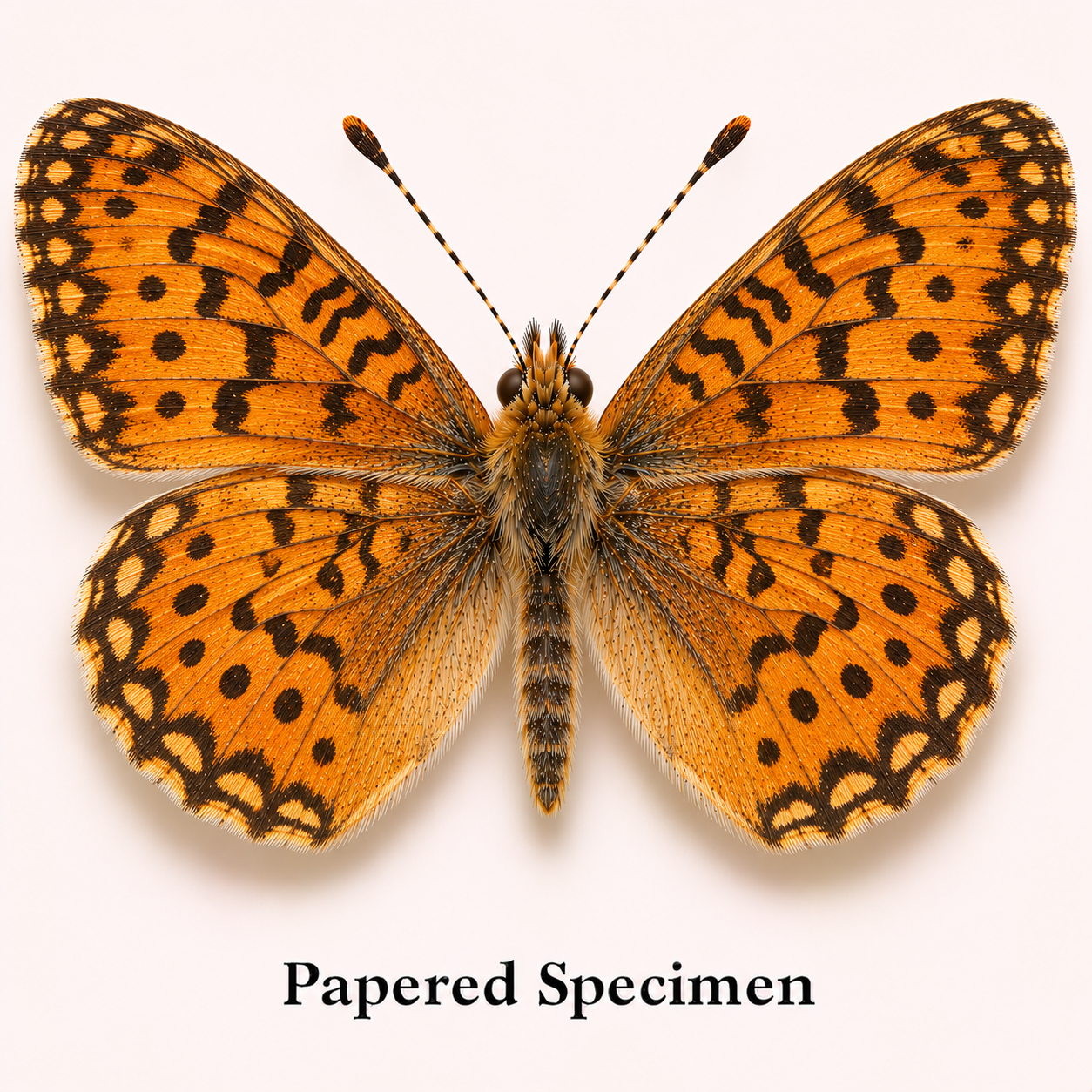
The Coronis Fritillary (Speyeria coronis) is a magnificent North American butterfly recognized for its brilliant tawny-orange wings decorated with intricate black markings. The upper wings feature bold black spots, dark veins, and distinctive crescent-shaped markings along the outer margins. The undersides of the hindwings display beautiful silvery-white spots against a background of tan, brown, and olive coloration. With a wingspan of approximately 2 to 3⅜ inches, this member of the Nymphalidae family is one of the larger and more striking fritillary butterflies found throughout western North America.
Native to western North America, Speyeria coronis ranges from southern Washington through California, Nevada, and the Great Basin, extending eastward into portions of the Rocky Mountains and Great Plains and south into northern Baja California. It inhabits mountain meadows, foothill grasslands, oak woodlands, chaparral, sagebrush habitats, and open forest clearings. Its caterpillars feed exclusively on native violets (Viola spp.), including Nuttall’s violet (Viola nuttallii), mountain violet (Viola purpurea), and Douglas’ violet (Viola douglasii). Adults visit a variety of wildflowers for nectar, including rabbitbrush, asters, goldenrods, thistles, and California buckeye.
Interesting Fact:
The Coronis Fritillary has a fascinating reproductive strategy that allows it to survive the hot, dry summers of western North America. In portions of California’s Sierra Nevada, adults emerge during early summer, and females mate before entering a period of summer dormancy called aestivation. The females store sperm and become active again during late summer or early autumn, when they lay their eggs near violet host plants. After hatching, the tiny caterpillars enter winter dormancy without feeding, surviving until fresh violet leaves emerge the following spring. This remarkable adaptation synchronizes caterpillar development with the seasonal growth of their host plants. The species produces only one generation annually, and its females may be observed flying and feeding on autumn wildflowers long after most males have disappeared.
This specimen is preserved and is carefully stored in a protective paper triangle, ensuring it arrives safely and is ready for spreading or long-term collection. Collection data is included.
All specimens are ethically sourced, collected responsibly with a focus on sustainability and minimal impact on wild populations.
Image is a representation drawing and is not scientifically accurate.