
 Image 1 of 1
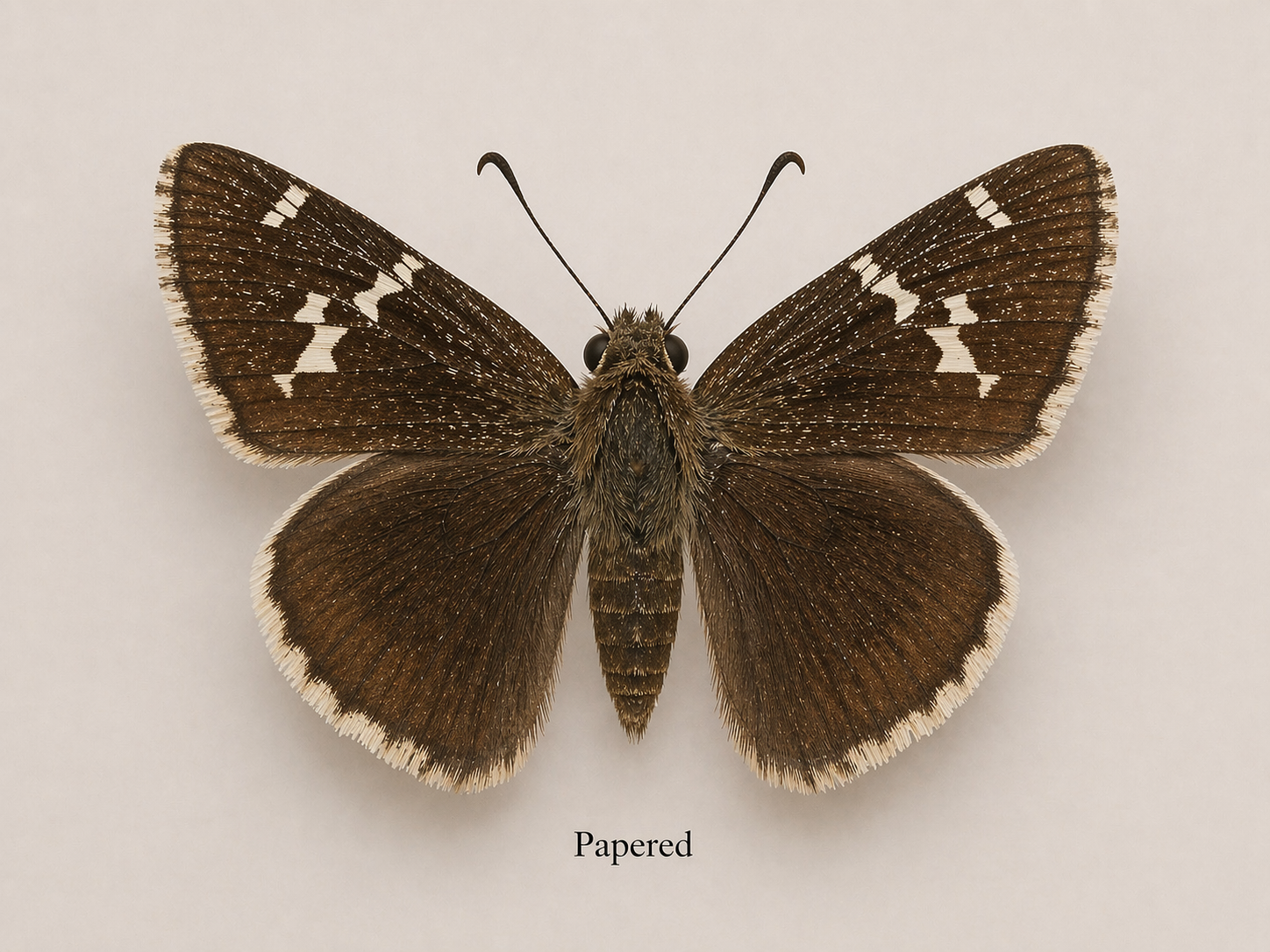
The Southern Cloudywing (Thorybes bathyllus) is a dark brown skipper with soft, cloudy pale spots scattered across the wings. Its subtle patterning and fast, darting flight make it a classic example of the duskywing-type skippers.
Native to eastern North America, Thorybes bathyllus is found throughout the southeastern and eastern United States, extending into parts of the Midwest. It is commonly associated with open woodlands, forest edges, and fields where its host plants grow.
Interesting Fact:
The caterpillars of this species feed on plants in the legume family, particularly tick-trefoils (Desmodium spp.), and create small leaf shelters using silk for protection.
This specimen is preserved and is carefully stored in a protective paper triangle, ensuring it arrives safely and is ready for spreading or long-term collection. Collection data is included.
All specimens are ethically sourced, collected responsibly with a focus on sustainability and minimal impact on wild populations.
Image is a representation drawing and is not scientifically accurate.
The Southern Cloudywing (Thorybes bathyllus) is a dark brown skipper with soft, cloudy pale spots scattered across the wings. Its subtle patterning and fast, darting flight make it a classic example of the duskywing-type skippers.
Native to eastern North America, Thorybes bathyllus is found throughout the southeastern and eastern United States, extending into parts of the Midwest. It is commonly associated with open woodlands, forest edges, and fields where its host plants grow.
Interesting Fact:
The caterpillars of this species feed on plants in the legume family, particularly tick-trefoils (Desmodium spp.), and create small leaf shelters using silk for protection.
This specimen is preserved and is carefully stored in a protective paper triangle, ensuring it arrives safely and is ready for spreading or long-term collection. Collection data is included.
All specimens are ethically sourced, collected responsibly with a focus on sustainability and minimal impact on wild populations.
Image is a representation drawing and is not scientifically accurate.