
 Image 1 of 1
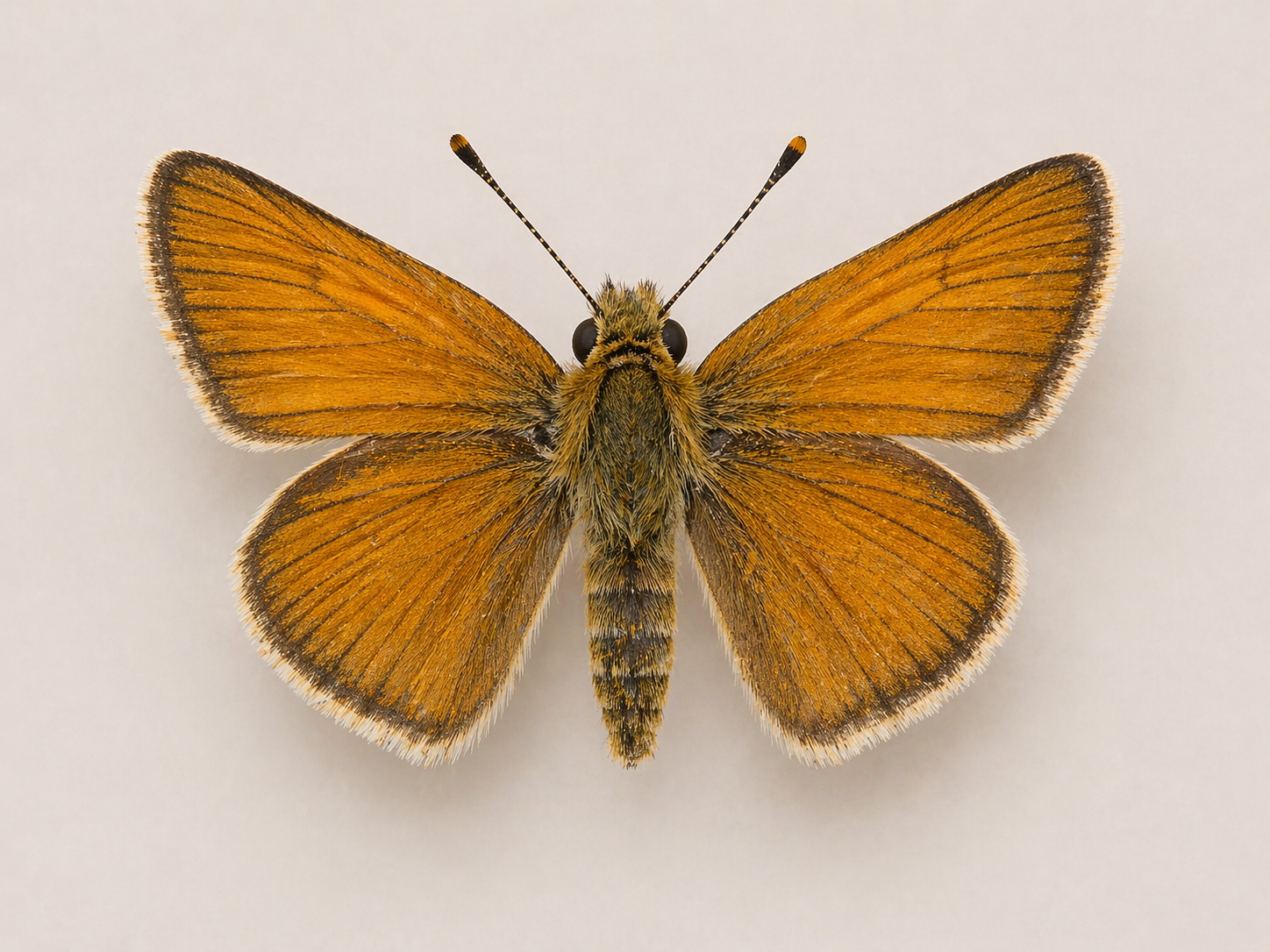
The European Skipper (Thymelicus lineola) is a small, bright orange butterfly with clean, uniform coloration and narrow wings. Males can be distinguished by a dark scent brand on the forewing, while females tend to have a more even orange appearance.
Native to Europe and Asia, Thymelicus lineola was introduced to North America and is now widespread across much of the northern United States and southern Canada. It is commonly found in grassy habitats such as fields, roadsides, and meadows.
Interesting Fact:
This species was accidentally introduced to North America in the early 20th century and has since become well established, often thriving in areas with introduced pasture grasses like timothy.
This specimen is preserved and is carefully stored in a protective paper triangle, ensuring it arrives safely and is ready for spreading or long-term collection. Collection data is included.
All specimens are ethically sourced, collected responsibly with a focus on sustainability and minimal impact on wild populations.
Image is a representation drawing and is not scientifically accurate.
The European Skipper (Thymelicus lineola) is a small, bright orange butterfly with clean, uniform coloration and narrow wings. Males can be distinguished by a dark scent brand on the forewing, while females tend to have a more even orange appearance.
Native to Europe and Asia, Thymelicus lineola was introduced to North America and is now widespread across much of the northern United States and southern Canada. It is commonly found in grassy habitats such as fields, roadsides, and meadows.
Interesting Fact:
This species was accidentally introduced to North America in the early 20th century and has since become well established, often thriving in areas with introduced pasture grasses like timothy.
This specimen is preserved and is carefully stored in a protective paper triangle, ensuring it arrives safely and is ready for spreading or long-term collection. Collection data is included.
All specimens are ethically sourced, collected responsibly with a focus on sustainability and minimal impact on wild populations.
Image is a representation drawing and is not scientifically accurate.