
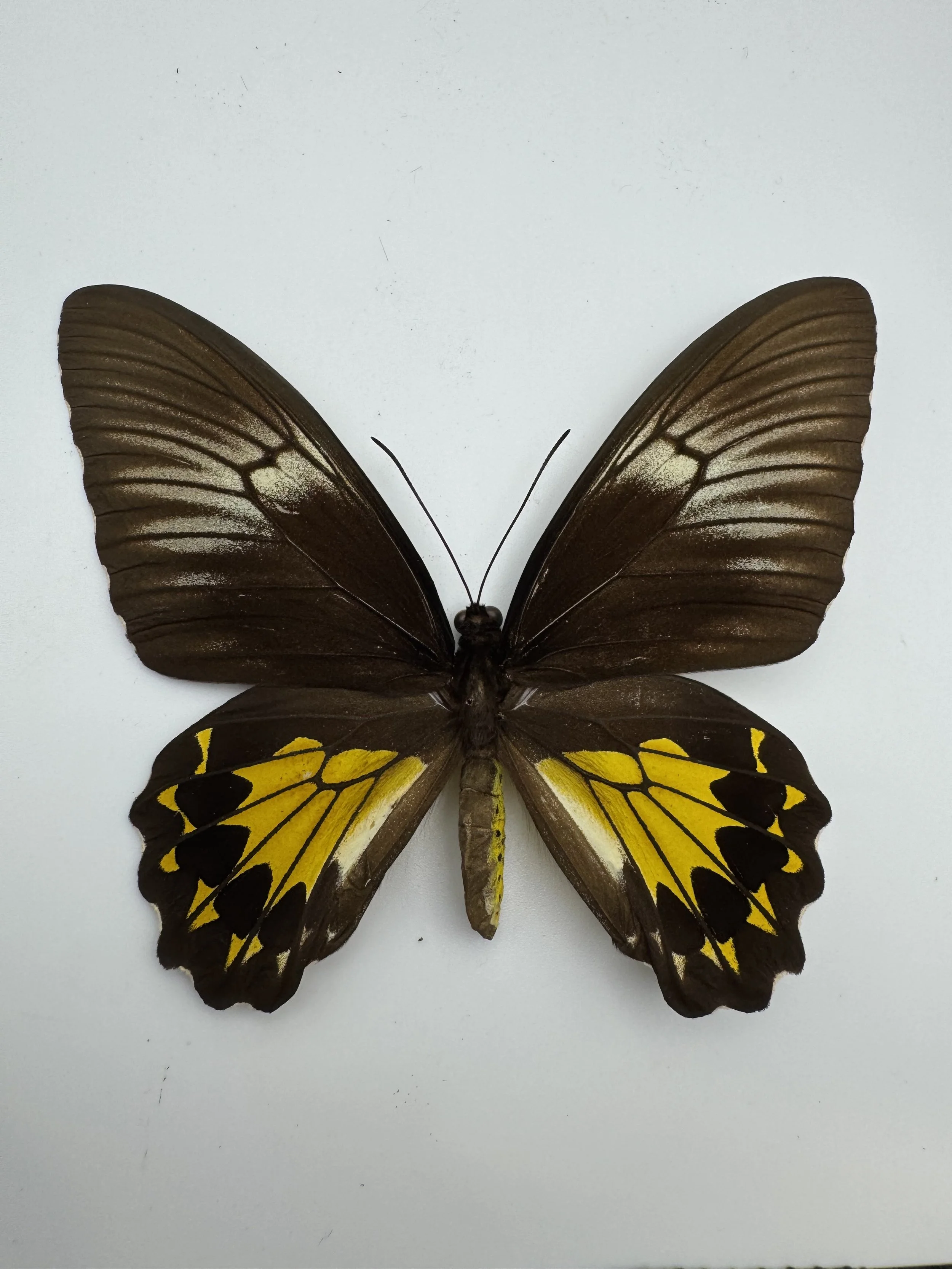
 Image 1 of 5
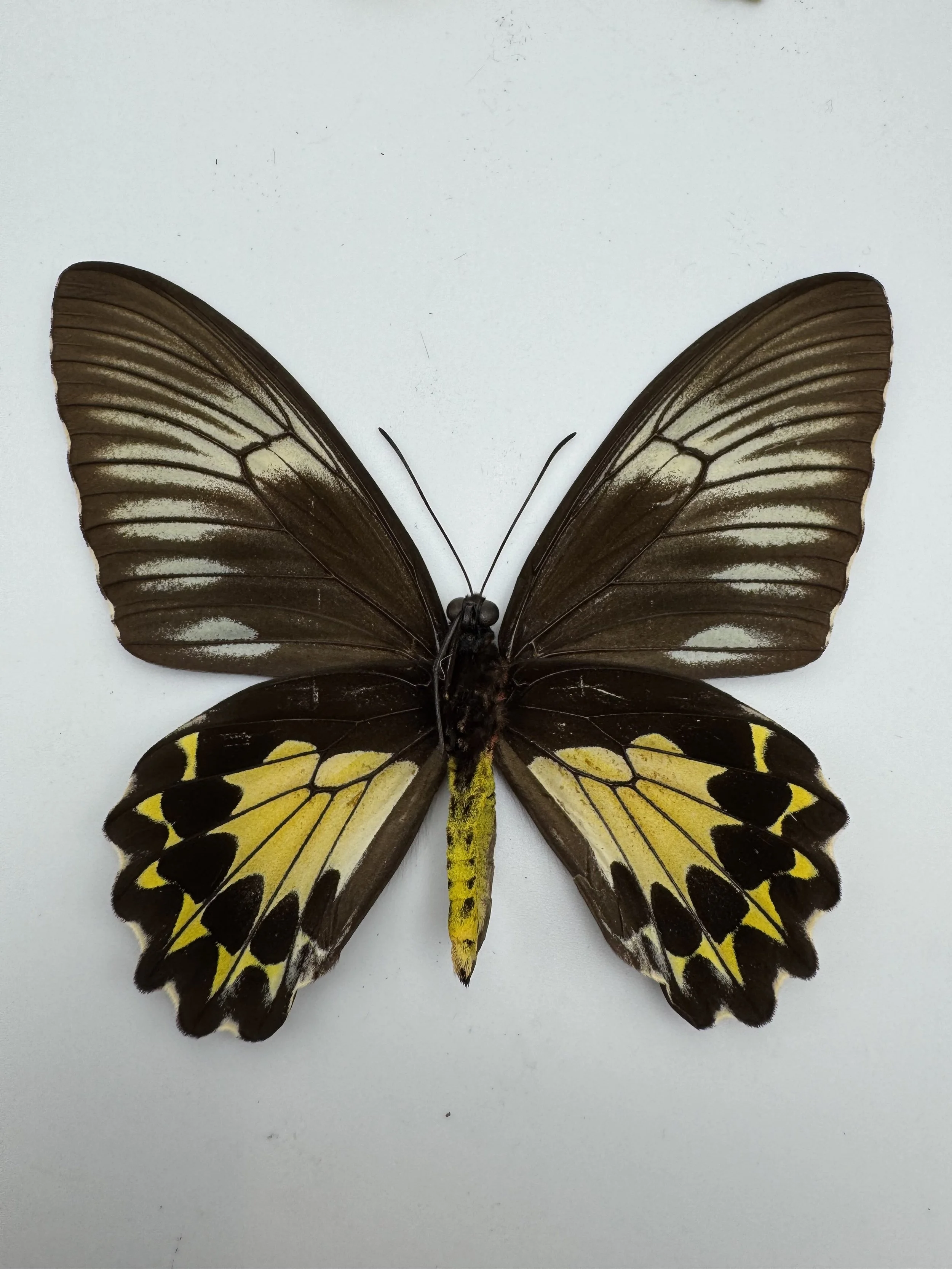 Image 2 of 5
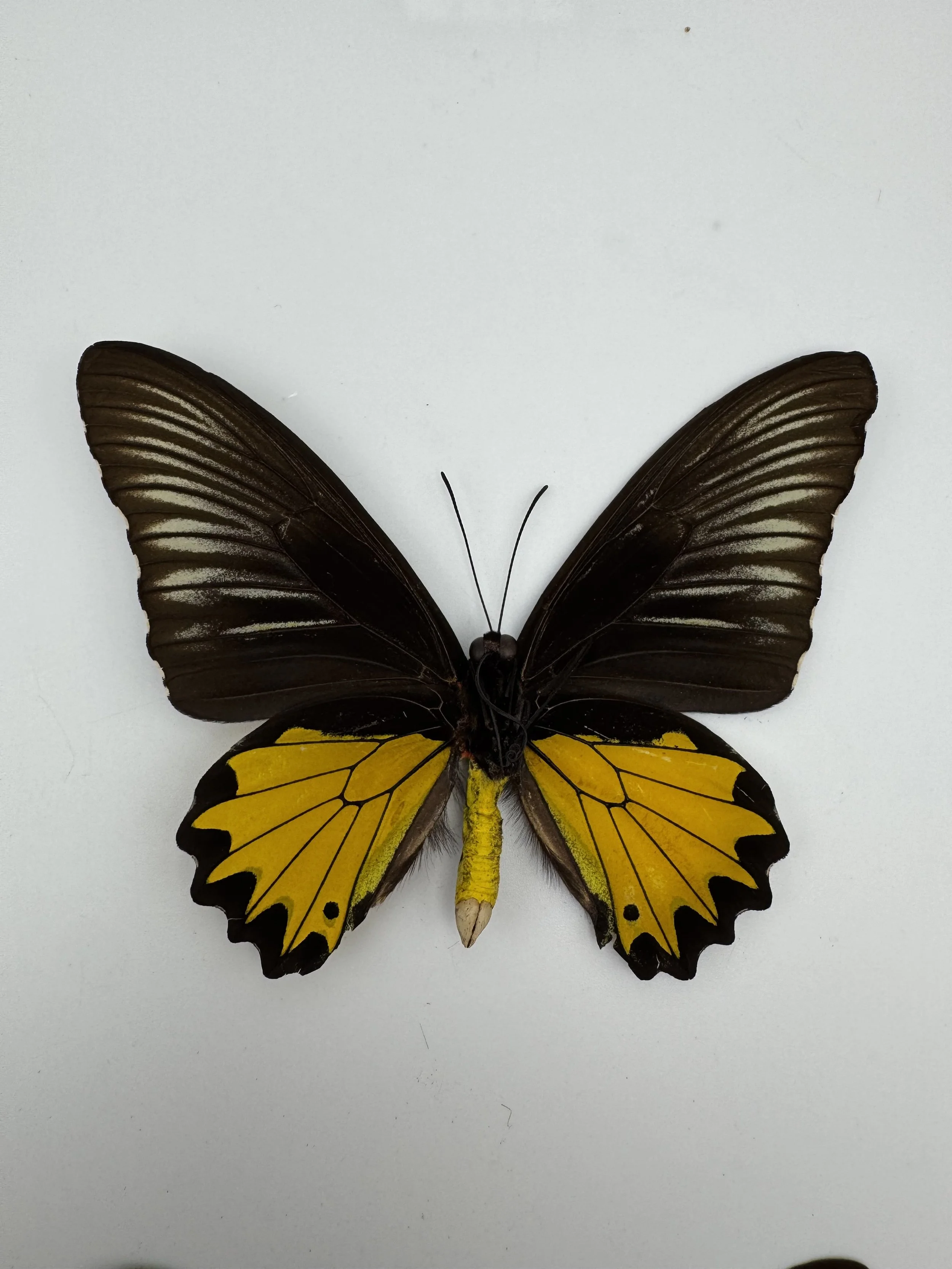 Image 3 of 5
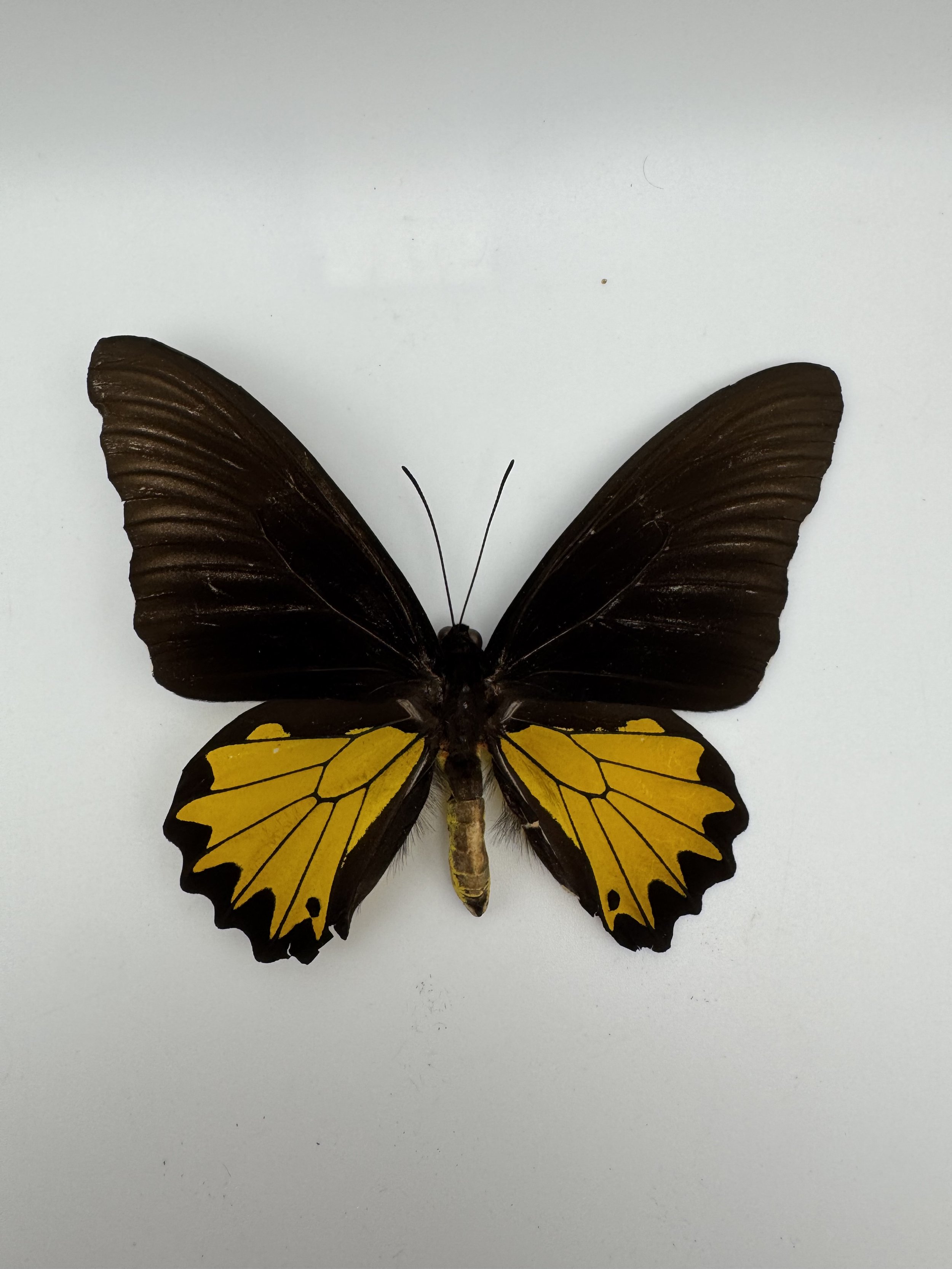 Image 4 of 5
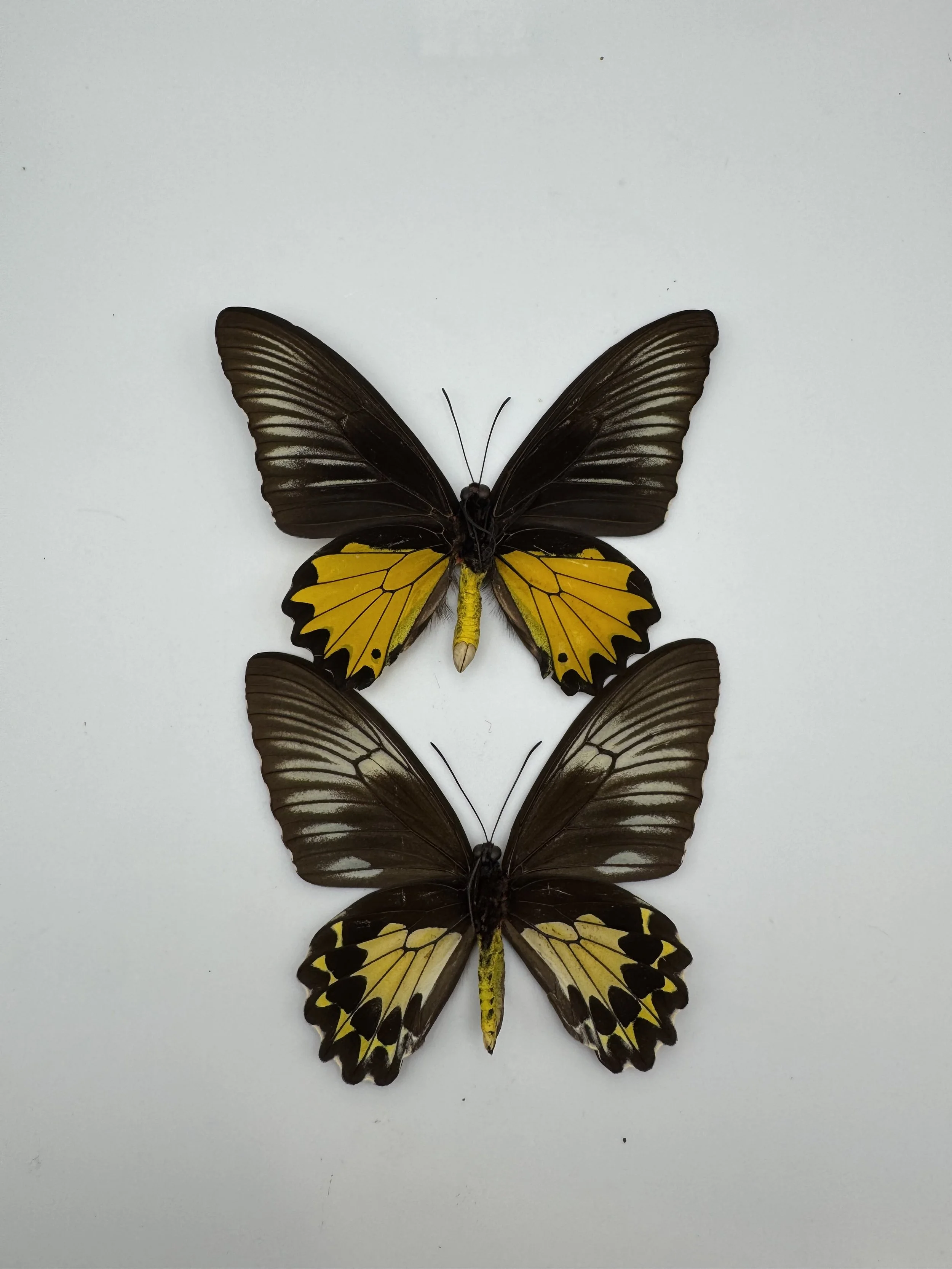 Image 5 of 5
The Common Birdwing (Troides helena) is a large and spectacular butterfly with velvety black forewings contrasted by brilliant golden-yellow hindwings. Its impressive size and bold coloration make it one of the most iconic birdwing butterflies.
Native to Asia, Troides helena is found across South and Southeast Asia, including Thailand, Malaysia, and Indonesia. It is commonly associated with tropical forests, where it flies high in the canopy but may descend to feed.
Interesting Fact:
This species is among the largest butterflies in the world, and like other birdwings, its caterpillars feed on toxic host plants, making the adults unpalatable to predators.
This is for a matched male female pair.
This specimen is preserved, fully spread and professionally mounted in a clear PE display frame, making it ready for immediate display. Collection data is included.
All specimens are ethically sourced, collected responsibly with a focus on sustainability and minimal impact on wild populations.
The Common Birdwing (Troides helena) is a large and spectacular butterfly with velvety black forewings contrasted by brilliant golden-yellow hindwings. Its impressive size and bold coloration make it one of the most iconic birdwing butterflies.
Native to Asia, Troides helena is found across South and Southeast Asia, including Thailand, Malaysia, and Indonesia. It is commonly associated with tropical forests, where it flies high in the canopy but may descend to feed.
Interesting Fact:
This species is among the largest butterflies in the world, and like other birdwings, its caterpillars feed on toxic host plants, making the adults unpalatable to predators.
This is for a matched male female pair.
This specimen is preserved, fully spread and professionally mounted in a clear PE display frame, making it ready for immediate display. Collection data is included.
All specimens are ethically sourced, collected responsibly with a focus on sustainability and minimal impact on wild populations.