
 Image 1 of 1
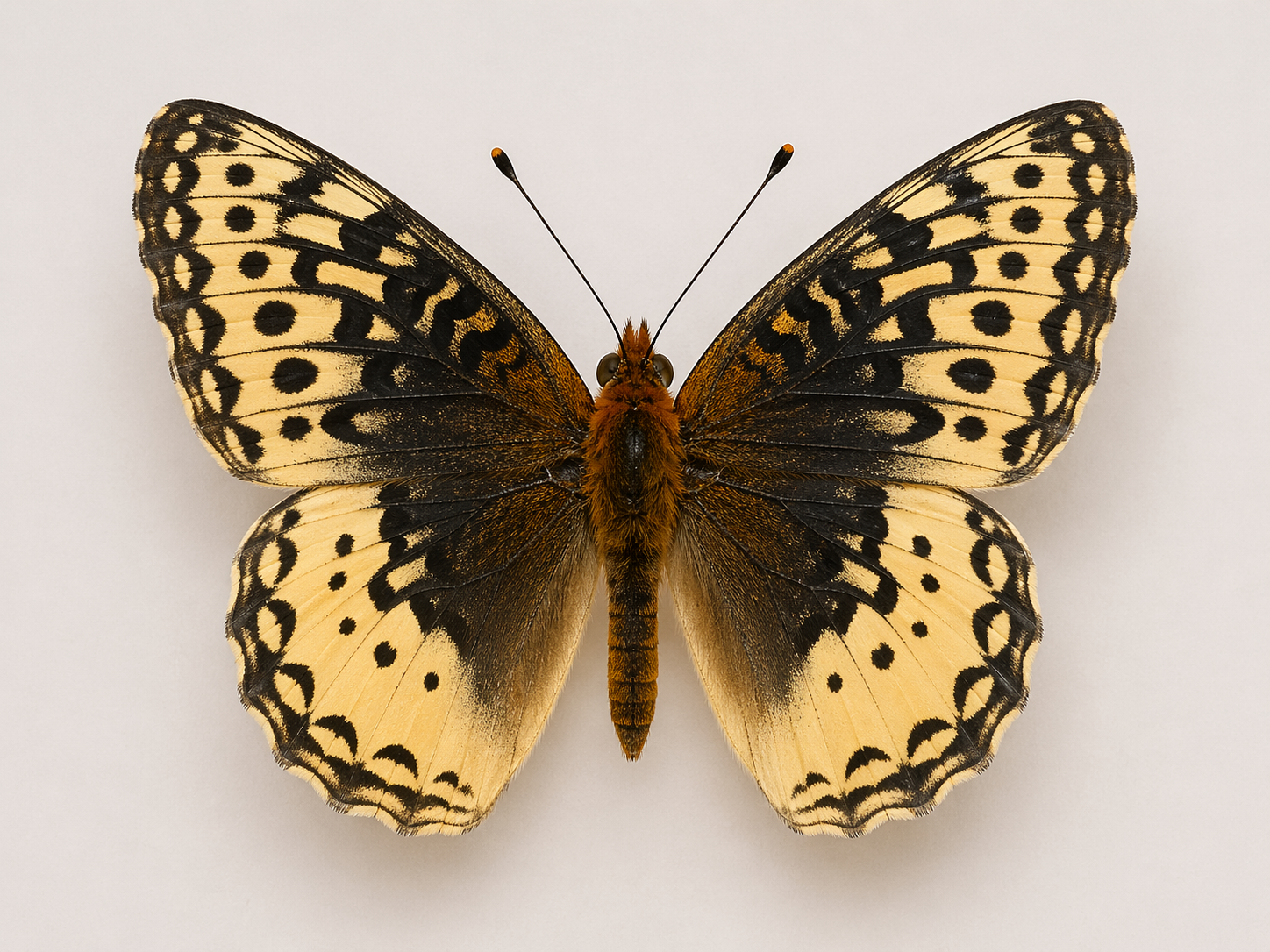
The Leto Fritillary (Speyeria leto) is a bright orange butterfly marked with bold black spotting on the upper wings. The underside of the hindwings features silvery spots set against a warm brown background, creating a striking contrast typical of fritillaries.
Native to western North America, Speyeria leto is found in the western United States, particularly in California and parts of the Great Basin. It is commonly associated with open habitats such as grasslands, foothills, and montane meadows where its host plants grow.
Interesting Fact:
Like other fritillaries, this species depends on violets (Viola spp.) as host plants for its caterpillars, and the larvae overwinter shortly after hatching before resuming development in spring.
This specimen is preserved and is carefully stored in a protective paper triangle, ensuring it arrives safely and is ready for spreading or long-term collection. Collection data is included.
All specimens are ethically sourced, collected responsibly with a focus on sustainability and minimal impact on wild populations.
Image is a representation drawing and is not scientifically accurate.
The Leto Fritillary (Speyeria leto) is a bright orange butterfly marked with bold black spotting on the upper wings. The underside of the hindwings features silvery spots set against a warm brown background, creating a striking contrast typical of fritillaries.
Native to western North America, Speyeria leto is found in the western United States, particularly in California and parts of the Great Basin. It is commonly associated with open habitats such as grasslands, foothills, and montane meadows where its host plants grow.
Interesting Fact:
Like other fritillaries, this species depends on violets (Viola spp.) as host plants for its caterpillars, and the larvae overwinter shortly after hatching before resuming development in spring.
This specimen is preserved and is carefully stored in a protective paper triangle, ensuring it arrives safely and is ready for spreading or long-term collection. Collection data is included.
All specimens are ethically sourced, collected responsibly with a focus on sustainability and minimal impact on wild populations.
Image is a representation drawing and is not scientifically accurate.