
 Image 1 of 3
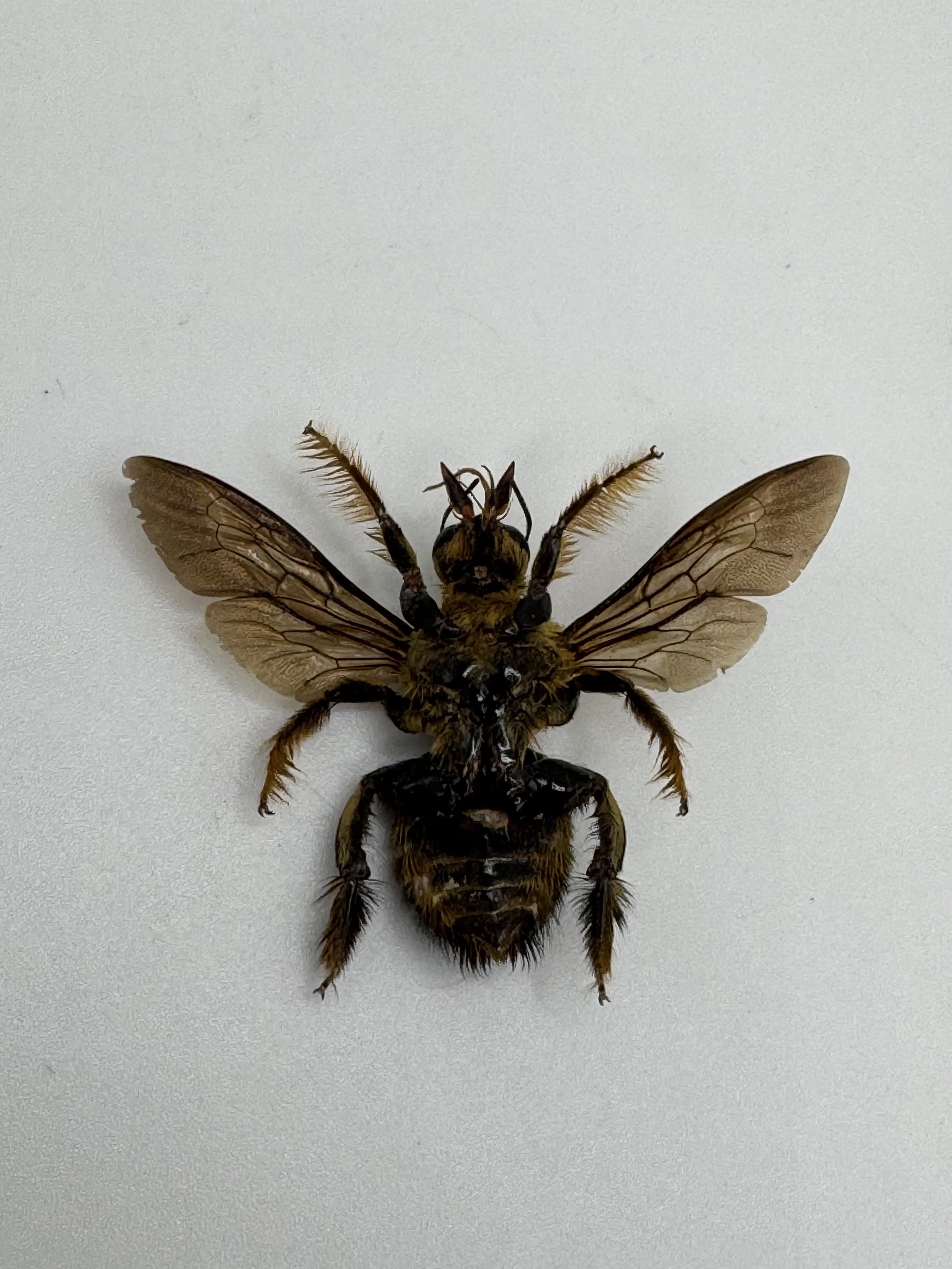 Image 2 of 3
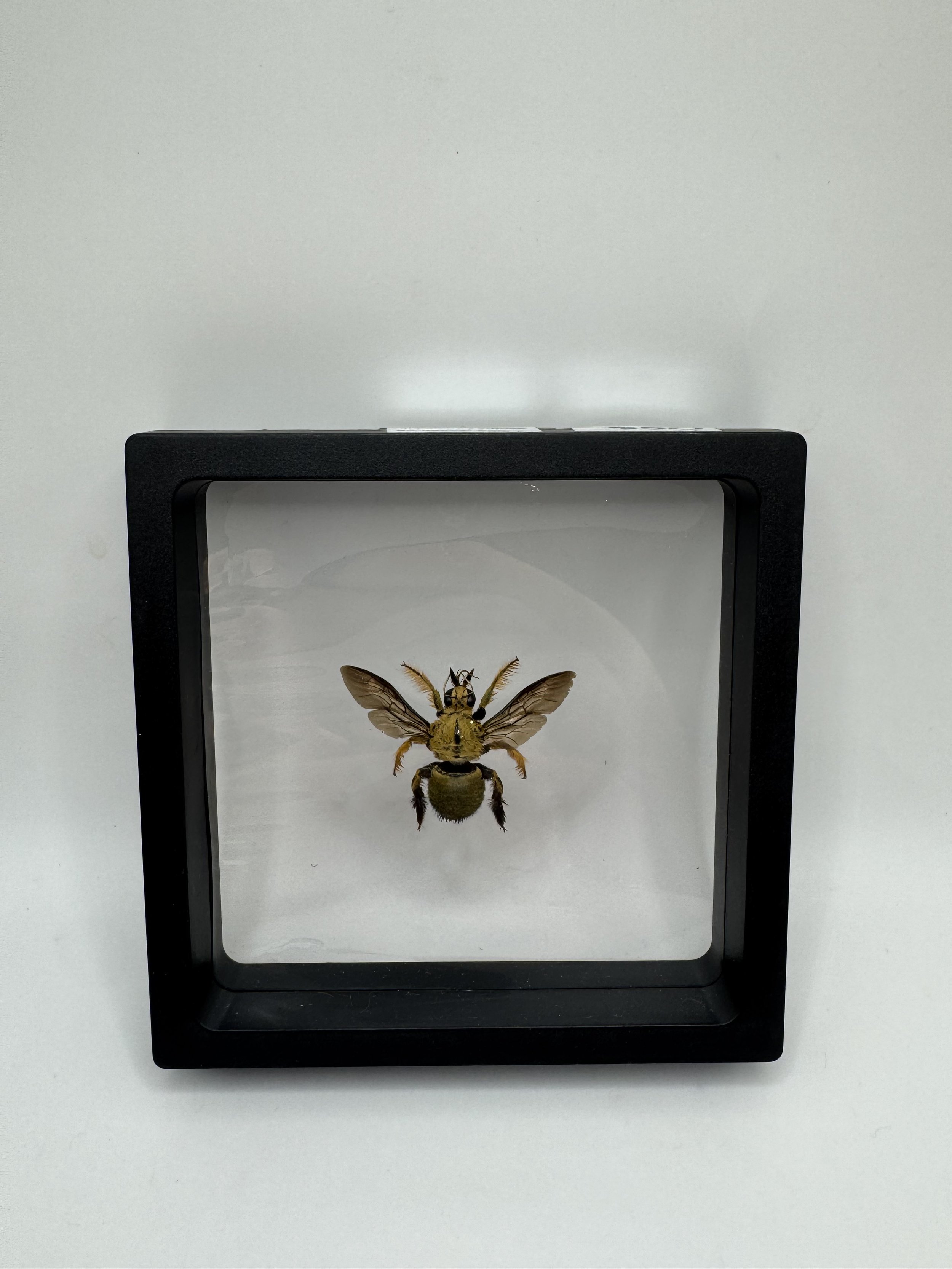 Image 3 of 3
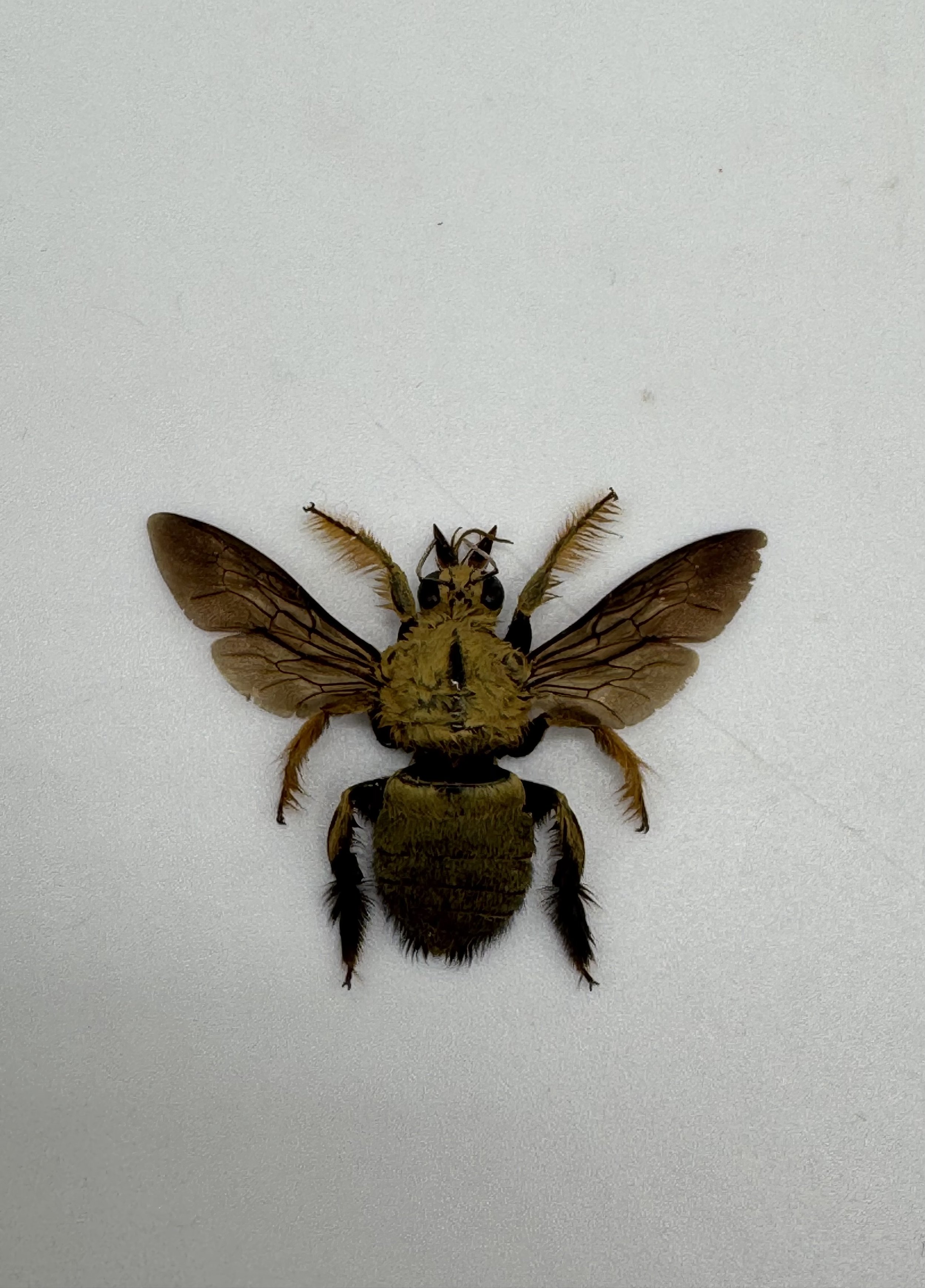
The Yellow Carpenter Bee (Xylocopa confusa) is a striking tropical bee known for its robust body, powerful wings, and brilliant golden-yellow coloration. Females have a glossy black abdomen contrasted by dense, bright yellow hairs covering the thorax, creating a distinctive and eye-catching appearance.
Native to parts of South and Southeast Asia, this large carpenter bee inhabits tropical forests, wooded areas, and gardens. It is an important pollinator, visiting flowering plants to collect nectar and pollen.
Interesting Fact:
Unlike honeybees, carpenter bees typically nest in tunnels they excavate in wood using their powerful mandibles. The brilliant yellow hairs of Xylocopa confusa contain specialized pigments that create a vivid contrast against green vegetation, potentially aiding visual recognition between bees.
This specimen is fully spread and professionally mounted in a clear PE display frame, making it ready for immediate display. Collection data is included.
All specimens are ethically sourced, collected responsibly with a focus on sustainability and minimal impact on wild populations.